
In the historic city of Khiva, 60 medical professionals from the penitentiary system and forensic experts from across Bukhara, Khorezm, Navoi and Tashkent regions and from Karakalpakstan gathered on 13-14 April for a hands-on training on documenting torture and ill-treatment, based on the internationally recognized Istanbul Protocol. The training was organized by the OSCE Project Co-ordinator in Uzbekistan in co-operation with the National Centre for Human Rights, the Department for the Execution of Sentences under the Ministry of Internal Affairs, and the Republican Scientific and Practical Centre of Forensic Medical Examination. It emphasized that protecting human rights begins with individuals - each survivor, each doctor, and each case matters.
"Torture leaves scars that are not always visible," said Antti Karttunen, OSCE Project Co-ordinator in Uzbekistan. "Through this training, we are equipping professionals to listen carefully, document rigorously and uphold justice. Medicine and science are powerful tools to protect dignity and human rights."
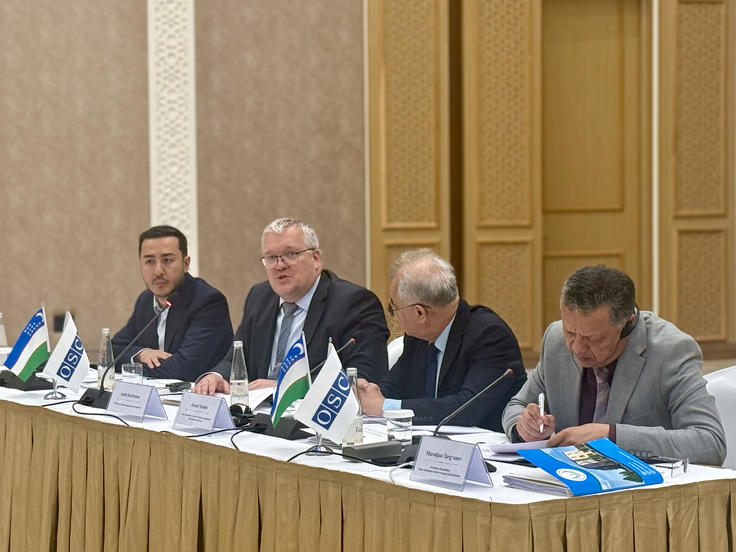
Antti Karttunen, OSCE Project Co-ordinator in Uzbekistan, delivers welcoming remarks to participants of a training in Khiva, Uzbekistan
Over two days, participants learned to identify, record and report evidence of abuse in a scientifically rigorous, legally sound and ethically responsible manner. International experts brought global perspectives: Professor Rusudan Beriashvili, one of the architects of the Istanbul Protocol, guided sessions on survivor interviews and physical evidence documentation, while Azamat Shambilov, an international consultant on prison reform and human rights, led discussions on national and international mechanisms to prevent torture.
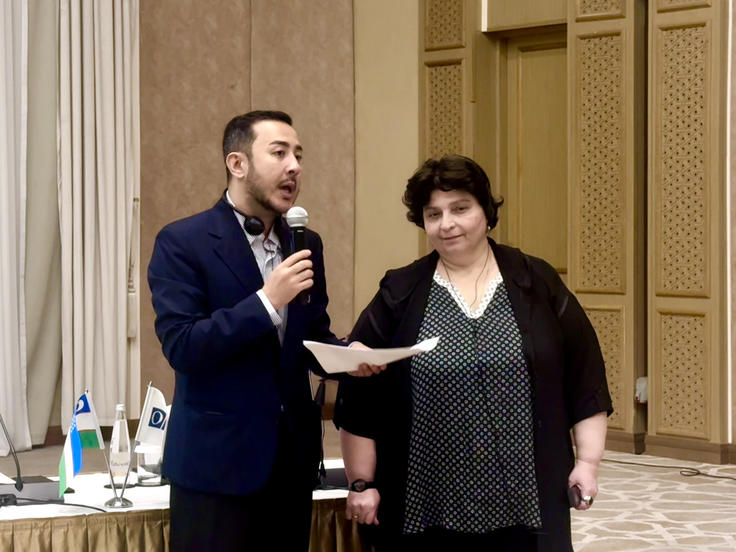
International experts Azamat Shambilov and Rusudan Beriashvili
The course emphasized a survivor-centred approach, ensuring that the documentation process itself never causes additional trauma. Participants engaged in practical exercises, case studies and role playing, strengthening both their professional skills and their commitment to ethical responsibility.
This training is part of the OSCE's ongoing support for Uzbekistan's penitentiary system, which aims to reinforce human rights standards and mechanisms to prevent torture. It includes adherence to the Nelson Mandela Rules for prisoner treatment and the UN Bangkok Rules addressing the treatment of female offenders.
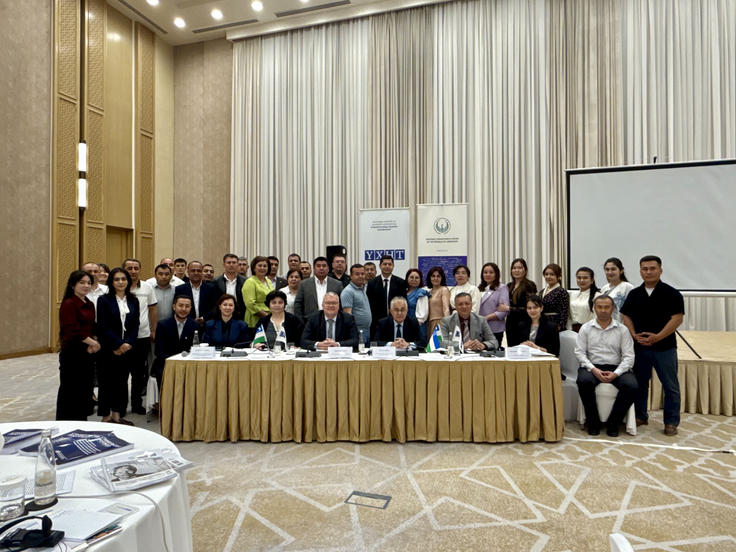
Group photo with participants and experts
A similar course will take place in Bukhara for the medical professionals of prison staff and forensic service from Bukhara, Samarkand and Navoi regions on 16 and 17 April. By equipping participants with these skills, the OSCE underscores its commitment to human rights, the rule of law, and the fundamental dignity of every individual - values that extend far beyond any single training room.


