
World Bank's Pacific Economic Update suggests repeated shocks are the region's 'new-normal'
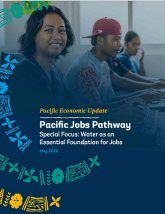
SUVA, May 12, 2026- The World Bank Group's new Pacific Economic Update projects regional growth to slow to 2.8 percent in 2026, as rising fuel and shipping costs, supply chain disruptions, and renewed global volatility place fresh pressure on Pacific economies. The report finds that repeated external shocks are becoming the region's "new normal", while reliable water systems are increasingly critical to jobs, business growth, and long-term resilience.
Pacific economies remain highly exposed to fuel shocks, with oil imports accounting for around 15-25 percent of merchandise imports in many countries. The update warns that continued disruptions to fuel and shipping markets are likely to slow growth further over the next six to nine months.
However, the report argues the Pacific still has a narrow window to strengthen long-term growth by moving beyond repeated crisis response and investing in the foundations of more productive jobs. With growing numbers of young people entering working age, the update says countries will need stronger infrastructure, more reliable services, better skills, and improved conditions for private investment to create opportunities at the scale the region now requires.
"The Pacific's current growth model is no longer creating enough opportunities for the region's growing and increasingly young populations," said Stephen N. Ndegwa, World Bank Group Division Director for the South and North Pacific. "Average growth across Pacific economies is projected to remain around 2 percent this decade, below the pace of the 2010s, while too many young people are still struggling to access productive work. Creating more and better jobs, especially for women and youth, will be critical to building resilience and supporting stronger long-term growth in a more uncertain world."
The report sets out a "jobs-first" pathway focused on stronger economic foundations such as water, energy, transport, digital connectivity, and skills; better conditions for businesses and market access; and improved access to finance and private investment. It identifies tourism, agribusiness and fisheries, health and care services, resilient infrastructure, and digitally delivered services as sectors with strong potential to create jobs at scale across the Pacific.
Reliable water systems can be a foundational driver of economic growth and opportunity across the Pacific. This echoes the recently launched Water Forward initiative which identifies water insecurity as a constraint on sectors such as tourism, agribusiness, fisheries, and services. The report notes that reliable and safe water services support business continuity, improve productivity, strengthen health and resilience, and help expand opportunities for women and young people. However, many Pacific utilities continue to face aging infrastructure, intermittent supply, high water losses, and rising operational costs that increase pressure on households and businesses. Strengthening safe water reliability will therefore be critical to supporting private sector growth and more resilient Pacific economies.
"The Pacific has shown extraordinary resilience through repeated shocks, but resilience alone is not enough," said World Bank Senior Economist and report author Eka Vashakmadze. "Countries that invest now in reliable services, stronger economic management, and the conditions for businesses to grow will be better placed to create opportunities and withstand future shocks."
The Update also notes that successive shocks have eroded fiscal buffers, increasing the importance of rebuilding them and strengthening public financial management as governments face rising costs and tighter financing conditions. It emphasizes targeted and temporary support to protect vulnerable households, while avoiding broad-based subsidies that could place further strain on already limited fiscal space.


