
Pacific ministers adopted a new declaration backing stronger national meteorological and hydrological services and calling for greater investment in multi-hazard early warning systems across the region.
The Fourth Pacific Meteorological Ministers Meeting (PMMM-4), held on 16 September in Nuku'alofa, Tonga, brought together ministers and senior representatives responsible for meteorology from across the Pacific to give political backing to regional priorities and strengthen National Meteorological and Hydrological Services (NMHSs). PMMM-4 was hosted by the Government of Tonga, in partnership with the Secretariat of the Pacific Regional Environment Programme (SPREP) and the World Meteorological Organization (WMO).
WMO President Dr Abdulla Al Mandous called for Pacific leadership, regional ownership and international solidarity to turn the region's ambitions into action and strengthen climate resilience. He urged countries to align regional strategies with the WMO Strategic Plan 2028-2031 so that Pacific priorities are reflected in global action. He also highlighted the potential of artificial intelligence and other emerging technologies and the need to expand multi-hazard early warning systems through the Early Warnings for All initiative.
The meeting followed the Eighth Pacific Meteorological Council , held in Nuku'alofa from 10 to 14 September, which set out priorities for the next decade. These included stronger multi-hazard early warning systems and climate services, better observations and data and ensuring that forecasts and warnings reach communities and decision-makers.
Investing in a more resilient Pacific
Regional experts reported that El Niño is fully established and is expected to peak between November 2026 and January 2027, with impacts likely continuing into 2027. Ministers discussed the implications for Pacific countries and the need for continued preparedness and regional coordination. Tonga's Prime Minister and newly appointed Chair of PMMM-4, Hon. Lord Fatafehi Fakafanua, called on governments, development partners, regional organisations and the private sector to align investments behind stronger and more sustainable climate and meteorological services and early warning systems.
"Weather and climate events cost our region an average of half a billion dollars every year and every dollar invested in early warnings can return many times its value," Hon. Lord Fakafanua said.
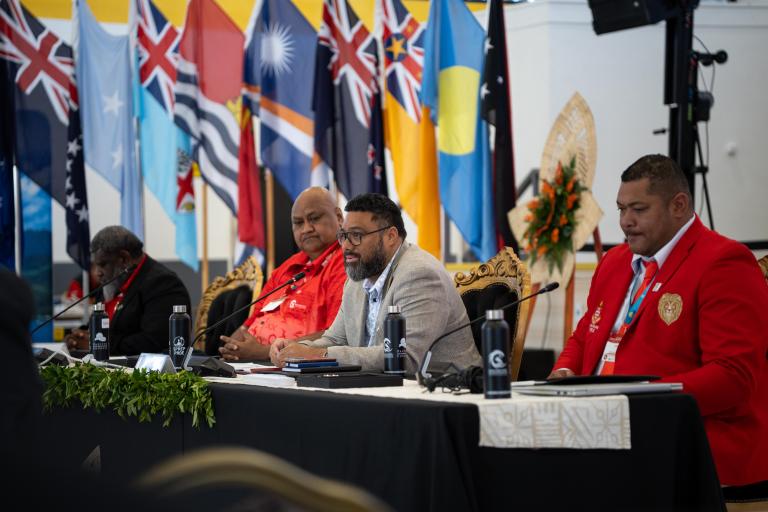
Drawing on Tonga's experience of cascading hazards, he stressed the need for integrated, multi-hazard early warning systems.
"The eruption of Hunga-Tonga Hunga-Ha'apai reminded the world that the hazards we face do not arrive one at a time. A volcano, a tsunami, an ash cloud, and the severing of our communications came together within hours. Our region sits on the Ring of Fire and in the path of the cyclone belt. Meteorological, hydrological, oceanic, and geological hazards are interconnected in the Earth system, and they compound and cascade."
Setting priorities for the next ten years
Following a decade of progress, the proposed Pacific Islands Meteorological Strategy 2027-2036 aims to provide a shared framework for strengthening weather, climate and water services across the region and guiding future investment and partnerships.
The strategy recognizes that strong national services are essential to regional resilience, while regional cooperation can help Pacific countries address common challenges, share expertise and resources, and improve access to technology, data and scientific knowledge. The Siu-í-Álaimoana-Ki-Likutapu Declaration adopted at the conclusion of PMMM-4 sets out the ministers' collective political commitment to strengthening NMHSs and expanding multi-hazard early warning systems across the Pacific.
The focus now shifts to implementation: strengthening national services and regional cooperation and ensuring that timely, trusted and useful weather and climate information reaches communities across the Pacific.


