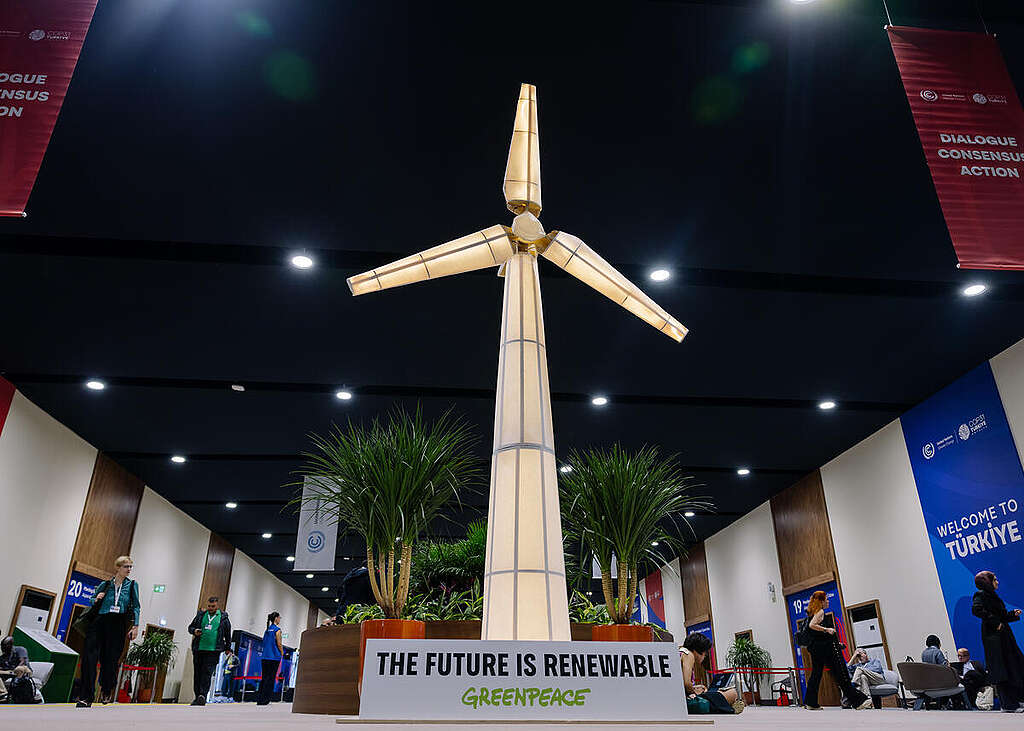
The COP31 climate conference in Antalya finally ended after running deep into overtime but without a hoped-for final deal to inject the required urgency to phase out fossil fuels. Just months after the UN declared the world will overshoot 1.5°C, negotiators failed to reach the required consensus to name fossil fuels as the culprit of climate change.
But while negotiators were debating texts about fossil fuel phase-out and electrification, around the world everyday people, farmers, villages and capital cities have already been building the green energy transition on the ground. They understand a simple truth: shifting to renewables and away from fossil fuels is a lifeline for people and for the natural world that sustains us.
As the United Nations Environment Programme (UNEP) confirmed, we are heading toward a 1.5C° overshoot, bringing far worse weather extremes than we have ever experienced. Keeping this overshoot as low and short as possible depends on what happens next.
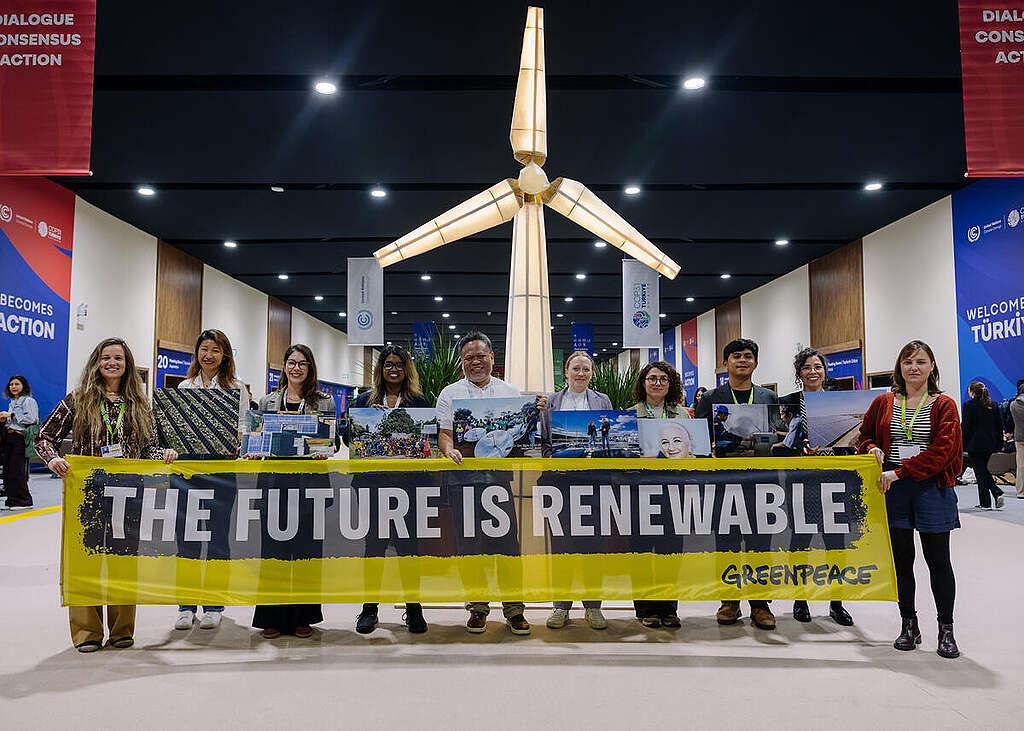
During the final days of COP31, members of the Greenpeace delegation from around the world gathered around a windmill installation symbolising hope, power and resilience, and shared a living proof that the green energy transition is already underway. Here are some of the stories that have inspired us and provide hope for a new and greener future.
1. Europe: How can we heat our homes and power our schools without gas?
Across Central and Southeastern Europe, towns and capital cities are rethinking how they heat and power their homes to protect residents from volatile fossil fuel prices and shield themselves from gas supply shocks. In Hungary, deep geothermal energy is replacing imported gas heating, warming thousands of flats and public spaces including the municipal swimming pool.
In Austria, historic and modern buildings share rooftop solar panels and ground heat, showing that even old parts of capital cities can lead progressive decarbonisation. Meanwhile, across Bulgaria and Romania, homegrown renewables are increasingly powering schools and households with reliable, affordable electricity, advancing the rise of energy communities.
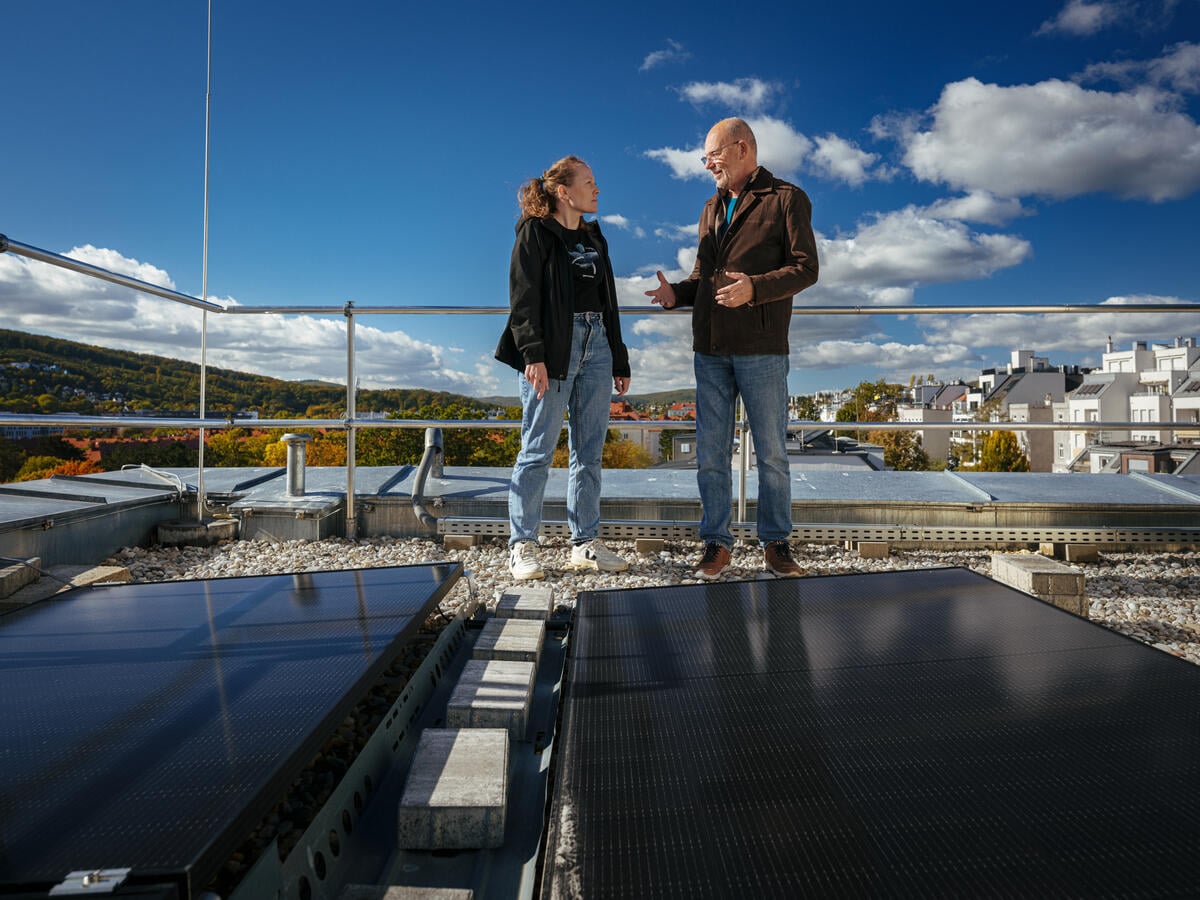
From geothermal wells in Hungary to solar roofs in Vienna, Romania, Bulgaria, I have seen how local green energy sustains families with power without relying on expensive gas.
– Jasmin Duregger, Political Lead for Global Gas at Greenpeace International
2. Türkiye: How Community-owned renewable energy can protect farms and coasts from coal
Just up the coast from Antalya in Türkiye's Çanakkale province, local residents, such as Süheyla Doğan, are fighting to defend a region famous for its tomatoes, cheese, and coastal farms. Already surrounded by five coal-fired power stations and facing plans for further coal expansion, activists and villagers took their campaign to the courts and travelled from village to village to rally community leaders.
By stopping new coal projects, cutting energy waste, and championing community-owned renewables, they are showing how the sustainable energy transition protects public health, farming, and fishing livelihoods provided that people own renewable energy production.
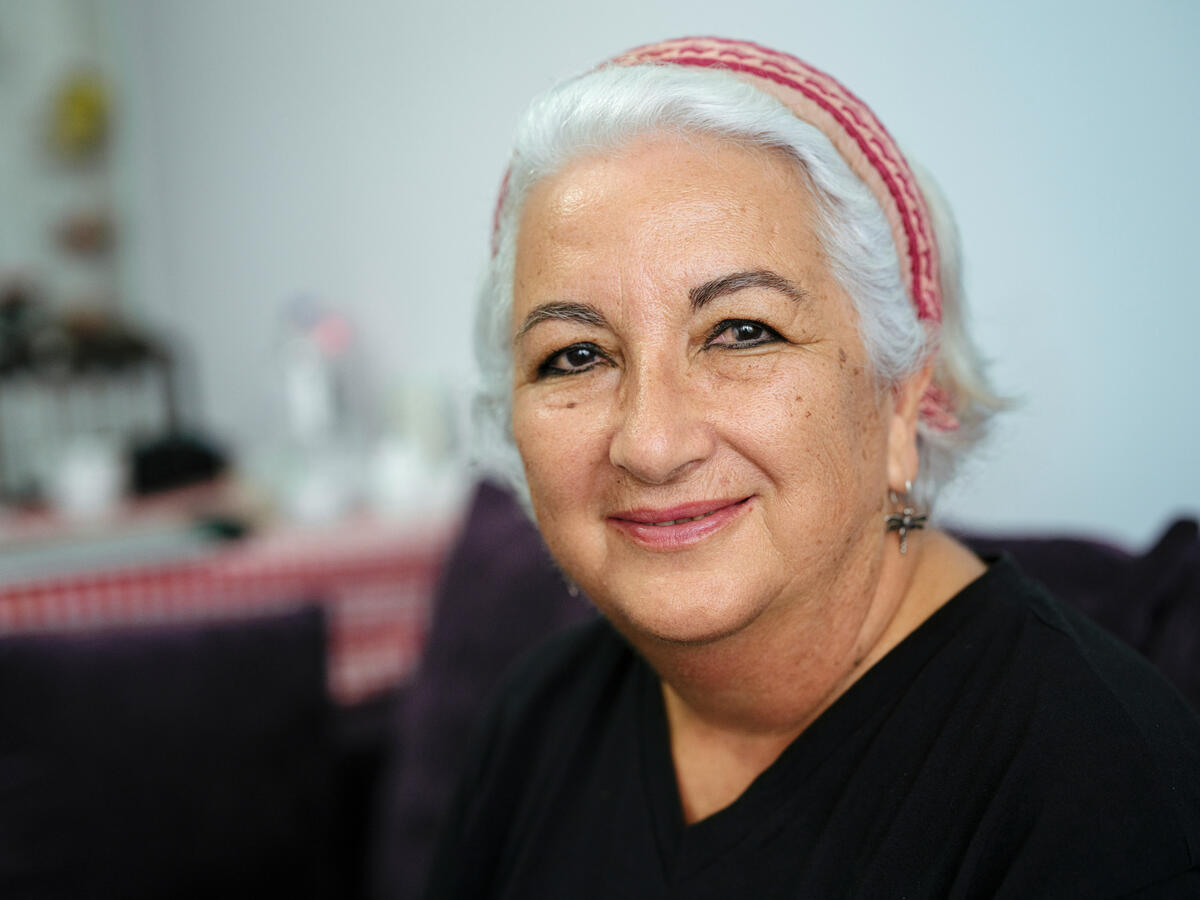
The real problem is how much energy we need and how it is going to be produced and by whom it will be produced. Only transitioning to green energy is not enough: we have to make real people own the energy production and we have to produce energy for the real need.
– Süheyla Doğan, Chairperson of the Kazdağları Natural and Cultural Heritage Protection Association
3. South Africa: How women-led solar can power safety and education
In South Africa, Earthlife Africa is enabling women-led solar projects across both rural and urban communities. In off-grid villages, solar cookers allow families to boil water and prepare meals without women taking dangerous walks into the bush to gather firewood, protecting their safety and saving hours every day. At the same time, rooftop solar panels on community Just Transition Centres keep the lights on during grid power cuts, giving neighbours a safe place to charge phones and students a well-lit space to study after dark. These initiatives show local municipalities why public money belongs in community solar rather than costly coal electricity.

Thanks to parabolic solar dishes, women don't need to spend hours going into the bush to collect firewood, which keeps them safe and out of harm's way. Solar panels on the roofs of Just Transition Centres show people that renewable energy technologies work. This challenges our municipalities to install solar panels rather than forcing residents to pay high electricity tariffs generated by coal.
– Makoma Lekalakala, Director of Earthlife Africa
4. Brazil: How to cut bills and build autonomy with renewables in low-income neighbourhoods
On the eastern outskirts of São Paulo, in Cidade Tiradentes, where more than one-third of residents live in poverty, local people partnered with the grassroots collective Nosso Sol and civil society organisation Instituto Pólis to tackle inequality with green power. At the Paulo Freire social housing complex, 38 community-managed solar panels have cut electricity bills by 75 percent for 100 residents, while feeding surplus power back into the grid for extra bill credits. The system also gives the neighbourhood real energy independence, enabling residents to coordinate local response efforts during extreme weather.
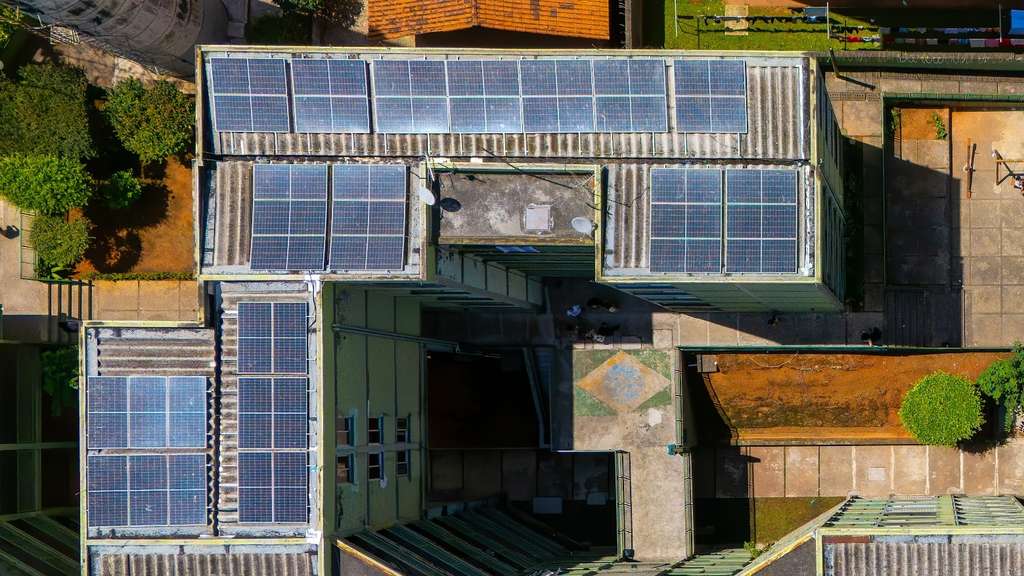
In the face of extreme weather events, community-managed solar power ensures the autonomy to uphold basic rights, such as storing food and having water at home, even when droughts and storms disrupt the grid.
– Gabriela Santos, a member the grassroots collective Nosso Sol (Our Sun Collective)
5. Indonesia: How can rooftop solar systems deliver affordable energy security?
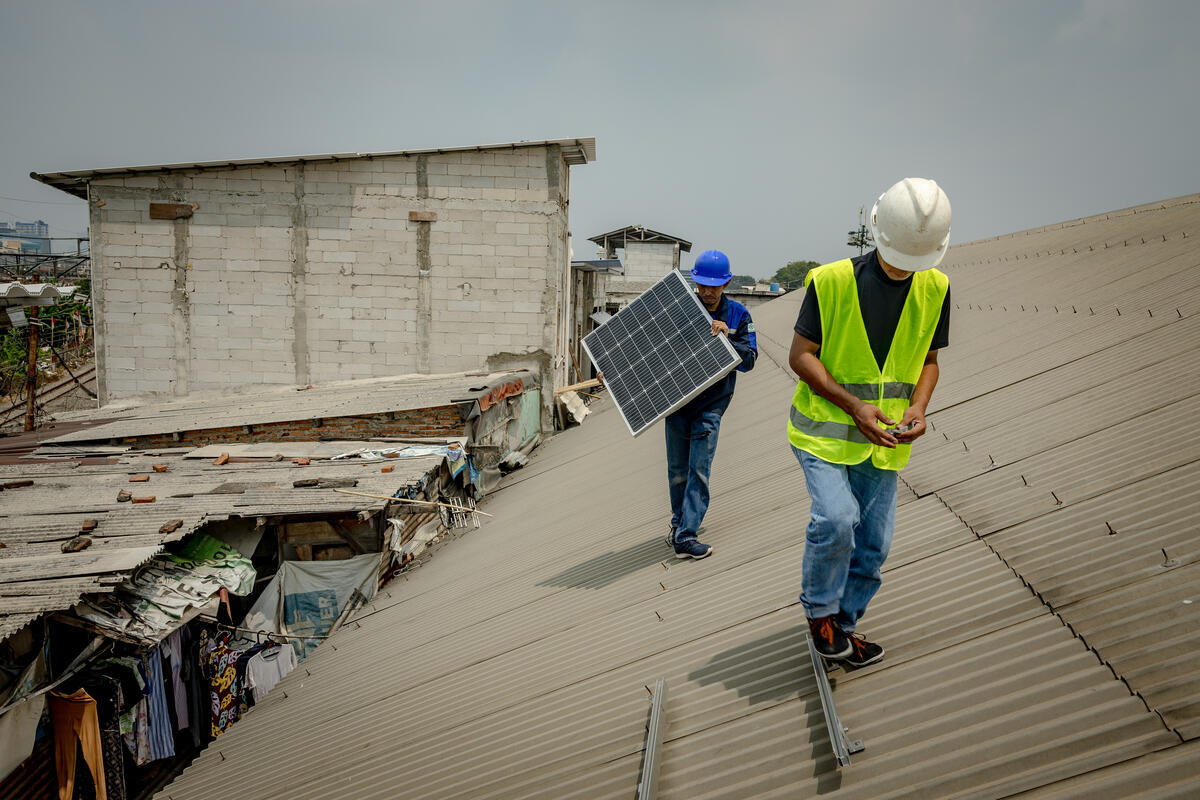
In Indonesia, residents in the Kampung Muka neighbourhood of North Jakarta are bringing green power directly onto urban rooftops through a collaboration between Greenpeace Indonesia, Jaringan Rakyat Miskin Kota (JRMK), and the Urban Poor Consortium (UPC).
Designed as a community-scale installation, the project expands access to affordable renewable electricity in densely populated urban areas. By placing solar infrastructure directly in working-class neighbourhoods, the partnership demonstrates how Indonesia can accelerate its energy transition while delivering everyday energy security.
Green energy cannot be reserved only for wealthy districts. Community rooftop solar in North Jakarta shows how urban neighbourhoods can lead Indonesia's renewable transition
– Yuyun Harmono, Climate and Energy Team Leader at Greenpeace Indonesia
6. Egypt: How can sunshine replace diesel on smallholder farms?
Greenpeace MENA has been exploring how decentralised energy can benefit the economy and local communities. In the farming village of Abwan in Egypt's Minya Governorate, smallholder farmers are breaking free from expensive, polluting diesel pumps by switching to decentralised solar irrigation.
After making the switch, local farmer Diana saved enough on fuel costs to expand her cultivated land from 6 to 20 feddans. By relying on abundant sunshine rather than volatile diesel prices, she has strengthened local food security and proven how green power directly boosts rural livelihoods.
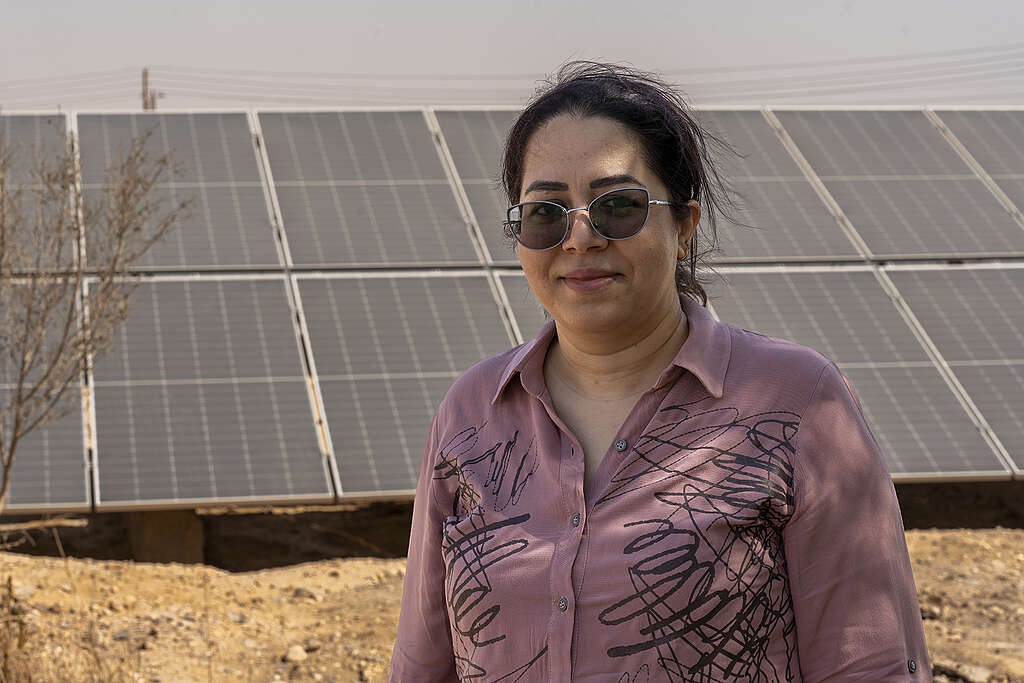
Before switching to solar energy, we could only afford enough diesel to irrigate six feddans of land. Today, we no longer have to pay for diesel, and we can cultivate and irrigate 20 feddans, which has helped increase our agricultural production and improve our income.
– Diana Youssef Hanna, Projects Manager, Development Office, Minya
7. Fiji: How can solar mini-grids ensure island resilience?
On Kioa Island in Fiji, the Vaitupu community, whose ancestors relocated from low-lying Tuvalu, is pairing cultural heritage with practical climate resilience. Living on the front lines of rising seas, islanders are replacing noisy, costly diesel generators with a community solar mini-grid.
Green electricity now powers the local school and village facilities, while new solar water pumps are being prepared to secure fresh water, creating a self-reliant blueprint for remote islands across the Pacific.
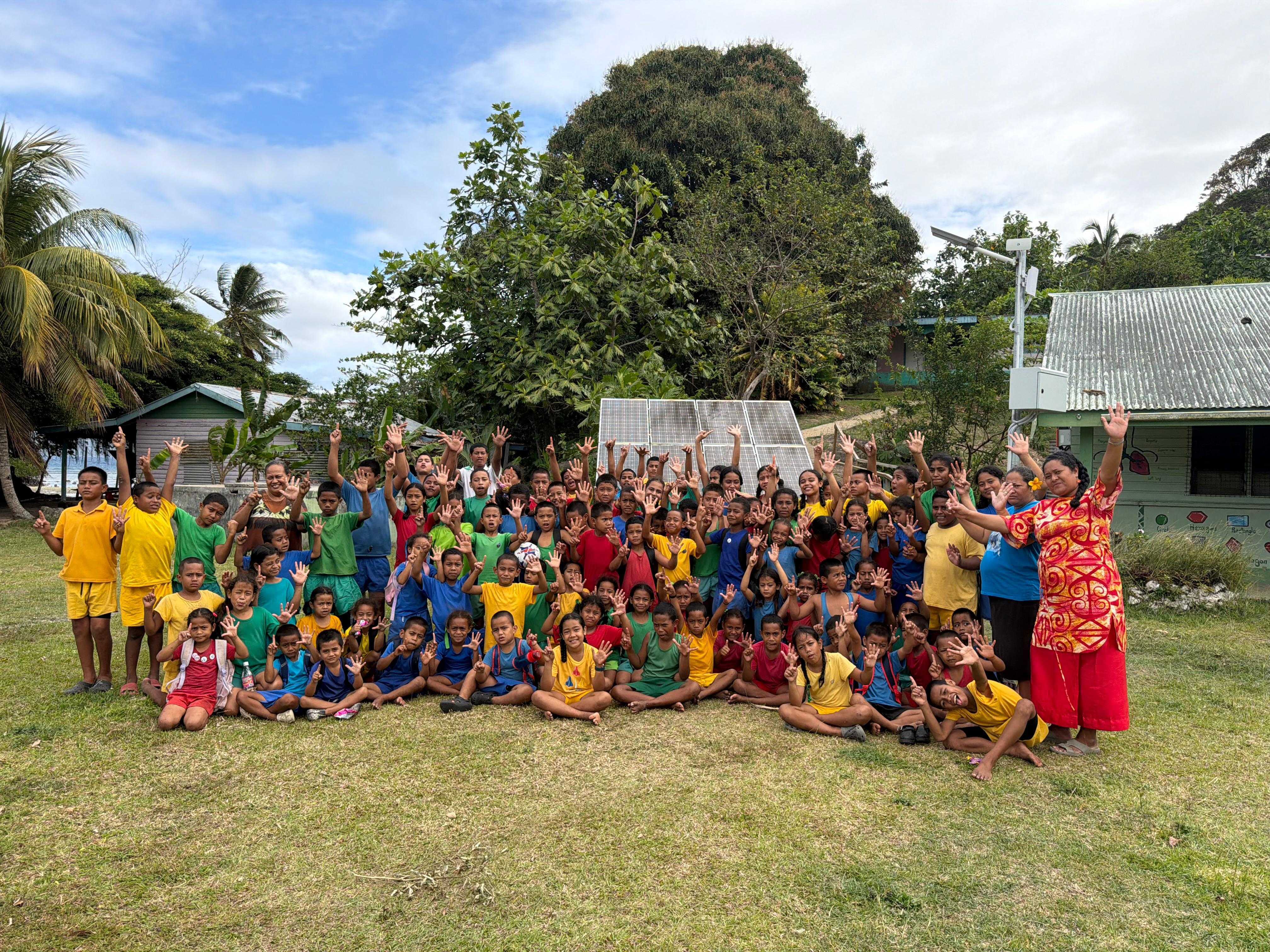
Kioa Island and its leadership in transitioning towards a fully renewable future should be a moment of inspiration for the rest of the world. An island community, on the frontlines of the climate crisis, with close to zero contributions to emissions showing everyone what true humility in addressing the existential crisis means.
– Shiva Gounden, Head of Pacific at Greenpeace Australia Pacific
8. China: How to restore desert land under solar panels?
In China's Tala Desert in Qinghai Province, large-scale solar arrays are helping bring degraded land back to life. By sheltering the dry soil from harsh sun and wind, the panels allow grass to grow back, enabling local herders to graze thousands of sheep underneath while renewable electricity powers nearby communities. Across China, the shift to renewables is unfolding at an extraordinary pace, creating new rural livelihoods and weaving green power into everyday life.
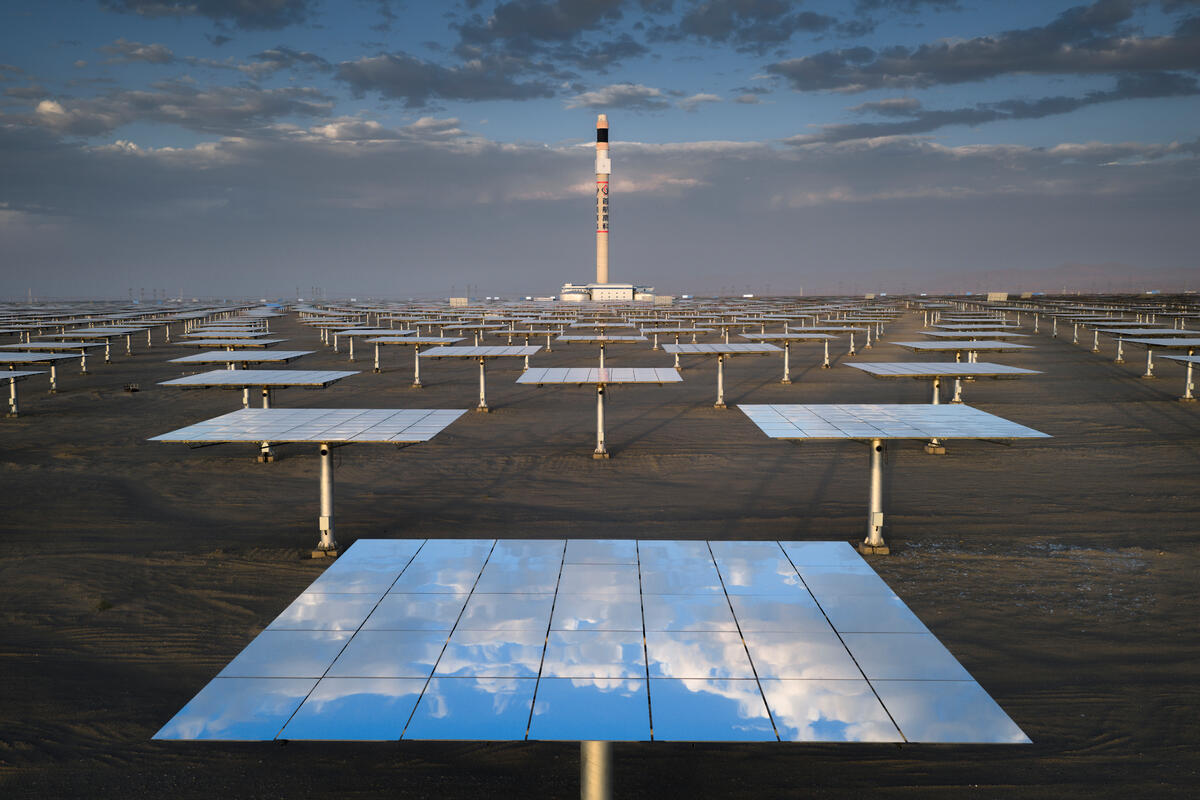
When thoughtfully designed to coexist with local ecosystems, solar projects can do more than generate clean energy. The solar panels shelter the desert soil from harsh winds, bringing back green grass where thousands of sheep now graze while the sun powers nearby towns.
– Yao Zhe, Global Policy Advisor at Greenpeace East Asia
Beyond COP31: People know the way forward
Although COP31 ended without a clear outcome or a credible pathway to end fossil fuels, ordinary people and local communities already know the way forward, and replacing fossil fuel dependency with reliable and affordable renewable energy that provides them with energy security. The green energy transition is not a distant goal for future climate summits. It is working today.
Beyond COP31, politicians must act at every level for a fair, fast and funded transition away from fossil fuels and accelerate electrification from renewables so renewables can displace coal, oil and gas. To keep 1.5°C alive, they need to make climate finance accessible to frontline communities and place ocean and forest protection at the heart of the climate agenda.
It is time to throw a lifeline not to fossil fuels but to people and ecosystems. Governments must end fossil fuel subsidies, make big polluters pay for the climate damage they have caused, and channel public climate finance directly into community-led renewable projects.
Only by backing the green energy transition unfolding on the ground can we have energy security for all, decent living conditions, and a liveable planet with a shared future.
The Future is Renewable!
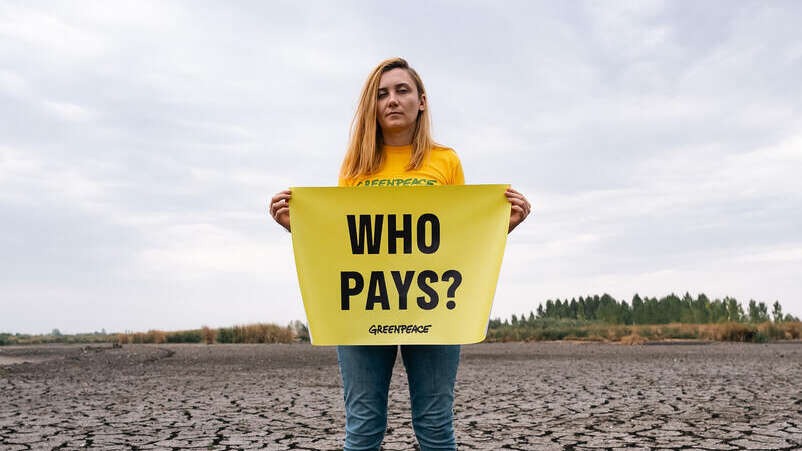
Sign the pact, record your story. Join the global movement to make polluters pay.
Reka Hunyadi is Communications Lead of Greenpeace's Global Gas campaign with Greenpeace Central and Eastern Europe. Based in Budapest, Hungary.
Frequently Asked Questions
What is the outcome of COP31 in Antalya?
The UN climate summit COP31 ended without a hoped-for final deal to inject the required urgency to phase out fossil fuels, just months after the UN declared the world will overshoot 1.5°C. As COP31 ran deep into overtime, a third draft cover decision text was presented to parties acknowledging 1.5°C overshoot would occur, but failed to name fossil fuels as the culprit of climate change. Instead, dangerous smokescreens such as gigatonne capacity carbon capture utilisation and storage (CCUS) were added to the text that would only prolong the lifeline of the fossil fuel industry. Several negotiating blocs and parties, such as the EU, Panama, the Marshall Islands and Norway formally rejected the COP31 cover decision text during the closing plenary and the cover decision text was not adopted due to a lack of consensus.
What do politicians at all levels need to do beyond COP?
Politicians at every level need to accelerate the just transition away from fossil fuels (JTAFF), the single biggest driver of the climate crisis, while ending and reversing forest destruction. That means delivering on promises to triple renewable energy and double energy efficiency by 2030 and to deliver an equitable, affordable, 1.5°C aligned and people-centred transition away from coal, oil, and gas, backed by finance and other support to developing countries that need it.
What do governments need to do for climate finance and to make polluters pay?
As devastating climate impacts are significantly intensifying, public finance must increase to disproportionately impacted Global South and climate vulnerable countries. There are clear ways to do this through progressive environmental taxation. As oil and gas companies book mega profits, taxing the super-rich and corporate polluters for their climate damages isn't optional - it's essential to secure a prosperous and just future for everyone.
How are local communities leading the renewable energy transition?
From deep geothermal district heating in Europe, villagers in Türkiye stopping coal expansion to champion community-owned renewables, and women-led solar cookers and Just Transition Centres in South Africa to solar irrigation farms in Egypt, island solar mini-grids powering schools and freshwater pumps in Fiji, community rooftop solar in North Jakarta, Indonesia, rooftop panels cutting bills by 75 percent in São Paulo, Brazil, and desert solar arrays in China restoring grass for grazing sheep, local people are already replacing coal, gas, and oil. These community-led projects lower energy bills, strengthen food and water security, restore degraded land, and protect households from fossil fuel price shocks.
What do people think about renewables and taxing fossil fuels?
According to Oxfam commissioned polling of April 2026, conducted in seven countries (UK, France, Brazil, Türkiye, Australia, the Netherlands and Colombia), three times as many citizens supported greater government investment in renewable energy compared to increasing fossil fuel extraction, and approximately two thirds (68 percent) supported increasing taxes on the profits of large oil and gas corporations to help fund the transition to renewables. Fossil fuel companies are projected to earn almost $3,000 a second in 2026 while families struggle to afford energy bills worldwide. The total projected fossil fuel profits of 2026 of Chevron, Shell, BP, ConocoPhillips, Exxon and TotalEnergies are US $94 billion: enough to provide solar power for the energy needs of almost 50 million people in Africa.