About 170 years ago a large bundle of stone tools was deliberately buried close to a waterhole in the hard dirt of the remote outback.
Who buried them and for what purpose? Why were they never retrieved?
Archaeologists from Griffith University, who discovered the hoard, believe they are evidence of planning and trade by those that stashed them.
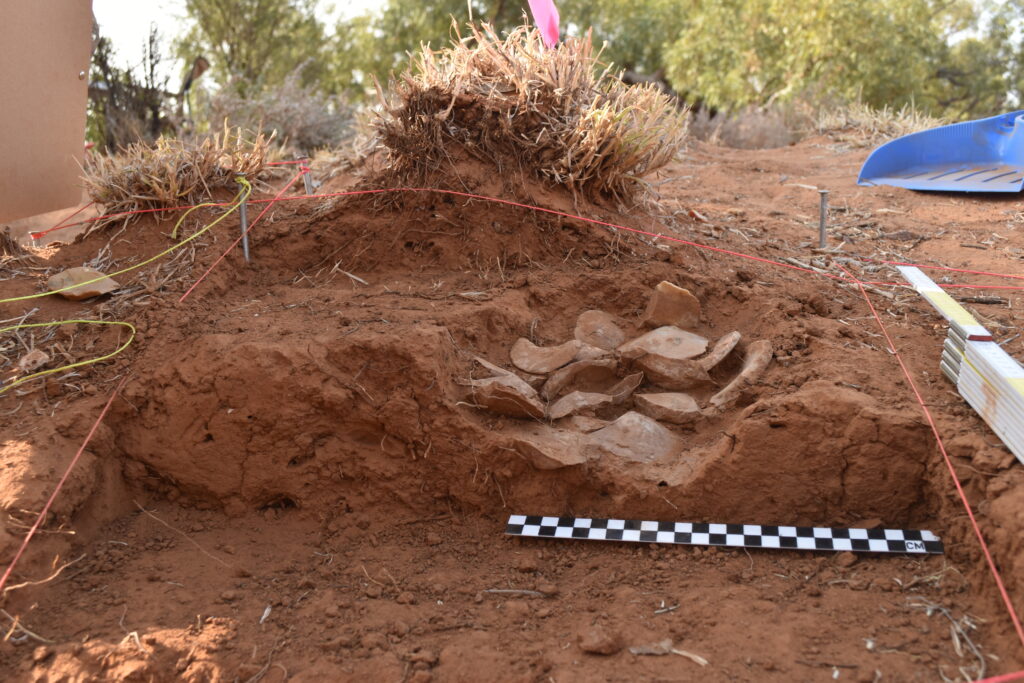
The research team spotted a handful of stones poking out of the soil in an area just north of the town of Boulia, Central West Queensland.
After investigating further, they discovered a pile of 60 large Aboriginal stone "tulas", special flaked stone tools that were hafted onto a handle and used for woodworking.
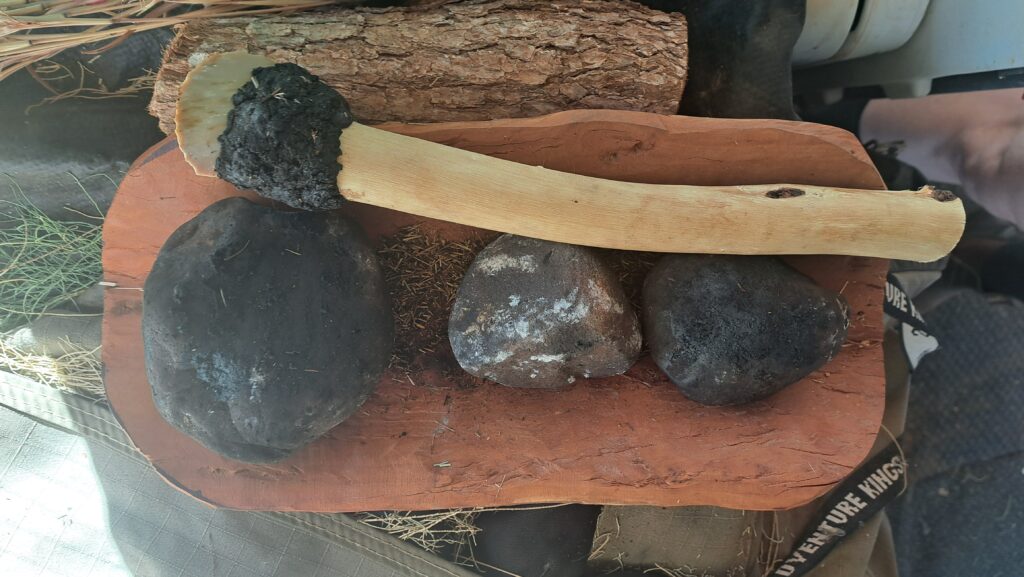
They were important tools, used across most of the continent to make objects such as boomerangs, wooden coolamon dishes, shields and clapsticks.
Dr Yinika Perston from the Griffith School of Social and Cultural Research, moved fast to complete the excavation.
"This region's climate is harsh." Dr Perston said.
"Even while we were excavating, bushfires raged to the north, preventing some of the team from joining us.
Once we found the cache, we knew were in a race against time to recover the tools before they were washed away in the next flood".
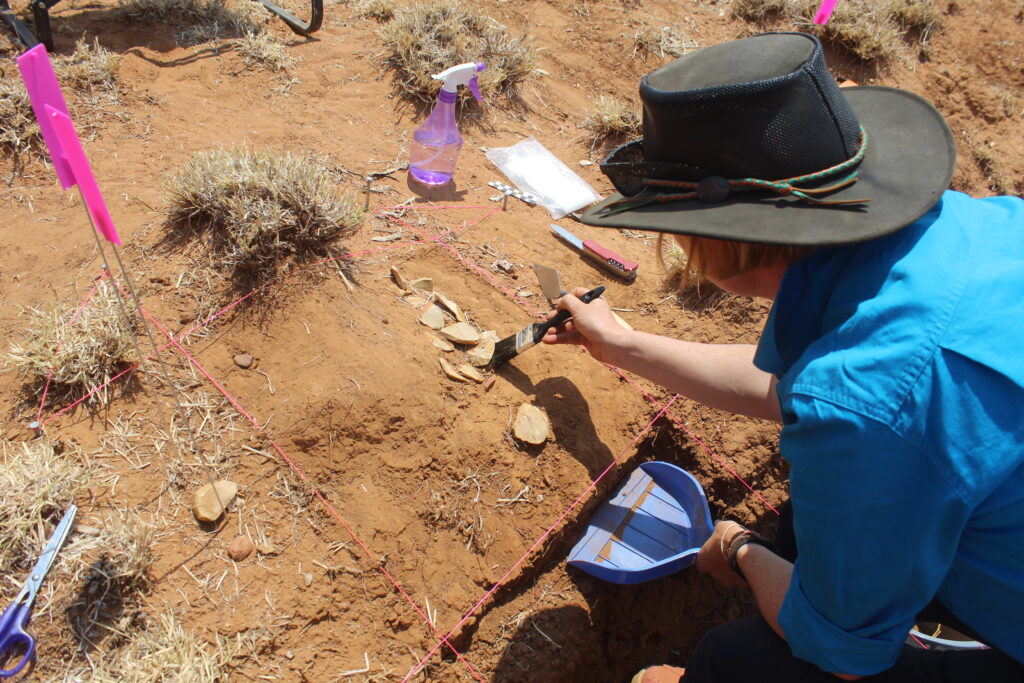
The team used scientific methods to analyse the tools, working closely with the Pitta Pitta, who hold Native Title for the area where the collection was found.
"Innovation and connection helped the Pitta Pitta people survive the region's harsh climates.
If they could not find resources locally, they bartered along vast trade routes.
It's possible this cache was a bundle of specially-made artefacts that were intended for trading." Dr Perston proposed.
The team attempted to figure out when, how and possibly why these tulas were buried.
Quartz grains in the soil can be dated using a method called optically stimulated luminescence, or OSL.
This technique uses decay rates in quartz to calculate when the grains were last exposed to sunlight.
Using this method meant the team had to collect samples from the centre of the cache on a dark and moonless night.
Dating revealed a 95% probability the tulas were buried sometime between 1793 and 1913.
The nearby town of Boulia was established around 1879, and the Burke River police camp operated from 1878 to 1886.
"We think the Pitta Pitta ancestors were likely planning to trade the tools in these caches when the time came, but for some reason never retrieved them." said Dr Perston.
"One possible reason for this may be due to disruption caused by European arrival - but the dates aren't precise enough to be sure.
"What we can say, is that this cache reveals how planning, resource management and collective cooperation allowed Aboriginal people to not only survive, but thrive, in this harsh environment."
The study 'Under the shade of a coolabah tree: A second cache of tulas from the Boulia district, Western Queensland' has been published in Archaeology in Oceania.
To explore 3D models of each tool in the cache, visit here.