
Key points
- Remote laundries are a holistic public health intervention, reducing scabies, skin infections, and risks of rheumatic heart disease in remote Aboriginal communities in the Northern Territory.
- The project creates local jobs, builds skills and strengthens community pride, supporting social and economic wellbeing.
- An Indigenous-led, co-designed evaluation by CSIRO shows the laundries are effective, scalable and aligned with the National Agreement on Closing the Gap.
The Remote Laundries Project is delivering free, community-run laundry services across multiple remote Aboriginal communities in the Northern Territory. CSIRO's evaluation includes sites in Barunga, Angurugu, Gunbalanya, Milyakburra and Darwin.
Launched in 2019 by the Aboriginal Investment Group (AIG) and evaluated in partnership with CSIRO, the project was developed in response to community-identified challenges accessing reliable washing facilities. Today, the project is improving everyday living conditions while addressing some of the most preventable health risks facing remote Aboriginal communities.
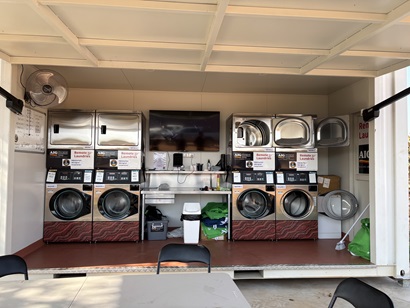
Improving health through clean clothes
Access to clean clothes, bedding and towels is a vital part of maintaining health, particularly in remote Indigenous communities where overcrowding and environmental challenges make regular washing difficult.
Eight out of ten Aboriginal babies living remotely will contract scabies before their first birthday. Aboriginal children suffer from higher rates of throat and skin infections that cause acute rheumatic fever. This can cause serious diseases later in life such as rheumatic heart disease and chronic kidney disease. 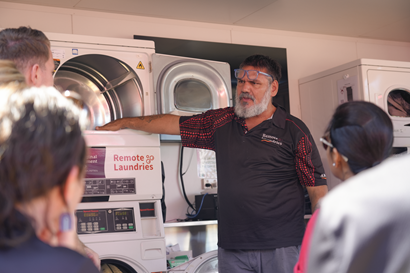
"Our research shows that improving access to clean clothes and bedding is an important community led solution to reduce scabies and skin infections. These laundries are a practical public health intervention that can help close the gap in health outcomes for remote communities," said Professor Ray Mahoney, a proud Bidjara man and CSIRO Research Scientist.
The Remote Laundries Project provides permanent, commercial-grade laundry facilities for free. Each laundry is staffed by local community members, ensuring culturally appropriate operation and local employment opportunities.
"There's the impact you can quantify – clean clothes, reduced scabies and better health. Then there's the impact that's harder to measure. People are happier, kids go to school more, and people go to work with pride and dignity," said one of the project staff. 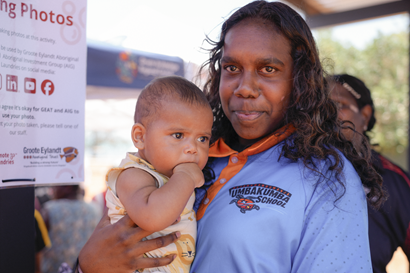
Supporting communities and building opportunity
Beyond health, the laundries provide significant social and economic benefits. Staff report increased community pride and dignity, while families save on electricity, water and laundry supplies. Since the first laundry opened in Barunga, local staff wages have totalled more than $215,000 and scabies cases at the local health clinic have fallen by 60 per cent.
The laundries also act as 'third spaces' for social connection, informal learning, relationship-building and opportunities for school-based engagement and work experience programs. 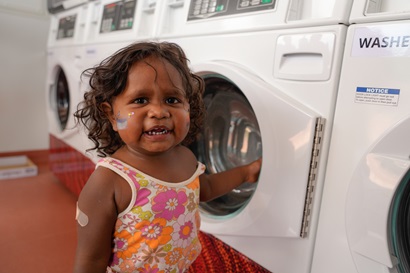
"This is a community-led solution to a real, everyday challenge. When people have access to clean clothes and bedding, it supports health, dignity and opportunity – and that has a lasting impact across the whole community and for future generations to come," said Liz Morgan-Brett, CEO of the Aboriginal Investment Group.
Scaling Impact and Closing the Gap
CSIRO's Indigenous-led evaluation of the Remote Laundries Project, conducted across multiple sites in the Northern Territory, shows the program is effective, scalable and adaptable to different community contexts. The findings highlight the importance of embedded Aboriginal governance, the project's patented laundry design, flexible program delivery and strong partnerships for program success.
With continued investment, the Remote Laundries Project has the potential to expand across Northern Australia, helping to advance the National Agreement on Closing the Gap .
Learn more about the Remote Laundries Project and CSIRO's evaluation .


