When Kristine Dalton (OD '07, MSc '10) first stepped into a meeting on Paralympic classification more than a decade ago, she had no idea it would change the trajectory of her career or the landscape of winter parasport.
Today, Dalton, a clinician‑scientist in the School of Optometry and Vision Science at the University of Waterloo, is preparing to travel to the 2026 Paralympic Winter Games in Italy to see her research put into action on the world stage.
Dalton's work has driven the most significant overhaul in classification rules for vision‑impaired Nordic and alpine skiing in more than 30 years. Traditionally, athletes were classified based on static measures of visual acuity and visual field in their best eye - criteria originally adapted from the World Health Organization's definitions of legal blindness. But these one‑size‑fits‑all standards didn't reflect the realities of sports.
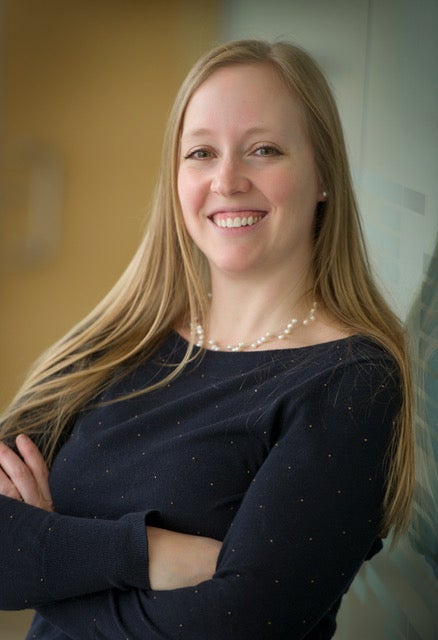 "Sports like alpine and Nordic skiing are incredibly dynamic," Dalton says. "Athletes move fast, navigate changing light, and read subtle shadows in the snow. The old rules didn't fully reflect what skiers actually need to see."
Drawing on earlier work she had done developing a dynamic visual acuity test using moving letters, Dalton began collaborating with Para Snow Sports, now governed by the International Ski and Snowboard Federation (FIS).
Over several seasons, her team conducted extensive studies examining which aspects of vision are most important for performance in high‑speed winter sports. They evaluated contrast sensitivity, colour perception, motion perception, visual fields, and both static and dynamic acuity - all with both eyes open, reflecting how athletes compete.
The research unfolded in two major phases. First, Dalton and her collaborators carefully measured the vision and performance of elite Paralympic athletes in competition, using years of raw timing data to determine how impairments affected results and where meaningful class boundaries should fall. Then she and her team worked with sighted participants to simulate various levels of vision impairment and identify the point at which performance meaningfully declined, which is key evidence for setting eligibility thresholds.
The results were transformative. The new evidence led to a lowering of the minimum impairment criteria and an expansion of allowable visual fields in both sports. In practice, this means more athletes are now eligible to compete - something Dalton calls "one of the most exciting outcomes" of the project. The research also informed new sport‑class divisions designed to ensure fairer, more competitive racing.
"The goal is always to ensure that the best athlete wins, not the athlete with the least impairment. Fair classification keeps sport competitive, keeps athletes motivated, and helps the sport grow."
The new rules were trialed in shadow form during the 2023-24 season and formally implemented in 2024-25. Dalton and her team are now running multi‑year validation studies at international competitions, including this year's Paralympic Games, to monitor how the updated system performs and where further refinements may be needed.
For Dalton, being invited by FIS to attend the Games is both a professional milestone and a personal triumph. A former university‑level athlete who faced her own significant health challenges as a teen, Dalton once imagined being at the Olympics herself. "Going to the Paralympic Winter Games in this way doesn't quite feel real," she says.
Her work in Paralympic sports has also opened new avenues in concussion research and rehabilitation, particularly for individuals with disabilities - an area where evidence remains scarce. Dalton now co‑chairs an international group advancing concussion guidelines for para-athletes and hopes insights from sport will help improve accessibility and safety across society.
"There's so much we can learn from Paralympic sports," she says. "If we can design fair, evidence‑based systems here, we can use that knowledge to make everyday life more inclusive too."
As she prepares to witness the impact of her work on the world stage, Dalton sees this moment as both a celebration and a beginning. "The athletes are the superheroes," she says. "I'm grateful to play even a small part in helping them shine."