
A breakthrough RMIT technology that captures and converts carbon dioxide into valuable products in a single process has won one of Australia's most prestigious science awards.
The C2X team from RMIT University, led by Distinguished Professor Tianyi Ma, received the 2026 Australian Museum Eureka Prize for Innovative Use of Technology, which recognises innovations with the potential to deliver significant benefits beyond the laboratory.
The Eureka Prizes are widely regarded as one of Australia's premier science awards, celebrating excellence in research, innovation, leadership and science engagement.
The RMIT team's system integrates carbon dioxide capture and conversion into a single process, reducing the cost, energy loss and engineering complexity of conventional systems.
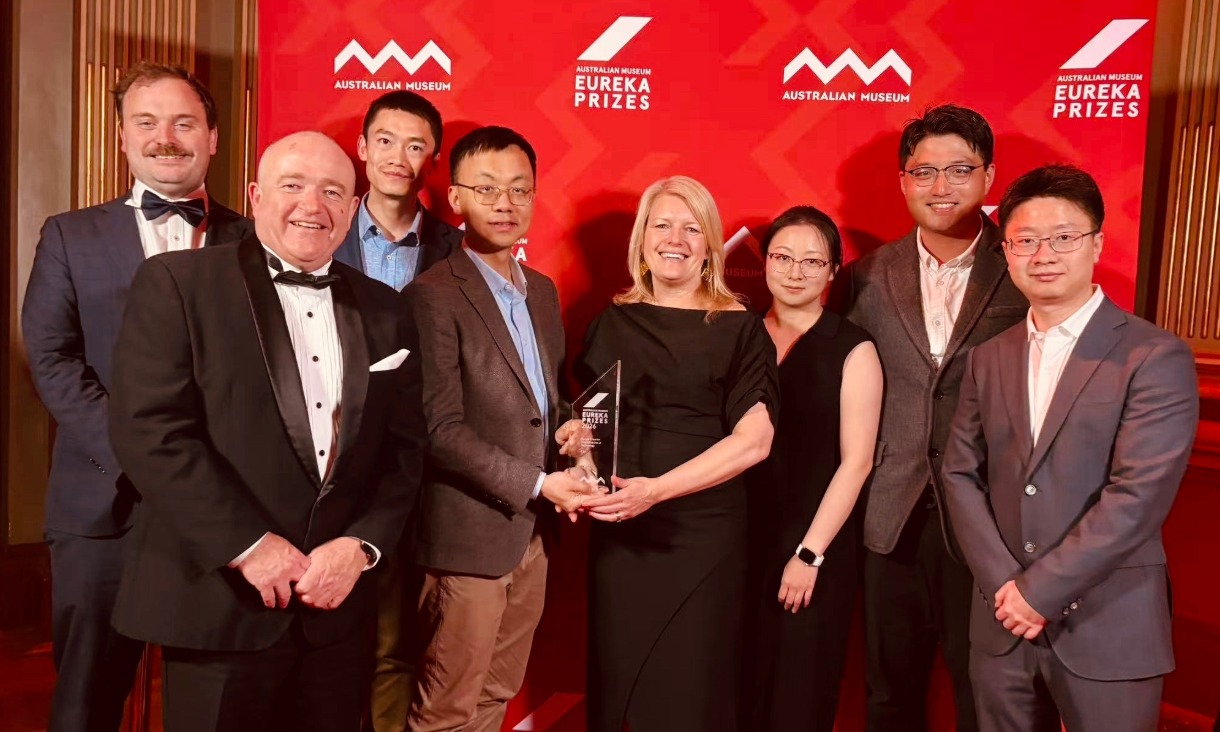 The RMIT research team and colleagues at the awards, including Disitinguished Professor Tianyi Ma and Jane Holt (RMIT Executive Director of Research Strategy and Services) holding the trophy.
 The technology offers a practical pathway for producing lower-emission fuels and value-added chemicals - including potentially jet fuel one day - from captured carbon dioxide, and has already been demonstrated with Victorian industry partners, including major industrial emitters and biogas manufacturers.
Ma said the award was an important recognition of the team's efforts to translate research into real-world solutions.
"It's a great honour to have our work recognised by the Eureka Prizes," he said.
"More importantly, it validates the importance of translating fundamental science into practical technologies that can make a real difference to industry and the environment."
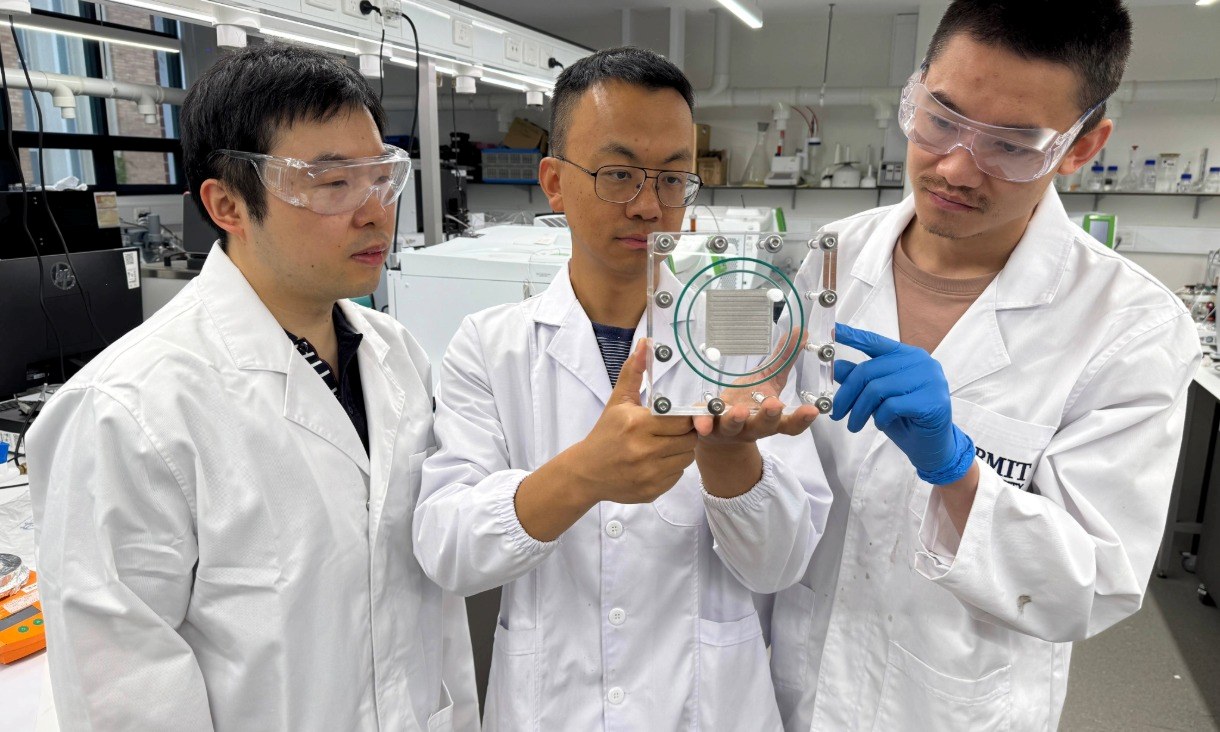 Dr Lei Zhang, Distinguished Professor Tianyi Ma and Dr Peng Li (left to right) in the RMIT University lab, with Professor Ma holding a key component of the team's 3 kW carbon conversion prototype device. Credit: Will Wright, RMIT University
 Developed at RMIT over several years, C2X addresses one of the world's most pressing challenges: reducing carbon emissions while supporting the transition to more sustainable manufacturing and energy systems.
"What inspires me is the opportunity to turn one of the world's biggest challenges, reducing CO₂ emissions, into an opportunity for innovation," Ma said.
"We want to develop technologies that are not only scientifically novel, but also practical, scalable and useful to industry."
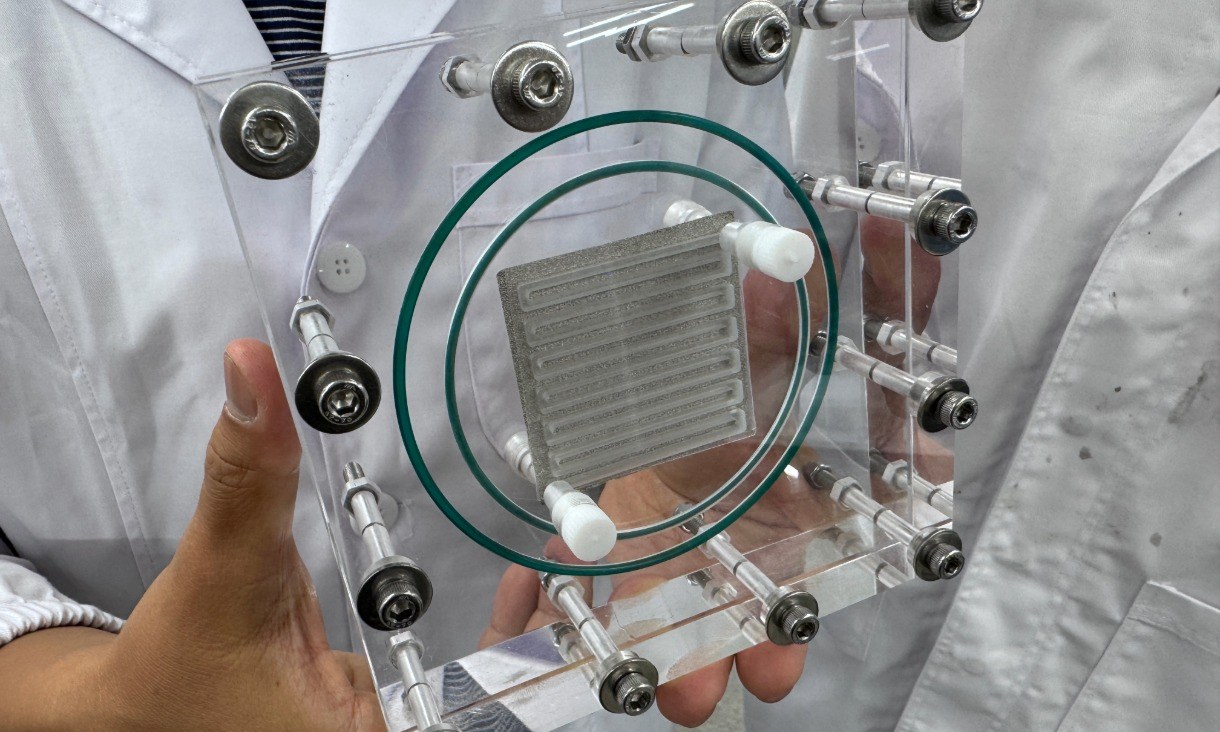 A key component of the team's 3 kW carbon conversion prototype device. Credit: Will Wright, RMIT University
 Next steps
The team is now focused on commercialising the technology and scaling its deployment.
Hart Bioenergy is supporting the project as a major supply chain partner, while Resi Ventures is an investment partner.
"Backed by our publications and patents, we are now working closely with technology manufacturers, major CO₂ emitters and venture capital partners to commercialise C2X," Ma said.
"By integrating CO₂ capture and conversion into a single process, we aim to reduce cost, energy loss and engineering complexity, and ultimately enable the production of lower-emission fuels and value-added chemicals from captured CO₂ at scale."
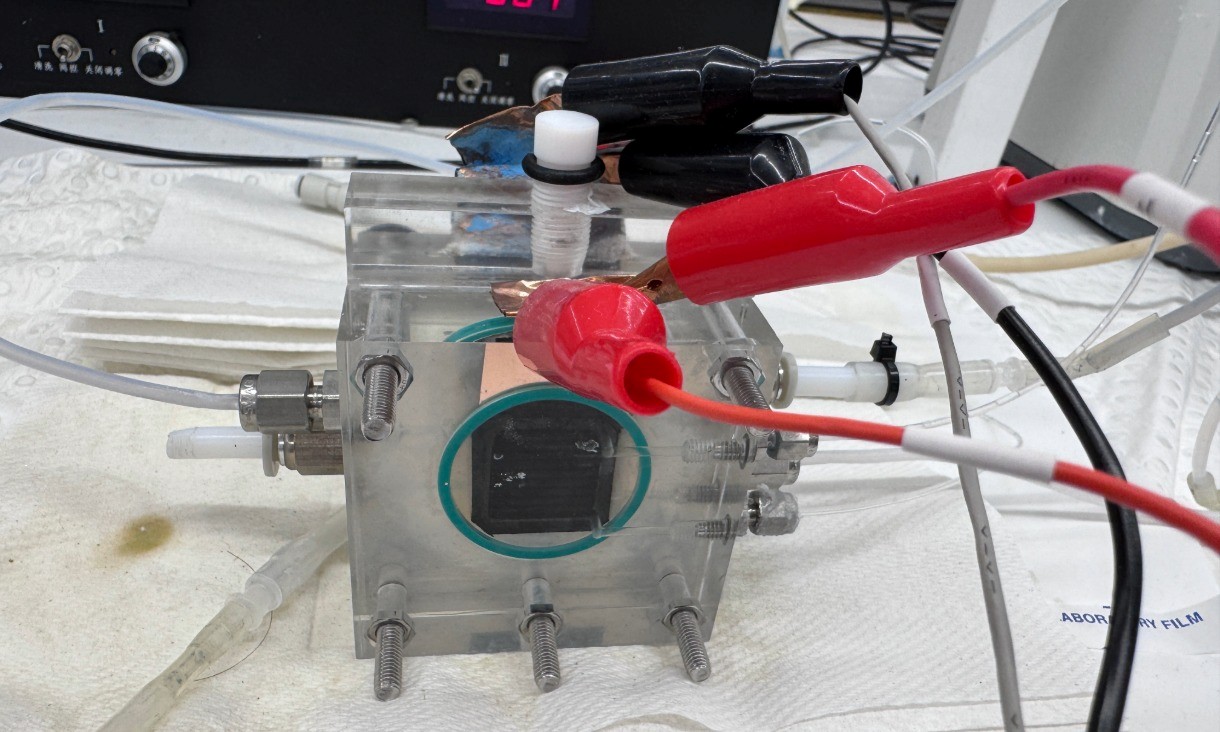 A close up of the team's smaller carbon conversion device during testing in the RMIT University lab. Credit: Will Wright, RMIT University
 RMIT Deputy Vice-Chancellor Research and Innovation, Distinguished Professor Calum Drummond AO, said the win reinforced the importance of investing in technologies with both environmental and economic benefits.
"What makes C2X particularly exciting is its journey beyond the laboratory," he said.
"The team has built strong industry partnerships, protected its intellectual property and is now pursuing commercial deployment.
"This is exactly the kind of research translation that helps turn Australian innovation into global impact."


