
I am writing this with my feet still sandy from Santa Marta in Colombia, and my heart fuller than when I arrived-because coming to the coast always fills me with motivation. This week, I participated in the First International Conference on Transitioning Away From Fossil Fuels.
This was a space I hoped would not merely be a forum for political declarations about ending coal, oil and gas, but a genuine conversation about how to make the clean energy transition possible. With the participation of over 50 countries from around the world, the dialogue brought together local communities, civil society organizations, Indigenous Peoples, small-scale farmers, Afro-descendant communities, academics, think tanks, intergovernmental institutions, and many other stakeholders to discuss a subject as central as energy and a safe climate.
A City That Says It All
Santa Marta is no neutral backdrop; it is a Caribbean city guarded by the Sierra Nevada-the largest coastal mountain range on the planet-the source of the watersheds that supply the entire region, and home to Indigenous Peoples who know and protect it. Yet, it is also a city battered by the climate crisis. Just recently, a heavy swell washed tons of plastic onto its beaches, harming wildlife and stripping away the livelihoods of those who depend on the sea. It serves as a stark reminder that plastic pollution is yet another major impact left behind by fossil fuels.
Discussing the energy transition here-in a region boasting some of the highest solar radiation levels in Colombia and winds that never cease-raises an inevitable question: what are we waiting for? And who stands to benefit from our delay in making this transition?
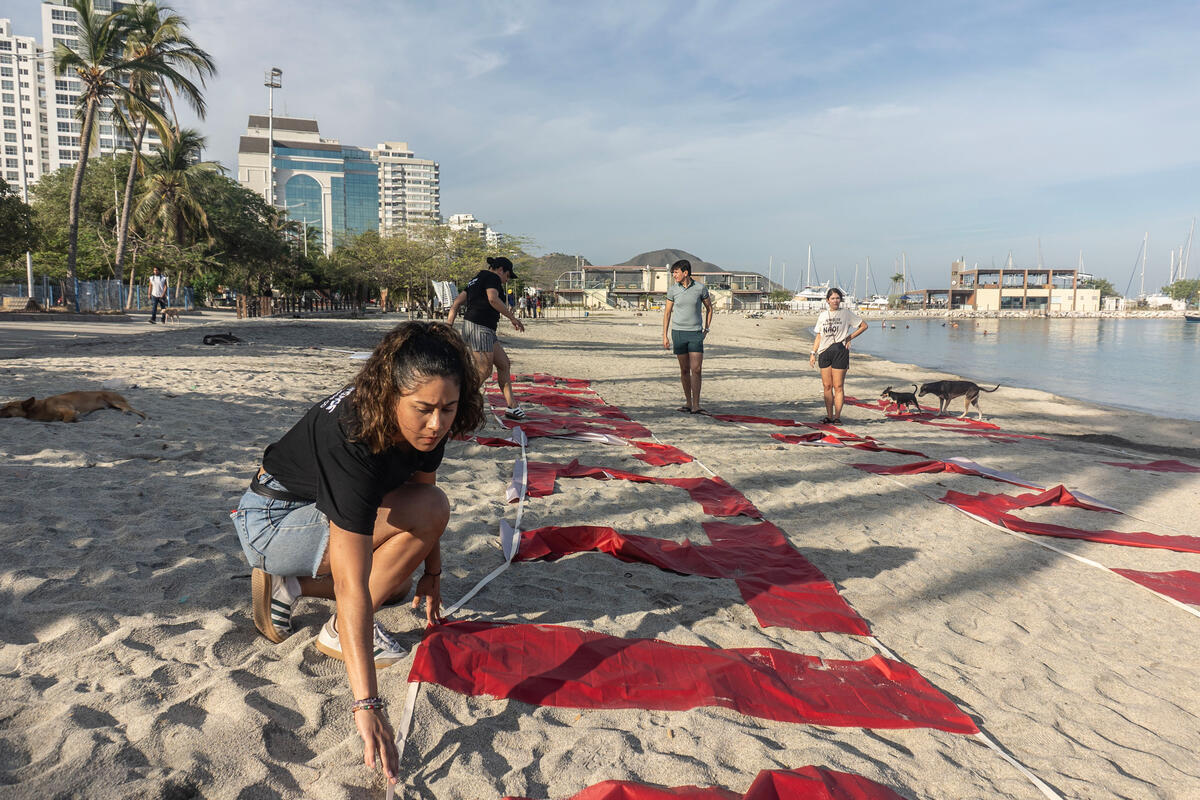
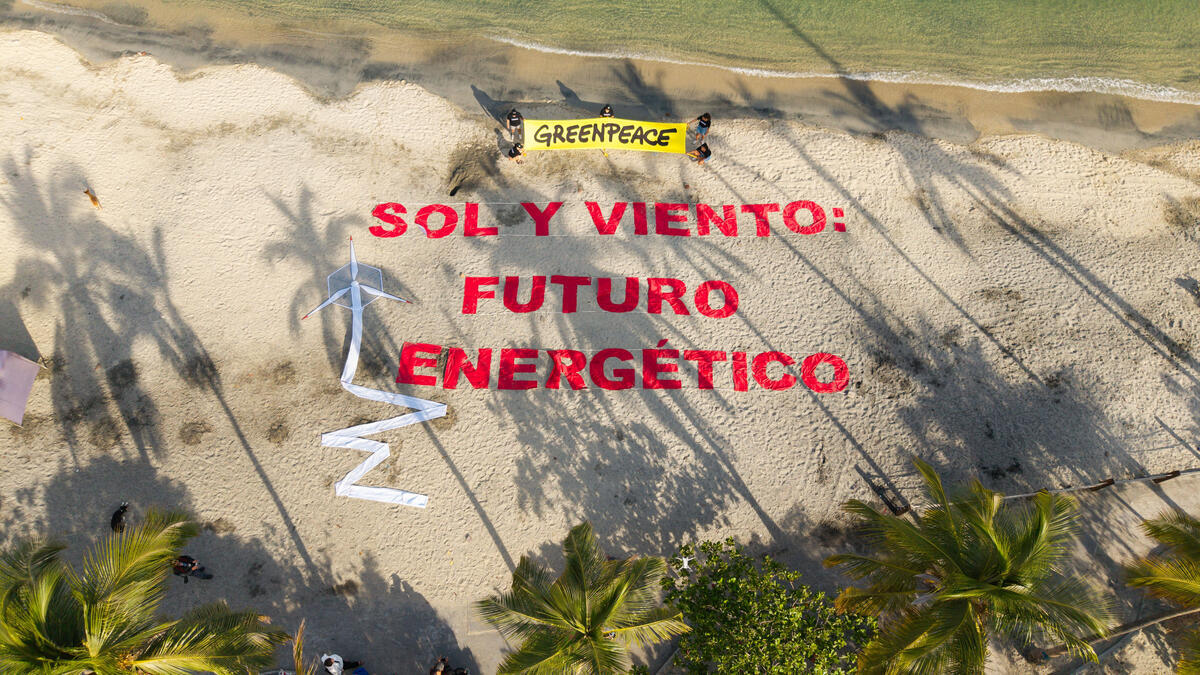
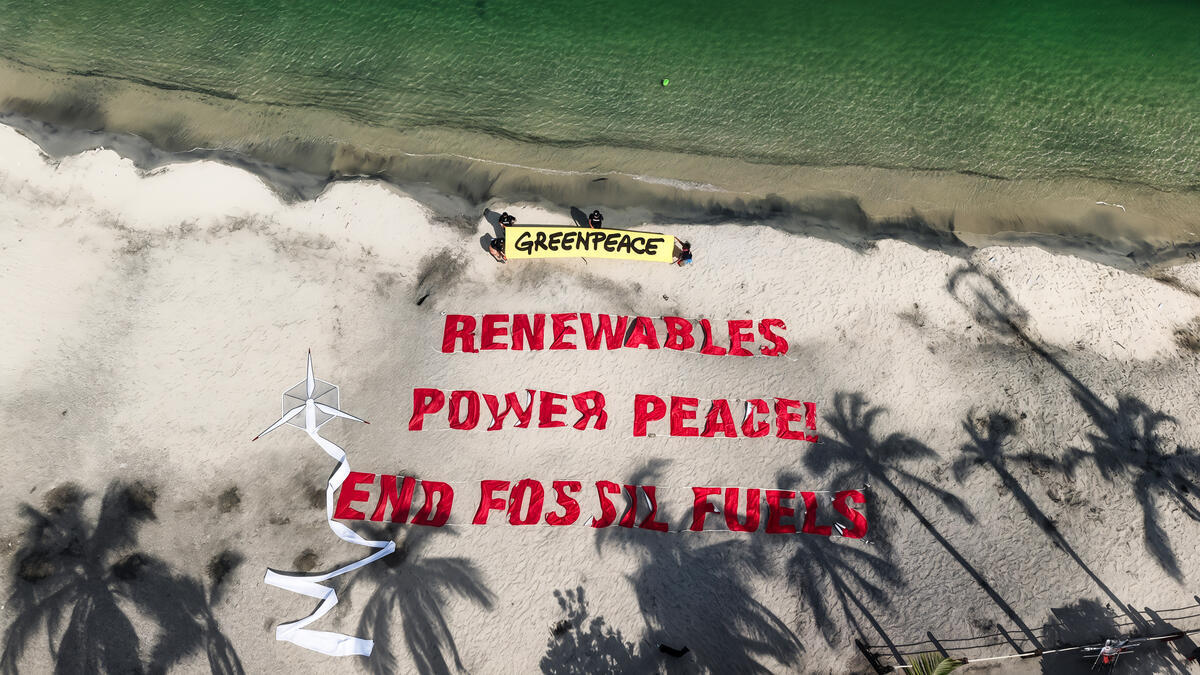
That is why we went to the beach and wrote in the sand:
SUN AND WIND: OUR ENERGY FUTURE
What We Built Together
For two days before, I worked alongside civil society organisations, Indigenous Peoples, academics, and institutions from across Latin America during the fifth Retreat for Latin American Civil Society Organizations. Together, we crafted a shared definition of the essential elements that must be included in the national roadmaps designed to halt deforestation and guide our countries' transition away from fossil fuels. We reached agreements regarding citizen participation, financing, product traceability, and the governance of our forests-aimed at ensuring that a standing forest holds more value than a destroyed one, and that the transition is carried out *with*, *by*, and *for* the people.
It was not easy. Deforestation and energy issues are not experienced in the same way across the world. In the case of deforestation, Latin America produces a large portion of what the world consumes; such a meat, soy, wood, minerals, among other commodities. Yet today-due to a lack of regulation, information, and traceability-this production destroys ecosystems vital for life, jeopardises our water and unique species, and generates tons of greenhouse gas emissions. Hearing this directly from the voices of those who live through it in their own territories lends greater weight and a human face than any statistic. And these communities can no longer be the last to learn about decisions that affect their territories.
My lasting impressions
The most important things, however, did not happen within the working sessions. They happened out on the streets-talking with taxi drivers, students, and vendors. When asked if they would like their home energy to come from the sun-which shines down on them all year round-and for that energy to be more accessible and affordable, the answer was always the same: "Of course. What needs to happen to make that possible? How would it affect us?"
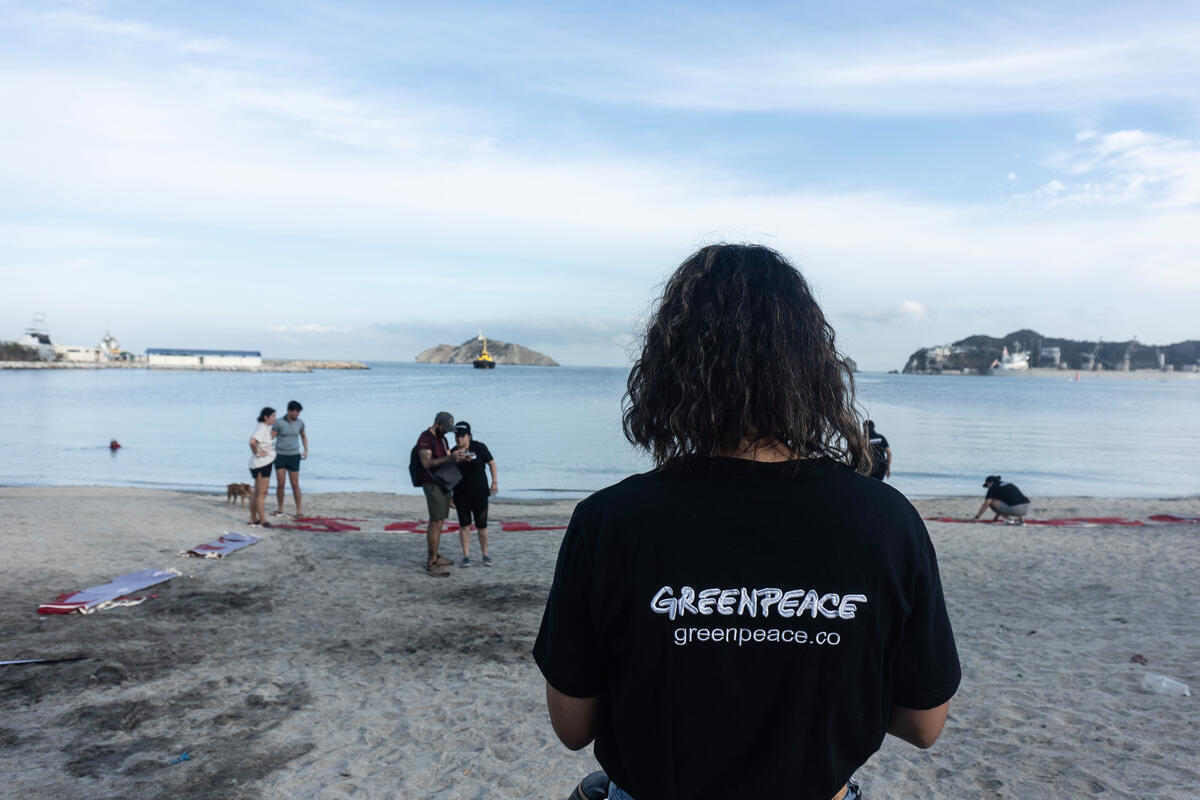
These are the questions that we at Greenpeace carry into every decision-making space, representing the people who could not be here in person but who have every right to have someone speak on their behalf. We have four years left until 2030 to achieve several key goals: halt and reverse deforestation and to triple renewable energy capacity to reduce global emissions as part of a fair, fast and funded energy transition. Four years for governments to transform intentions into concrete roadmaps, complete with clear targets and genuine public participation. That is not a lot of time.
I leave with greater clarity than when I arrived but with the same unwavering conviction as always: this conversation can no longer be left solely to the experts.
A just energy transition, making the fossil fuel polluters pay and the protection of our Amazon are built by more people demanding change, asking questions, and getting involved.
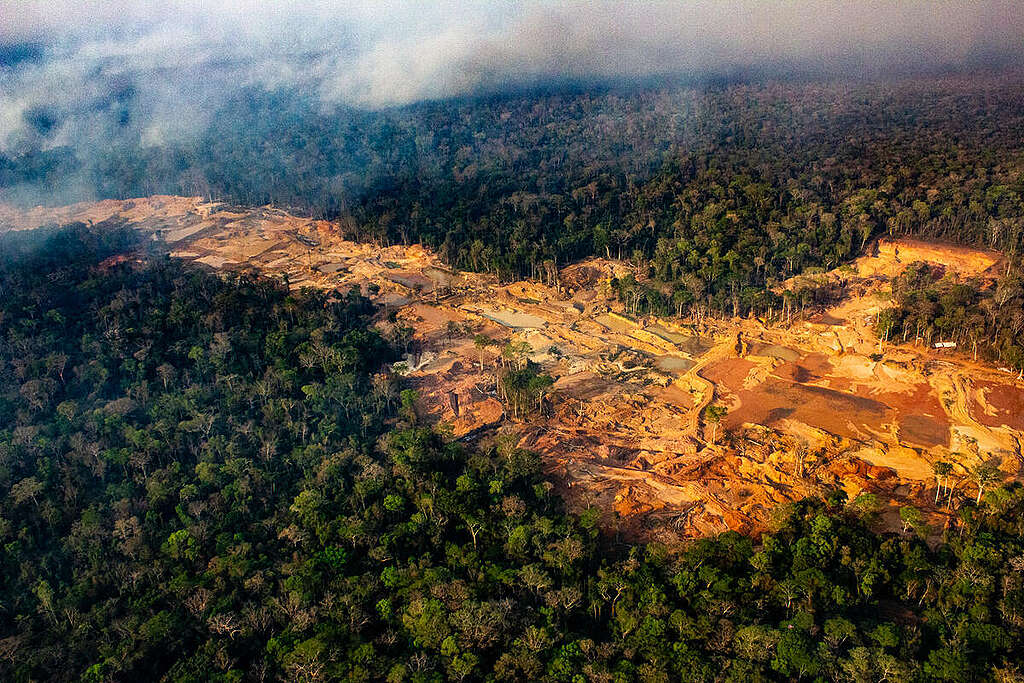
Ask political leaders to act on their promises to stop Amazon destruction.
Laura Caicedo is the Campaigns Coordinator with Greenpeace Colombia.


