
Along the southern coastline, researchers dive deep to collect seaweed from kelp forests and rocky platforms, taking small samples and the location of each sample. Back in the lab, the specimens are preserved – some dried, others kept alive – so they can be studied, cultured and sequenced.
Much of the seaweed lining our beaches, which shapes underwater forests and feeds marine life, remains scientifically mysterious. Researchers estimate that as much as half of seaweed species are still unknown to science – not because they're rare, but because many look deceptively similar and were historically grouped together. 
Seaweeds create vital underwater habitats, support marine life, help stabilise coastlines and are becoming important ingredients for new industries. Understanding where different species come from enables researchers to make informed decisions about conservation, how to protect and preserve underwater environments and monitor changes to the environment.
Dr Cintia Iha, seaweed taxonomist and research scientist at CSIRO, explained that identifying seaweeds was traditionally done by eye and hand, using features like colour, texture and microscopic sections.
"Taxonomy is the science of identifying and naming a species, but it's also like an art. You make sections, look at cells and structures, and sometimes you can guess a species by its smell or the way it feels," said Dr Iha.
"Some seaweeds have a sweet smell – for example, Undaria pinnatifida, the seaweed that produces wakame, whereas others are noticeably pungent like ammonia. Those scents, plus the texture and feel – slimy, brittle, rubbery, velvety, even crunchy – can provide clues about what a sample might be."
Today, that skill is being fused with molecular technology to update and refine the seaweed family tree, changing how new compounds for health, materials and climate solutions are discovered.
A shifting methodology
Two seaweeds might look similar, but their DNA can tell a very different story. 
As DNA sequencing has advanced, researchers have repeatedly found that one 'species' is actually several. Dr Iha recalled an example where a seaweed long thought to be a single species turned out to be four or five different species once scientists examined its DNA.
"Years ago, identification was often subjective – 'this seaweed looks like that one, so they're the same'. Molecular data gives a more objective view. We can test whether groups are truly the same species, or understand how they differ," explained Dr Iha.
But modern technology doesn't replace the old rules, nor does it rewrite them.
"An organism is much more than its DNA. Modern taxonomy brings field skills together with molecular tools. That's how we get the complete picture."
The quiet biodiversity of Australia's seas
Along Australia's southern coastline – especially around the Great Southern Reef, which stretches around the southern half of the continent and Tasmania – seaweeds have evolved in relative isolation, creating a collection of species found nowhere else. 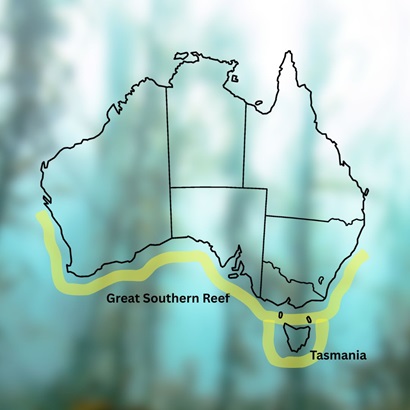
"These coastlines host an old and varied marine environment, shaped by currents, temperature gradients and sheltered micro‑habitats," said Dr Iha.
"The Great Southern Reef has a mix of cold and milder waters that creates small pockets where different species can evolve. It really is a hotspot, not just for the number of species, but for how many are unique to this region."
This diversity comes at a time when the expertise needed to study it is increasingly rare. Australia has a long tradition of seaweed taxonomy, but many of the specialists who built that foundation have since retired. A small group of the next generation of taxonomists, including Dr Iha, is now stepping in to continue the work.
Australia's living algae library
Supporting this effort is CSIRO's Australian National Algae Culture Collection (ANACC) – a living 'library' of more than 1,000 strains of algae, including microscopic algae and seaweeds, from across Australia, Antarctica and beyond. Each strain is cared for and maintained so it can be studied, compared or used in future research.
"A strain is basically a living snapshot of what was in the ocean at a certain place and time. Because it's still alive, we can study it, compare it with other species, or even use it to help restore ecosystems," Dr Iha explained.
Keeping that snapshot alive takes dedication. Microalgae cultures are regularly renewed on a set schedule – typically every three to six weeks for faster‑growing species and less frequently for slower strains. Technicians transfer each culture into fresh, sterile media and maintain 'parent, child and grandparent' lines so there is always a backup if one falters.
"Seaweeds can also grow in cultures. Imagine the process of growing plants in pots. What we're doing in the living library is similar, although obviously a little more complex because it requires sterile seawater and supplying the seaweed with the correct nutrients."
Maintaining living cultures is important. One example is giant kelp, a seaweed that can reach 60 meters in height and forms extensive sea forests, which are under threat due to increasing seawater temperatures.
As these underwater kelp forests decline, researchers are preserving reproductive cells which can be kept for years and used to support restoration projects – including the ability to select strains that may cope with changing conditions, like warming waters.
"We're helping safeguard species. If a species like giant kelp were ever wiped out from the natural environment, we could use the cells we store to grow new plants. It's one way we can help protect seaweed biodiversity."
Reimagining bioprospecting
Bioprospecting is the process of looking for useful natural compounds in living organisms – things like oils, gels, pigments and chemicals that could become new medicines, foods or materials. In seaweeds and algae, these compounds can have huge value, but finding them has historically taken a lot of time.

Scientists would grow a species, extract its different compounds and then test each one to see if anything promising turned up. It's careful work which can be slow, costly and often a matter of trial and error.
Dr Iha and her colleagues are working on a way to make this kind of bioprospecting faster and more targeted.
"Instead of relying on trial and error, we study the biology of each species in depth – observing its molecules, the proteins it makes and the natural chemicals already inside it. Together, these pieces provide us with important clues about what the species might be capable of producing."
This approach could make a big difference. Seaweeds already support industries – from the nori used in sushi to the ingredients that help thicken creams and food products. There's also growing interest in using algae for things like omega‑3 oils, new medicines, bioplastics and even supplements that help reduce methane from cattle.
"There are similar prediction tools for bacteria and fungi, but not for algae. That's what makes this work exciting."
Building the family tree
Taxonomy can seem distant from everyday life, but it's a quiet foundation for marine science.
When researchers understand exactly which species they're working with, we can protect the right habitats, restore damaged ecosystems and choose the best seaweeds to grow for food, materials or other products. 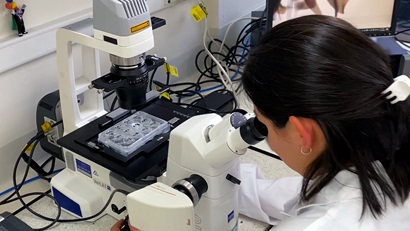
As Australian scientists revise and refine the seaweed family tree, the benefits ripple outward: better conservation decisions, more effective restoration efforts and the ability to unlock useful compounds.
"This is because understanding evolutionary relatedness is the best prediction tool we have to navigate seaweed diversity."
"We're building the foundations for the next generation of ocean solutions. When we know what a species really is, we can finally understand what it's capable of," concluded Dr Iha.


