
Key points
- Ashmore Reef Marine Park is a refuge for birds and turtles, as well as an important biosecurity sentinel for mainland Australia.
- The reef's unique ecosystem is under threat from invasive species such as buffel grass and tropical fire ants.
- CSIRO scientists are part of restoration efforts, from controlling and eradicating pests and weeds to monitoring native populations.
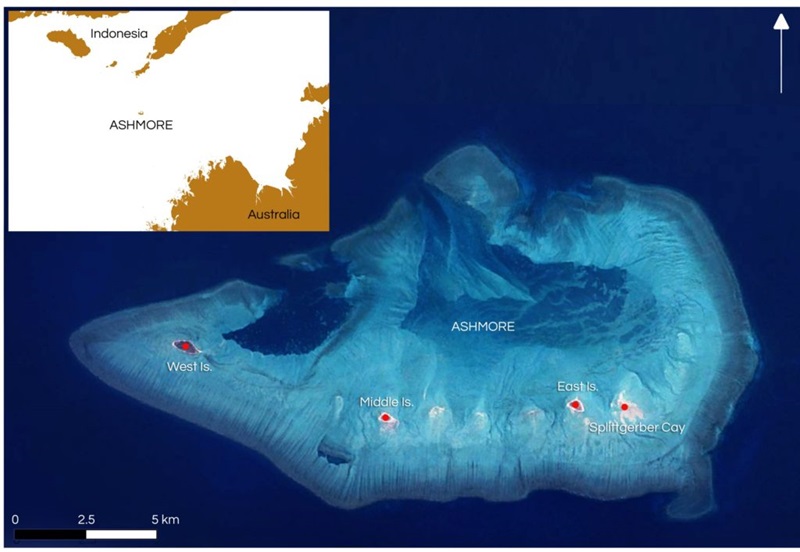
Off the north-west coast of Australia, 630 kilometres out to sea, lies a reef that serves as a first line of defence for unique ecosystems, shielding the mainland from biosecurity threats. The reef boasts a sparkling turquoise sea, lapping gently against powder-soft white beaches.
Each year, around 100,000 birds nest here , transforming the islands into a vibrant spectacle of colour and sound. But this sanctuary is under siege. An ecosystem that once thrived is challenged by invasive weeds and animals.
CSIRO is part of the team put together by Parks Australia through the Ocean Discovery and Restoration Program . The team is responsible for understanding what is behind these threats and working towards protecting and restoring the marine park into the future.
Ashmore Reef is a critical stopover for many migratory birds such as the Greater Frigatebird and the White-tailed Tropicbird. The reef and sand cays offer a place for them to rest and refuel before continuing their long journey south, away from the northern hemisphere winter and toward summer warmth.
Beneath the surface, lagoons, coral gardens and seagrass meadows provide shelter and food for marine life, making Ashmore Reef a biodiversity hotspot.
How far we'll go
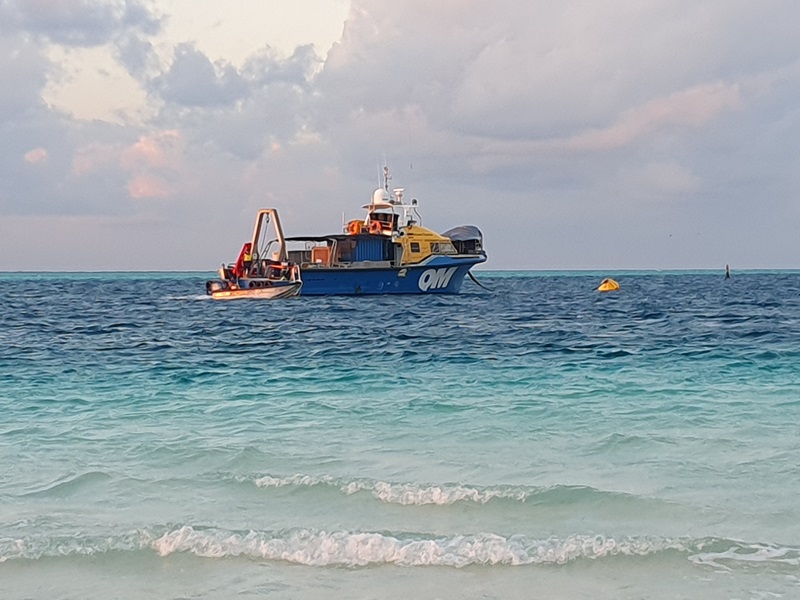
Reaching Ashmore Reef is no small feat. However, there is beauty in the isolation.
"You sail for two days from the mainland out to the reef, and everything you need for the scientific experiments, research and monitoring, you need to bring on the boat," explained Magen Pettit, a research assistant with CSIRO's Plant Biosecurity Group who has made four voyages to the reef.
"It's hard work on the islands – long stretches in the sun – but at night, the stars are incredible, and you fall asleep to the calls of seabirds."
Magen's passion for the reef is clear.
"I love birdwatching. When the first recorded Pacific subspecies of the Red-billed Tropicbird was spotted, I ran from one end of the West island to the other to see it. That was an amazing moment.
"Protecting the habitat for these species is so important, it's nice to get reminders of what we are protecting," she said.

More than meets the tide
Despite its beauty, Ashmore Reef faces serious challenges. Over time, invasive species including tropical fire ants, rodents, buffel grass and the Asian house gecko have been introduced to the Reef. Until recently, the impact of these species was unknown.
To tackle these challenges, the team conducted a three-phase plan to understand, protect and restore Ashmore Reef's ecosystem.
Dr Mariana Hopper, former CSIRO Environmental Biosecurity senior research scientist explains the process.
"Phase one was initial reconnaissance, finding out what species were present on the islands," Dr Hopper said.
"Phase two involved extensive research, drawing on decades of data from recent and historical expeditions and even handwritten notebook logs dating back to the 1960s. This wealth of information helped create a comprehensive restoration plan.
"Finally, phase three put that plan into action, with scientists returning to the reef to implement targeted measures aimed at reversing the damage and safeguarding its biodiversity," she said.
The (not so hidden) buffel grass threat
Buffel grass was rampant on West Island, and a priority weed to be removed under the Ashmore Reef Islands Restoration Plan, as it negatively transforms the habitat. 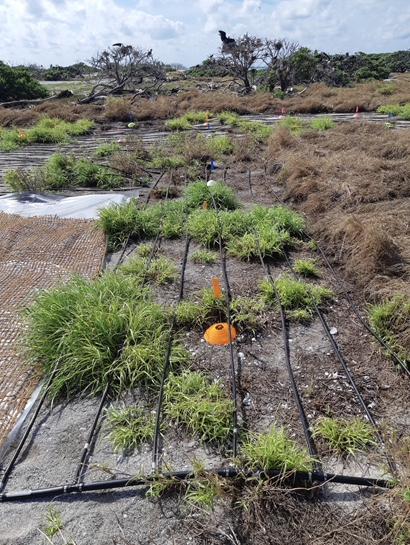
"Buffel grass became quite a threat because many birds like to nest directly on the sand, and it chokes out the bare sand that many native animals like to shelter and nest in. It can also outcompete native species, reduce native grass cover and restrict regeneration of shrub species," said Dr Hopper, whose team focused on the management of invasive weeds.
Because many birds return to the same spot to nest, finding it overgrown or unsuitable can leave them disoriented, forcing them to search urgently for another location – sometimes without success.
To combat this threat, the team dug out an estimated 12 tonnes of buffel grass over three voyages and experimented successfully with irrigation techniques to force seeds to germinate out of season – then die – helping control the spread.
Magen Pettit explains the team also deployed some shelters for the birds.
"We also placed 60 A-frame wooden bird shelters for Red-tailed Tropicbirds to nest and find shade in, because of the limited vegetation due to the buffel grass takeover of the island," she said.
Combatting tropical fire ants
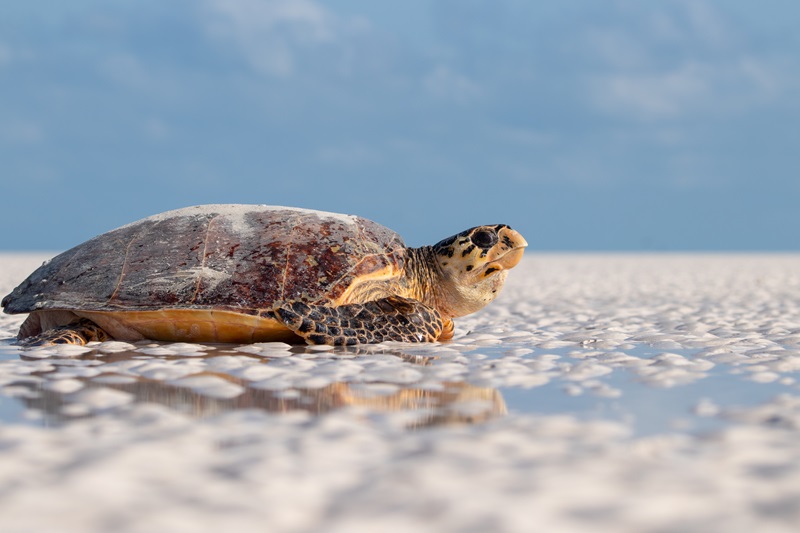
The tropical fire ant (Solenopsis geminata) poses an additional high threat. They get their name from the burning sensation caused by its powerful sting. It poses a serious threat to ecosystems and economies worldwide. An aggressive, territorial predator, it uses its powerful sting to attack nesting seabirds and hatchlings, as well as turtle eggs and hatchlings.
"We saw a turtle hatchling that came out and got covered in ants immediately," said Dr Hopper.
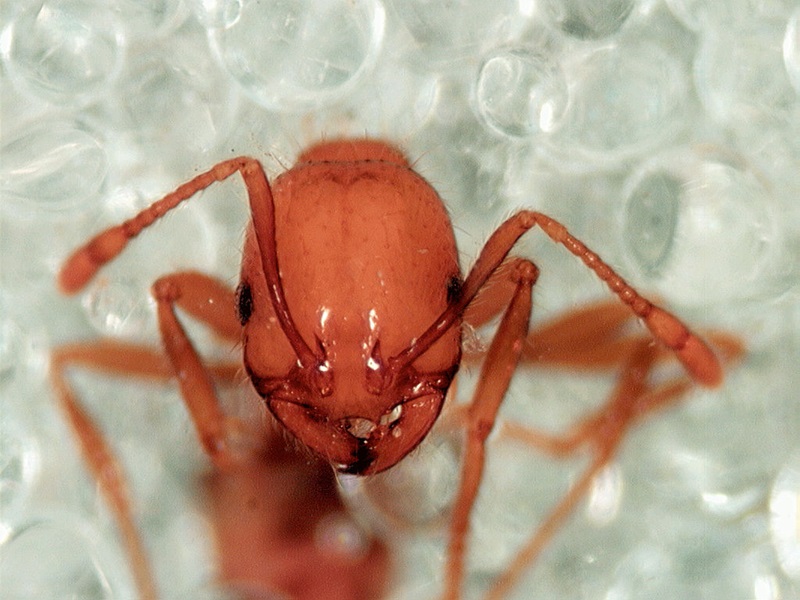
Magen was also involved in the research and experiments on the ants.
"We trialled hydrogel, a water-absorbing polymer that attracts ants who chew it and take the pieces back to the nest. If combined with an insecticide, it could kill large portions of the population, and ultimately the queen," said Magen.
"However, no ant-specific poisons currently exist. As a result, any insecticides used on Ashmore Reef would likely affect the hermit crabs who share the space. So, we only tested the effectiveness of the hydrogel using water, to see if hermit crabs would also be attracted to them as a food source."
Future solutions may include RNAi technology, undergoing development by CSIRO, which is species-specific and will not impact the hermit crab population.
(Ash)more to come
Without continued intervention, vital nesting grounds could be overrun by weeds, migratory birds could lose vital stopovers in their long journeys, and Australia's biosecurity buffer could be weakened.
As the sun sets on phase three of the restoration plan, CSIRO will continue to support Parks Australia on weed removal, native shrub restoration and the management of invasive animal species to protect the ecosystem and have less of an impact on breeding seabirds.

For this important work, CSIRO has partnered with Parks Australia, Monash University and University of Western Australia, as part of the Oceans Discovery and Restoration Program.


