
Plastic recycling could become far more effective thanks to a new technique that restores the strength of damaged engineering plastics by repairing them at the molecular level, researchers at Tohoku University have demonstrated.
The team developed a method to restore the mechanical strength of degraded polybutylene terephthalate (PBT), a durable engineering plastic widely used in automotive parts, electrical components, and industrial products. By adding a chemical compound known as a chain extender during recycling, they were able to reconnect broken polymer chains and recover the material's strength to a level close to that of new plastic.
The findings address one of the biggest challenges facing plastic recycling. Many plastics gradually weaken during use as heat and moisture break apart the long molecular chains that give them their strength. Although these materials can be melted and remolded, conventional recycling methods often fail to restore their original mechanical performance, limiting how they can be reused.
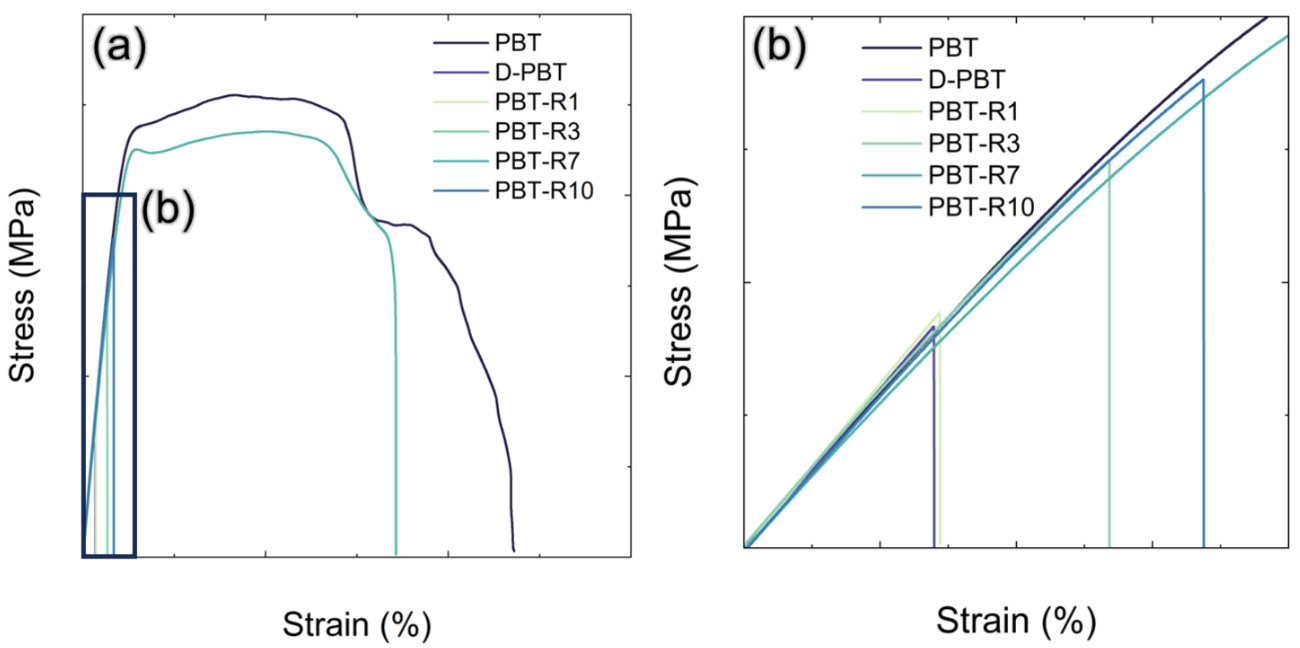
Rather than simply reshaping degraded plastic, the researchers focused on repairing the underlying molecular damage. They added a chain extender called PPDI during the recycling process, allowing broken polymer chains to reconnect. At an optimal concentration, the treatment restored the plastic's tensile strength to nearly that of virgin material while also recovering much of its original flexibility.
The team also uncovered a clear relationship between molecular weight and mechanical strength. By analyzing the recycled material using tensile testing, gel permeation chromatography, infrared spectroscopy, and end-group analysis, they showed that the recovered strength follows a Fox-Flory-type relationship. This means the future performance of recycled plastics can be predicted from their molecular characteristics rather than relying on trial-and-error processing.
"This study demonstrates that recycling can be approached scientifically," said Associate Professor Hiroki Kurita of Tohoku University's Graduate School of Engineering. "By understanding how molecular weight affects mechanical strength, we can transition from empirical methods of recycling to predictive ones."
The findings provide a practical design guideline for improving the recycling of engineering plastics. While the study focused on PBT, the researchers believe the same concept could be applied to other thermoplastics that degrade through similar molecular chain breakage. The work bridges the gap between molecular-scale repair and the mechanical performance required in real-world applications.
The researchers hope their approach will contribute to a more circular materials economy by enabling high-performance plastics to be reused instead of discarded. As demand for sustainable manufacturing continues to grow, repairing polymers at the molecular level could help reduce plastic waste, conserve valuable resources, and extend the lifespan of engineering materials.
Details of their study were published in Composites Part A: Applied Science and Manufacturing on June 23 2026.
- Publication Details:
Title: Molecular-Weight-Driven Recovery of Mechanical Strength via Chain Extension: A Fox-Flory-Type Approach to Polymer Recycling
Authors: Koya Otsuka, Zhenjin Wang, Hiroki Kurita, Fuminori Kondo, Masato Ikeda, Fumio Narita
Journal: Composites Part A: Applied Science and Manufacturing


