
Discovery offers new insight into protein clumping seen in neurodegenerative diseases
University of Wollongong (UOW) scientists have uncovered, for the first time, exactly how two of the cell's "helper" proteins operate as a rescue crew for misfolded proteins, a discovery that sheds new light on the molecular breakdown that underpins neurodegenerative diseases.
Using advanced imaging techniques capable of tracking individual protein molecules in real time, the team from UOW's groundbreaking Molecular Horizons watched two chaperone proteins, Heat Shock Protein70 (Hsp70) and Hsp90, in action as they worked together to ensure that luciferase was able to fold into its correct three-dimensional shape.
Special 'helper' proteins, called chaperones, are the cell's first line of defence. They continually monitor other proteins to ensure they are correctly shaped, stepping in to fix or refold them when something goes wrong. Until now, scientists have been unclear about how chaperone proteins work together to prevent proteins from misfolding
As the folding progressed, the advanced imaging method they developed allowed the scientists to see the molecular repair job occur in real time. The study was published this week in Science Advances.
Every human cell contains billions of individual protein molecules, and for many, once they are made, they must be folded into a correct shape to do their biological job. If this folding process fails, proteins can become damaged, clump together, and build up in cells, a process that is strongly linked to the progression of neurodegenerative diseases, such as Motor Neurone Disease, Alzheimer's, and Parkinson's.
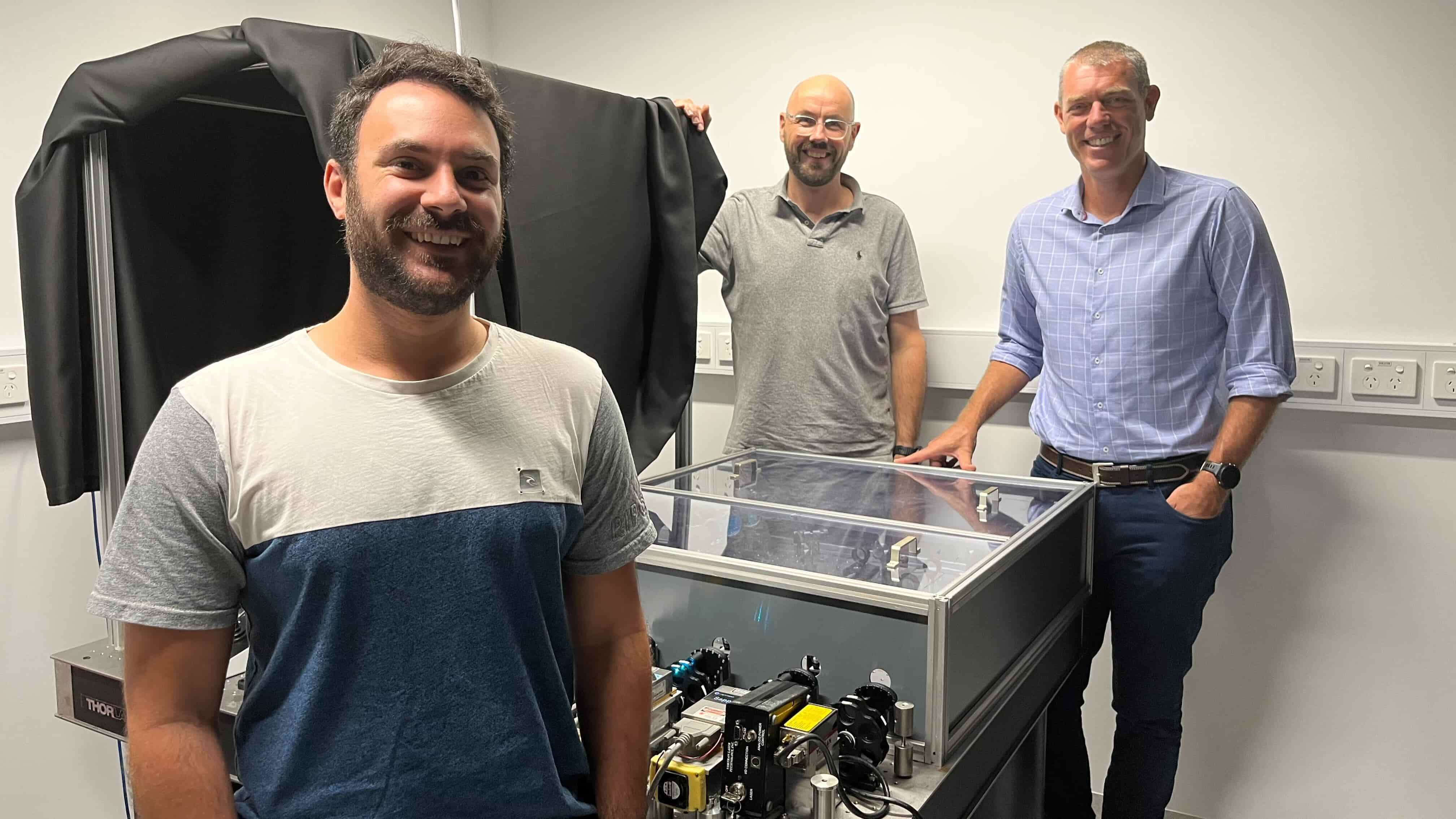
The UOW team used state-of-the-art microscopes that allowed them to watch as the protein luciferase, the enzyme that gives fireflies their glow, was folded by Hsp70 and HSp90. Luciferase protein only produces light once it has folded into exactly the right shape, which gave the team a visual way to track the chaperone proteins as they assisted luciferase to fold.
"We've essentially watched, for the first time, how the cell's protein repair crew works together to protect against protein misfolding and clumping. This gives us an invaluable insight into how cells prevent the build-up of harmful misfolded proteins," said study co-author Professor Heath Ecroyd, a renowned researcher into neurodegenerative disease.
The study revealed Hsp90 can rescue proteins that have become trapped in a non-functional state by Hsp70, giving them another chance to fold correctly. Hsp90 was also shown to actively use cellular energy to guide proteins through a series of controlled steps, reducing errors along the way and promoting healthy protein function.
The findings captured a previously unknown coordination system: one chaperone effectively manages the tendency of another to hold on to a protein for too long, and in doing so ensures that folding is able to succeed even under conditions that would normally cause it to fail.
"This is complex and fundamental research, but this type of research is exactly what is needed to understand what happens at the molecular level in disease. This type of research underpins future medical breakthroughs," Professor Ecroyd said.
"By revealing how cells naturally prevent proteins from misfolding and clumping, it opens new avenues for developing therapies that could improve the lives of people affected by MND, dementia, Parkinson's disease, and other conditions linked to protein damage and aggregation."
Rather than managing symptoms of these diseases after the cellular damage has occurred, the researchers hope insights like this could help in the development of therapies that support or restore the protein folding process itself, preventing or slowing the disease process at its root cause.
About the research
'Direct single-molecule visualization of Hsp90-mediated relief of a Hsp70-folding block', by Nicholas R. Marzano, Bailey Skewes, Shannon McMahon, Lauren Rice, Dezerae Cox, Antoine M. van Oijen, and Heath Ecroyd, was published in Science Advances: https://www.science.org/doi/10.1126/sciadv.aeg5464


