
Reporting by the University of Queensland project team
Switching from transplanting to direct-seeded rice (DSR) helped farmers in Savannakhet, Laos cope with labour shortages. DSR is where seeds are sown directly into the main field, bypassing nursery raising and transplanting.
However, this switch brought a new problem: fast-growing weeds competed with young rice and contaminated grain, and forced families to spend long days hand-weeding or buying expensive herbicide. Farmers used to say weeds 'steal both our harvest and our time'.
Through an ACIAR-funded project, researchers, led by The University of Queensland, and extension staff from Laos, Cambodia and Australia worked side by side with farmers to test a different approach: 'weed-smart' DSR.
A suite of solutions
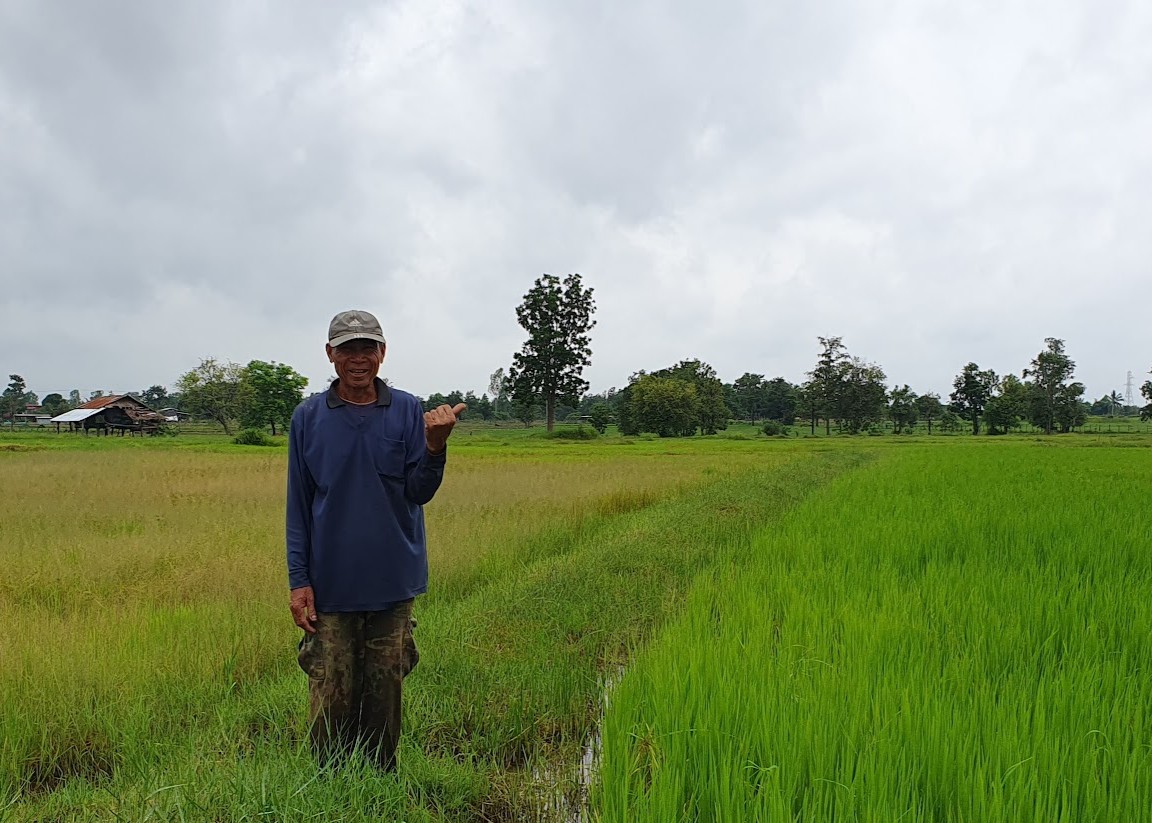
Instead of relying on a single solution, the team co-designed packages of solutions that combined:
- certified seed and better land preparation
- drill or drum seeding instead of random broadcasting
- early flooding at the right growth stage
- mungbean intercropping in rainfed lowland areas
- carefully selected herbicides and mechanical weeders where appropriate.
In the rainfed lowlands of Laos, these packages reduced weed pressure, reduced the weed seed bank, increased rice yield by about one-third and more than doubled farm profit compared with local practice.
One woman farmer explained that, in a good season, the package meant 'less time bent over the field, and more time spent for self and family'.
In the irrigated systems in Laos and Cambodia, integrated weed management (IWM) reduced weed biomass by around half, improved grain quality by lowering weed seed contamination, and increased profits by 40-120% per hectare. Such gains can mean more food for families and better support for essentials, like children's education.
Women's work, shared benefits

Because women do much of the weeding, they felt the impact of labour savings first.
In focus group discussions in Laos, women involved in the project shared that the time saved helped them diversify their income (including paid work) and feel more confident taking part in farm decision-making.
Project partners also made sure women were present not just as participants, but as trainers and leaders. Almost half of the 49 Master Trainers trained in weed identification and IWM were women. Many now lead farmer field days and provide technical advice within their districts.
Building skills that stay
Beyond the farm, the project has strengthened national capacity. This will outlast any single project cycle.
At Cambodia's Royal University of Agriculture, weed science teaching has been updated using local examples from farmer fields. Hundreds of students now graduate each year with a better understanding of DSR, safe herbicide use and IWM.
In both Laos and Cambodia, Master Trainer programs and farmer training have strengthened practical weed identification and decision-making. Among engaged farmers who participated in training and on-farm activities, there is now a clearer understanding of which herbicides control which weeds (and when non-chemical options are more appropriate), supporting more targeted, safer and cost-effective weed management.
Young researchers have also been involved in the project conducting their undergraduate, Master's and PhD research projects as aspects of the broader activities. Some now work as lecturers, government officers or research staff, taking weed-smart thinking into classrooms, ministries and new projects.
Extension staff have been trained in survey design, on-farm trials, grain quality assessment and data analysis, helping national institutes to plan and evaluate future work more effectively.
A platform for future impact
For ACIAR and its partners, this project provides a platform for future investment in climate-smart, weed-smart rice.
The next steps include scaling out proven DSR packages, fast-tracking weed-competitive and climate-resilient varieties, strengthening post-harvest and grain quality systems, and deepening gender-responsive extension so that women and men farmers can adopt new practices on their own terms.
This visibility of the project has also helped open conversations on policy issues such as herbicide regulation, drone use, grain quality standards and how to ensure women are included in extension and decision-making.
Importantly, the project has shown that when farmers, researchers, extension staff and policymakers work together, weeds don't have to 'steal the harvest'. With the right mix of practices, they can be managed in ways that protect people, profits and the environment across the Mekong's rice bowls.
Learn more about the project.


