
Can doctors in California learn from a patient who was bounced from one specialist to another in Japan? Can clinicians in London take lessons from a patient seeking asylum while suffering a medical emergency at the U.S.-Mexico border? Can doctors treating refugees in Africa inform health policy around the world?
Dr. Seth Holmes believes so.
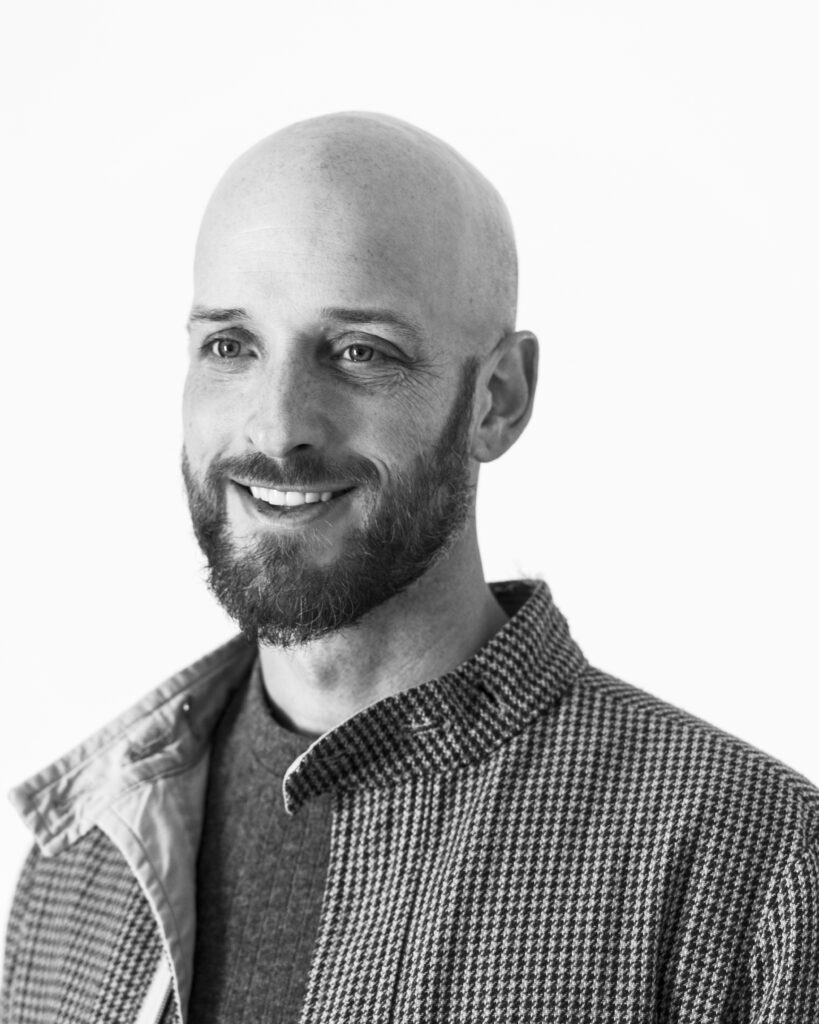
Holmes is Chancellor's Professor of Environmental Science, Policy and Management at UC Berkeley. A physician and a cultural and medical anthropologist, he studies social hierarchies and global health disparities. He also co-chairs the Berkeley Center for Social Medicine and co-directs the joint medical anthropology Ph.D. program between Berkeley and UCSF.
Like many doctors, he's spent decades learning from clinical case studies in leading medical journals. These brief digests are written and reviewed through medical frameworks exclusively, and they describe a patient's predicament alongside a clinician's assessment, diagnosis and treatment. They're a fixture in medical journals and a primary way doctors and all health professionals continue learning after their training.
Now a new monthly series in The Lancet led by Holmes is going beyond clinical diagnoses, tapping experts from the social sciences and humanities, as well as community members from around the world.
The resulting cases provide a critical lens into the cultural and social forces that contribute to each patient's condition - not just the biological factors. Each unpacks a framework or concept in the social sciences and humanities that researchers hope readers will incorporate into their own practice, leadership or policy-making. The team developed this "translational social medicine toolkit" to help health professionals and policymakers address the deep social and structural causes of global health inequities.
"We hope that these cases will help orient health care practice and become a source of solidarity as we organize to confront obstacles to health and well-being for all in an interconnected world," Holmes wrote in an essay introducing the series.
It launched with the case of a 22-year-old woman in Japan who suffered from a rare genetic disorder. She was denied admission to a special elementary school because officials said her physical and mental impairments were not severe enough. Psychiatrists declined to prescribe her medications because they could aggravate her heart condition. When she went to the hospital during a crisis, she was denied care because the hospital lacked adequate staffing.
In unpacking her case, the research team explained the concept of "medical compartmentalization" - the fragmentation of medical services that harms people whose complex conditions do not fit neatly into simple categories. The physicians and social scientists who wrote the case together said it illustrated clear ways the system can be improved.
"We want a middle-range theory that can be relevant in lots of other clinics, hospitals, policies and countries in the world but also really touches ground with this particular patient or case," Holmes said. "And then we try to make sure the theory would both show the depth of social theory and be really understandable."
The latest piece in the series, published Thursday, describes the experience of a 45-year-old asylum seeker suffering from kidney stone complications. A volunteer clinician in Tijuana treated the man before he crossed into the U.S. Once detained in an Immigration and Customs Enforcement facility, the man sought help from a nonprofit that could help advocate for him when he was given inadequate medical treatment. But when the organization requested the man's medical records, the doctor from Tijuana became concerned about privacy laws and legal liabilities.
The case demonstrates the need for what the researchers term "structural intercompetency," or the ability of experts to be aware of and address social, political, legal and economic processes and systems affecting a patient's health that extend beyond health care alone. It showcases the importance of doctors needing to work in new, more collaborative ways, said Carlos Martinez, the case's lead author and an assistant professor of Latin American and Latino studies at UC Santa Cruz.
"They, of course, cannot be experts in all those systems," said Martinez, a Berkeley alum who was mentored by Holmes. "What we're really asking is that clinicians become familiar with the other experts who could help in a given patient's care."
The project has been a long time coming. Holmes and his colleagues first envisioned it over 20 years ago, when he was a student interested in bridging the fields of medicine and the social sciences and humanities. They eventually launched a similar series in the New England Journal of Medicine, with cases that were primarily rooted in the U.S.
With the series in The Lancet - one of the world's most esteemed medical journals - they're broadening the topics to a global audience.
They solicited hundreds of cases from research institutions, clinics and scholars around the world. Then, the 15-person project team - including MD/Ph.D. student researchers from UC Berkeley and UCSF - sifted through over 400 submitted abstracts and identified those that might have the most relevant applications for social concepts.
Courtesy of Zoe Boudart
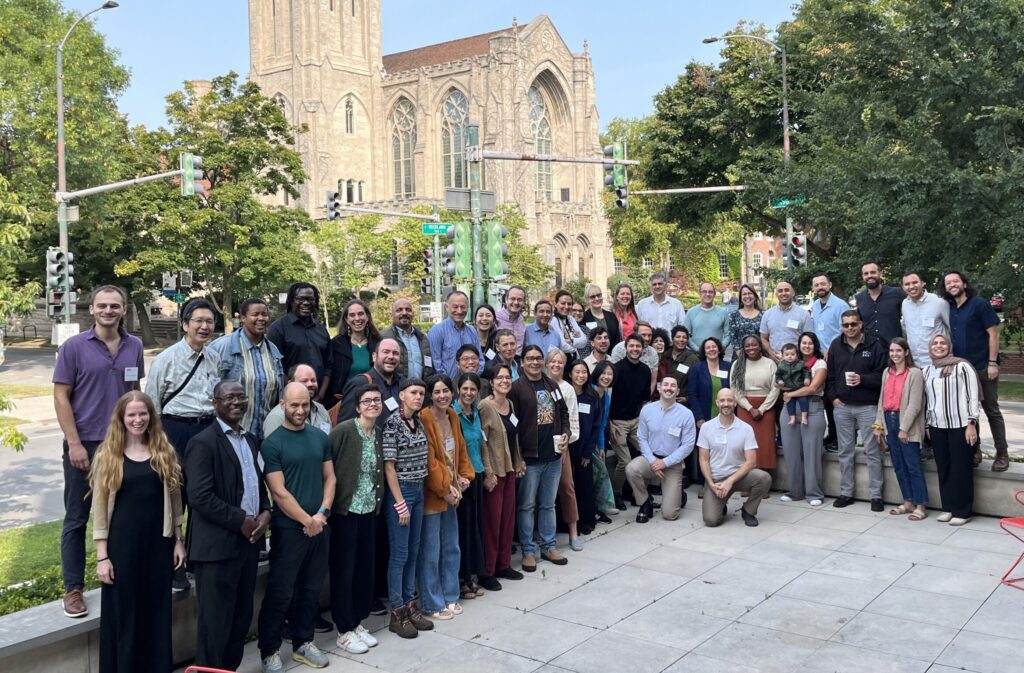
Last year, they hosted a three-day mini-conference in Chicago, co-sponsored by Berkeley and co-funded by the National Institutes of Health, and flew people in from around the world. There were doctors, nurses and medical researchers as well as scholars from the social sciences and humanities. Community members from an array of backgrounds contributed too, including a Florida-based human rights organizer and an Indigenous health worker from the Amazon of Brazil. Even doctors who work in the Sahrawi refugee camps in Algeria joined to contribute their perspectives.
"One of the goals of the team was to reach out as far as we could beyond the usual places," Holmes said. "To support people whose lives, stories, health, health care and concepts could be really important for the world to read but who might not usually have as easy a time publishing in a place like The Lancet."
The series is expected to run for 12 months, with the possibility of extending. Holmes said it was especially meaningful work to be doing now, given the shifting political landscape in the U.S. and globally.
"How much can one article a month do in the midst of active authoritarian regimes? I'm not sure," Holmes said. "But we're all working hard to develop these articles to keep people who care about health thinking critically and aware of what's going on, to have empathy and solidarity for people who they might otherwise consider quite different than them."


