
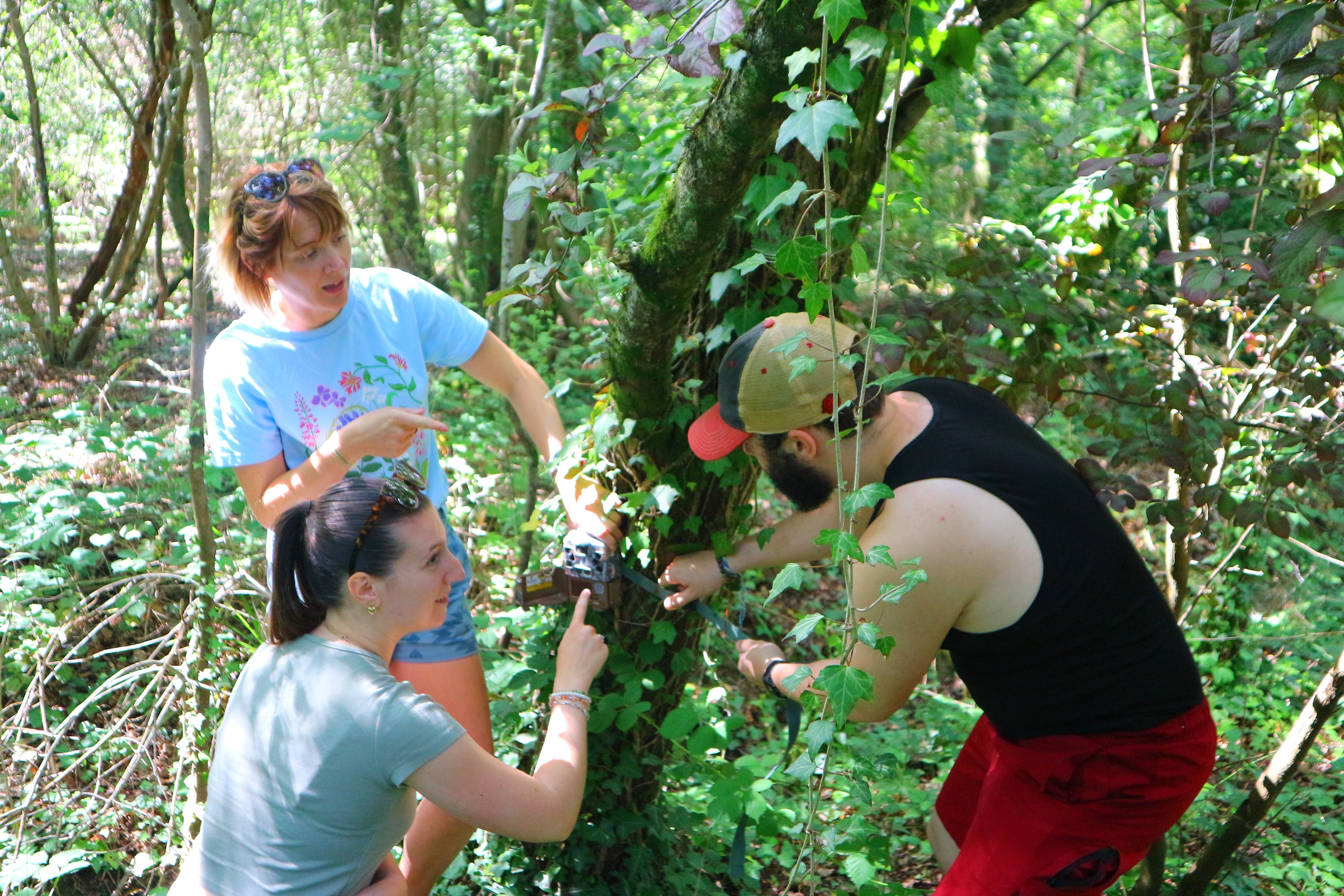
A new programme of student-led research has been launched aiming to protect some of the New Forest's rarest species and most important habitats.
The New Forest Living Lab involves five undergraduate and seven masters-level students from the School of Geography and Environmental Sciences at the University of Southampton .
The programme, supported by a grant from the New Forest Biodiversity Forum, will see students conduct research projects across the next 12 months, generating new evidence to support biodiversity and nature recovery.
Students will work alongside partner organisations including Forestry England, Hampshire Bat Group, and Hampshire and Isle of Wight Wildlife Trust to contribute directly to conservation efforts while gaining valuable field experience.
Dr Becks Spake , from the University of Southampton, said: "It is wonderful that the New Forest Living Lab can now facilitate even more projects like these for our students.
"I did my PhD research in the New Forest over a decade ago, and working in such a beautiful landscape was a wonderful experience, one made possible by the support of many individuals.
"I continue to work there now, supervising PhD students on projects related to deer and birds, again with enormous support from individuals who are deeply passionate about the New Forest and its future."
The research will focus on conservation challenges impacting the Forest's wildlife and habitats, as well as opportunities.
Projects will include how bats use conifer woodlands, monitoring of deadwood habitats - fallen trees, branches and decaying wood that provide food and shelter for thousands of species - and their importance for fungi.
It will also look at the impacts of recreation on wildlife in ponds, and map both native and invasive crayfish populations across the Forest.

Dr Spake added: "This is the first year we have run the programme in the School of Geography and Environmental Sciences, and we have been overwhelmed by the support from our partner organisations.
"We very much hope to run it every year, and our ambition is to expand further by bringing in other schools across the University and welcoming additional partner organisations so that even more students can contribute to nature recovery in the New Forest."
The programme has been made possible thanks to grant funding from the Forum, the leading independent voice on nature recovery in the region.
Co-founded and powered by long-term funding from Kairos Philanthropy, the Forum works to provide independent evidence on the state of biodiversity in the New Forest and the action needed to protect it.
Forestry England's Nature Recovery Manager Leanne Sargeant said: "We are delighted to be supporting this scheme and are working closely with many of the students.
"By identifying some of the key species and habitats in the New Forest for study, we hope this research will help to inform the work we do to look after this very special place and provide a really valuable experience for our future custodians of nature."
Professor Russell Wynn , Chair of the New Forest Biodiversity Forum and an Honorary Professor at University of Southampton, said: "The Forum is delighted to be supporting University of Southampton in this exciting new initiative.
"By delivering student projects that are co-designed with partners and targeted at strategically important issues, the programme will provide information to help inform future forest management while also supporting the development of the next generation of ecologists and conservationists."


