
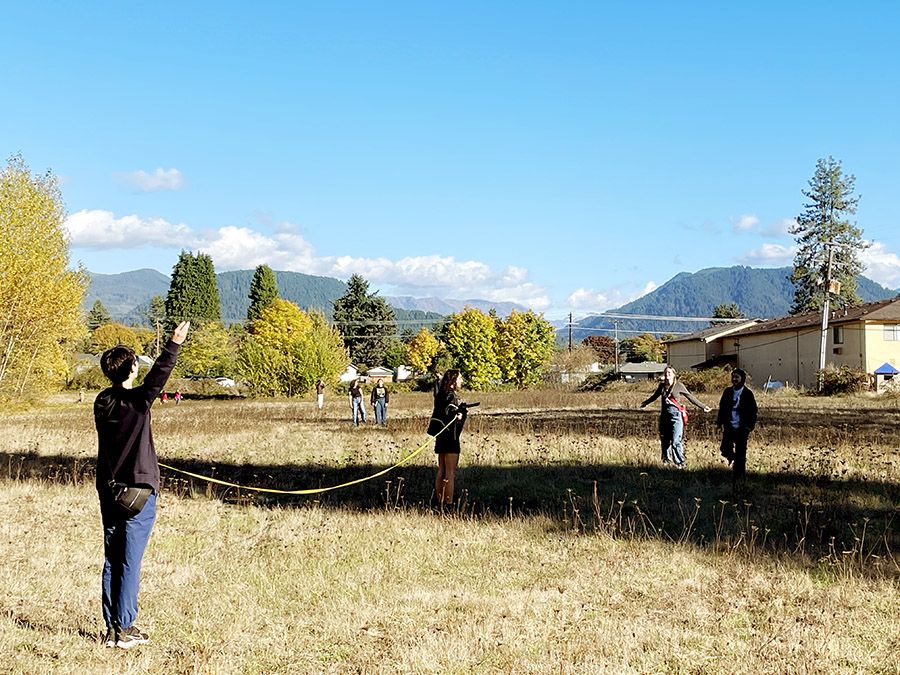
It's a sunny October afternoon in Oakridge. Sixteen UO juniors wielding tape measures and sketchbooks trudge through a grassy field with the property owner, taking in and jotting down all they survey.
That 3-acre site will serve as a blank canvas for the students in assistant professor Christina Bollo's architecture studio as they work to solve pressing housing problems facing the city.
"Their buildings won't be constructed, so it's not quite real-world," Bollo said. "But it's close. The students work with real people in a real Oregon community. Those conversations provide rich experiences that will help them become better architects."
They also will help Oakridge become better.
Students spent fall quarter meeting with city officials and other community members, taking field trips and developing ideas that culminated with a final show-and-tell in Oakridge.
Affordable housing doesn't always mean big apartment complexes, Bollo said. Residents were pleasantly surprised by the students' ideas for middle housing, including tasteful townhouses and duplexes that reflect the nearby Willamette National Forest and the city's timber roots.
From 2024 to 2026, UO students will be learning while helping the city of Oakridge, Oregon address affordable housing, promote tourism and promote economic development
Bollo's studio is one course of many in the UO's Sustainable City Year Program, an idea spawned at the College of Design in 2009.
The program unites departments across campus to focus the time, expertise and creativity of UO students and faculty members to help Oregon cities. This is the second year students from diverse majors including advertising, business and architecture are working and learning in Oakridge.
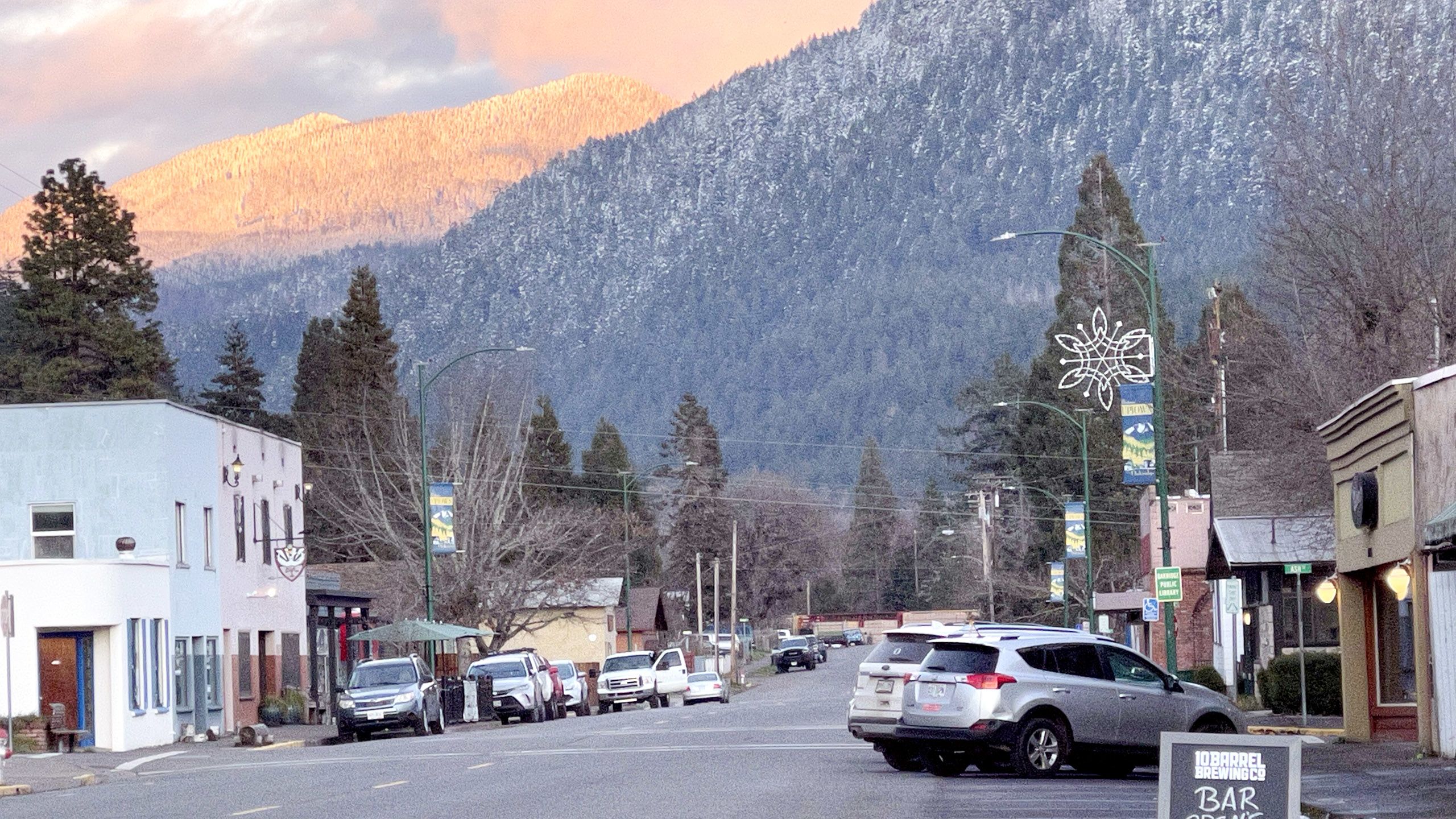
A 45-minute drive east of Eugene, the town of roughly 3,500 residents serves as a gateway to the Cascade Mountains and Bend. But the transition from timber to tourism hasn't been as easy for Oakridge as some other Oregon cities.
UO students are working on innovative solutions for economic development and affordability. They're also helping with more routine aspects of managing a city, such as maintenance and upgrades for the Oakridge wastewater treatment plant.
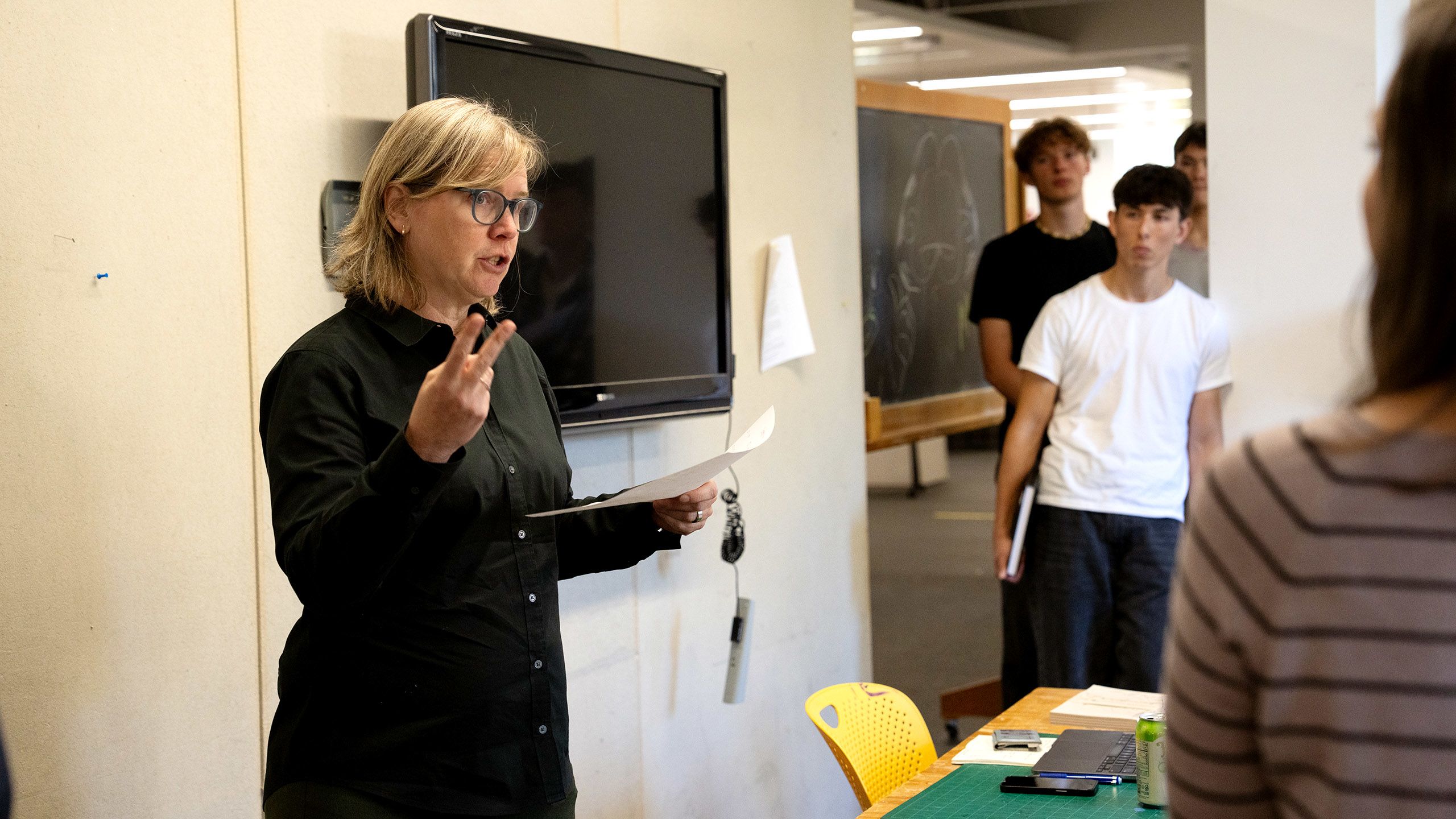
"Their buildings won't be constructed, so it's not quite real-world. But it's close. The students work with real people in a real Oregon community. Those conversations provide rich experiences that will help them become better architects."
"This small town is charming, and the drive is very pretty," said architecture major Jamaica Atad. "By partnering with the Sustainable Cities Year Program, we get to have a stronger connection to Oakridge and the building sites. The class was fun and very intense."
The studio required four architecture designs - most have just one - perfected at breakneck speed. Every two weeks, the students faced a new deadline and more late nights in the studio.
All the designs were for affordable housing construction, but each was different and created with a specific Oakridge site in mind. The students started with duplex ideas, then townhouses. Project 3 was a medium-density housing project with 10-12 units.
For their final design, they teamed up in pairs to either address infill opportunities in uptown or create a large site plan for a city-owned site near Salmon Creek.
Atad added that the short project turnarounds interspersed with multiple field trips created a powerful learning experience.
Not all architecture studios involve a site visit. For those that do, the field trip usually happens just once, toward the beginning of the quarter.
For Atad, going to Oakridge, working on her designs, then visiting again created a cycle of reflection and iteration that connected her ideas more deeply to the city, its people and the specific building sites.
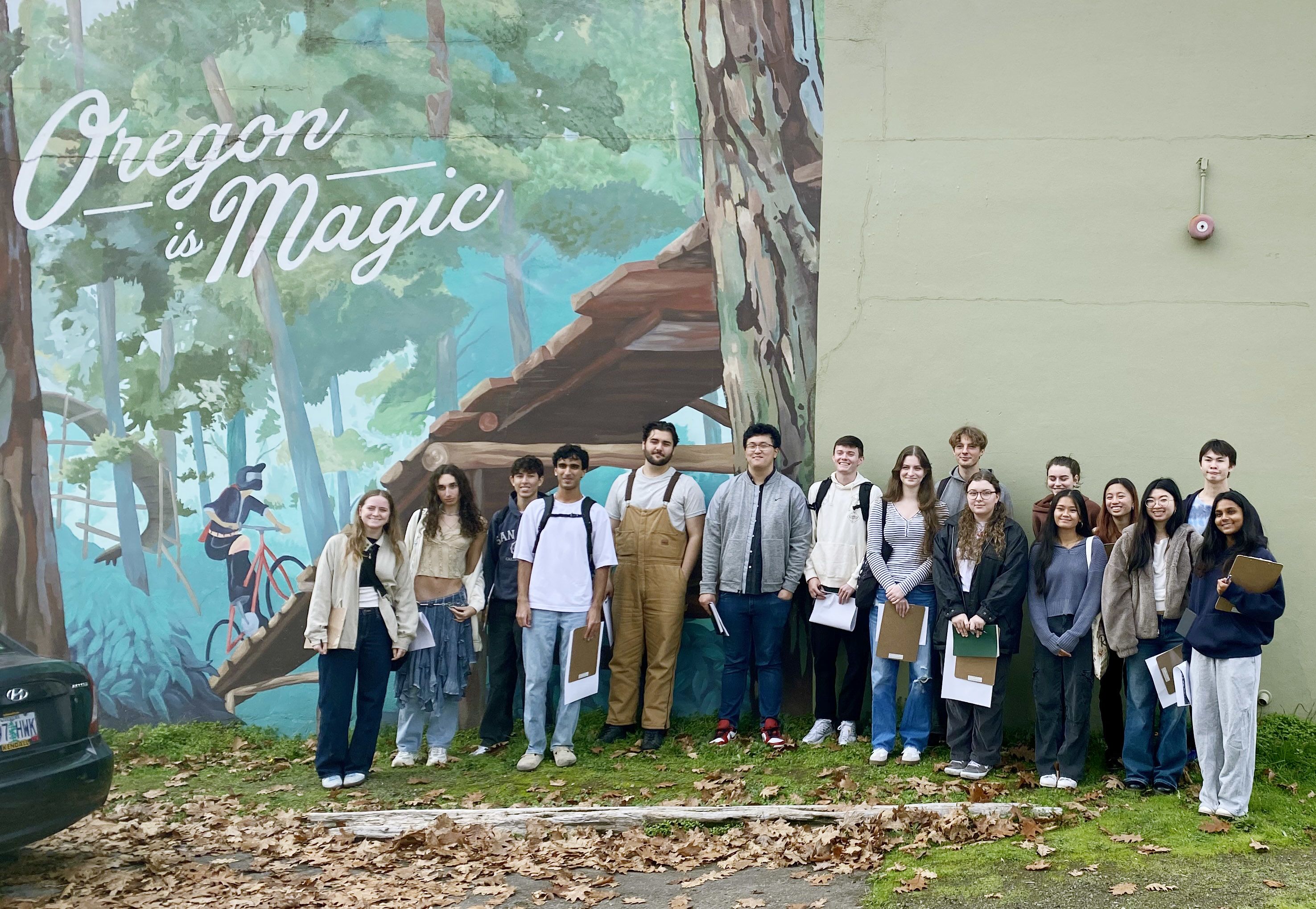
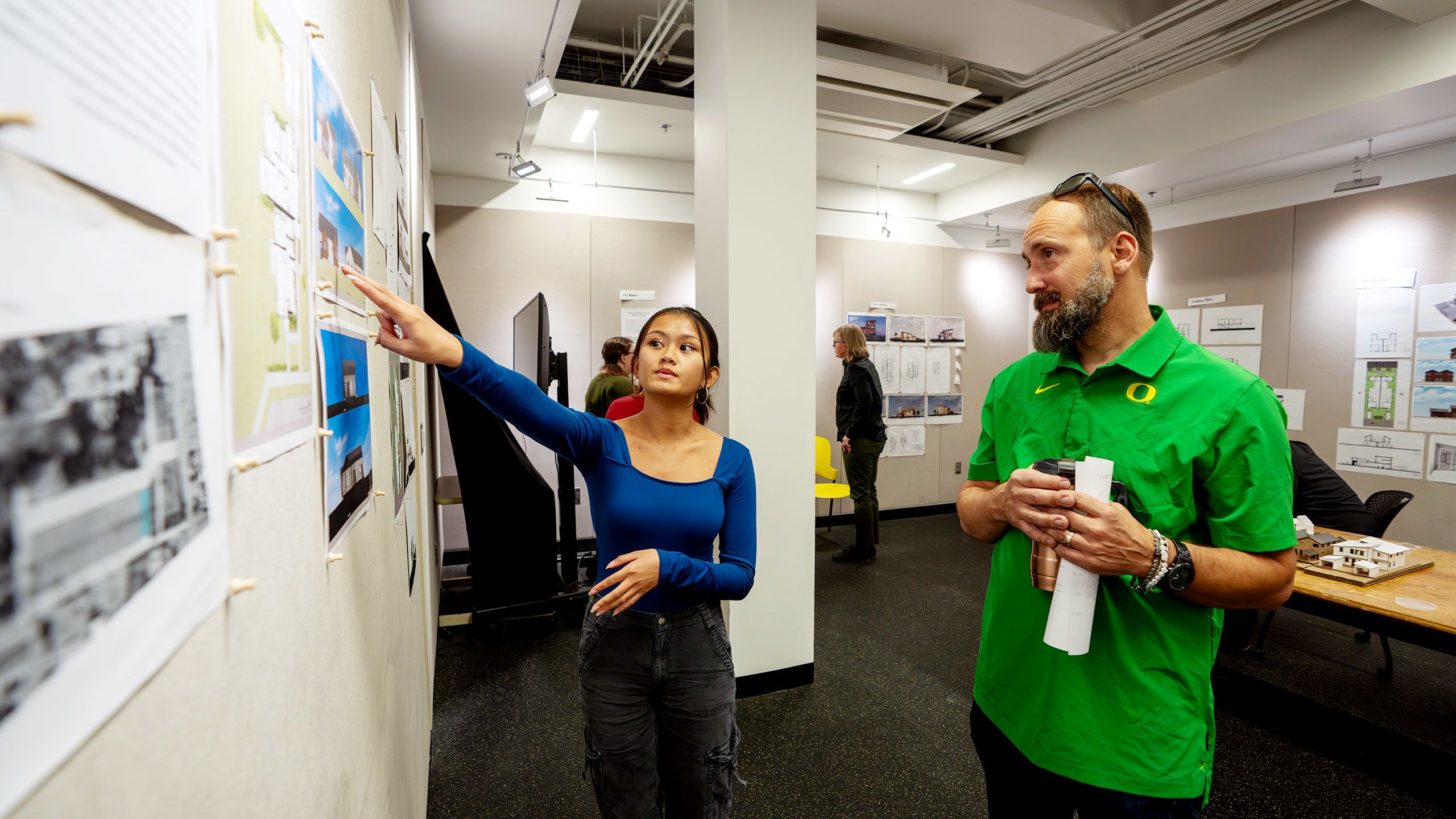
"By partnering with the Sustainable Cities Year Program, we get to have a stronger connection to Oakridge and the building sites. The class was fun and very intense."
Back on campus, it's review day in the bustling studios on the first floor of Gerlinger Hall.
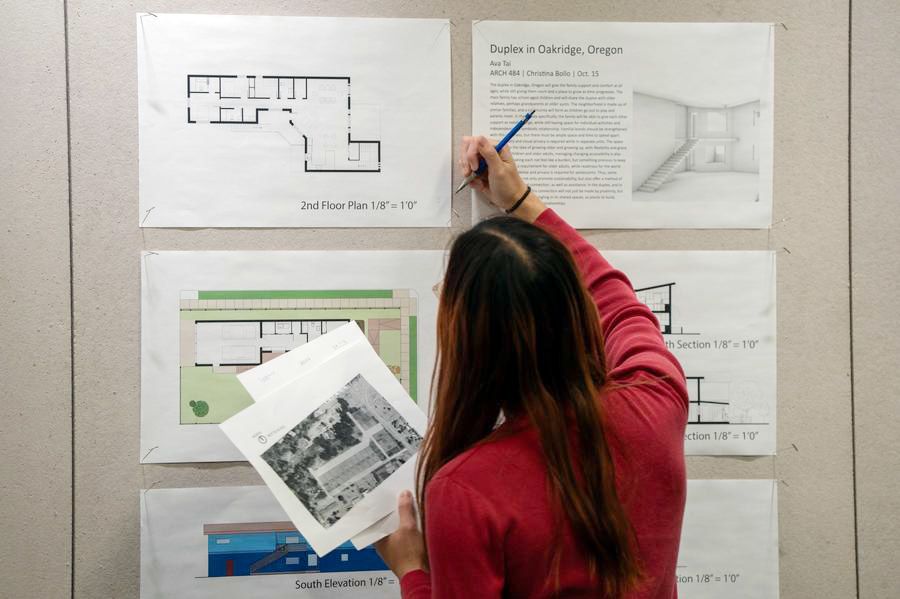
Bollo's students are focused but chatty as they prepare posters and 3D models of duplexes they imagine for the Oakridge field they toured earlier. They gather for informal but substantial discussions with three local architects.
Architecture major Chae Cannon discusses his project with Eugene architect David Schmitz to gain professional insights and review his cardboard model, which he folds open to reveal how the different elements connect. They discuss spatial composition and user experience.
Cannon organized the available space realistically, Schmitz says. But some elements might prove too costly for Oakridge. And cost is a key concern.
"Oakridge is a lower-income town," Cannon said. "So we're trying to design housing that the locals can afford. It's one thing to design an ambitious building where the sky's the limit, but the Oakridge projects were grounded in the reality and the struggles of the community."
Designing low-cost housing was compelling, Cannon said, because he's inspired by community-oriented projects.
Working with an architect should not be a luxury limited to exclusive clientele, he added. Cannon also appreciated the realism and practical nature of the studio. Ironically, the constraints of working with real potential construction sites helped him think outside the box.
Cannon added that community members, including the Oakridge city administrator, helped students understand the city's needs. In some cases, they heard diverse and conflicting opinions about the directions Oakridge should be headed.
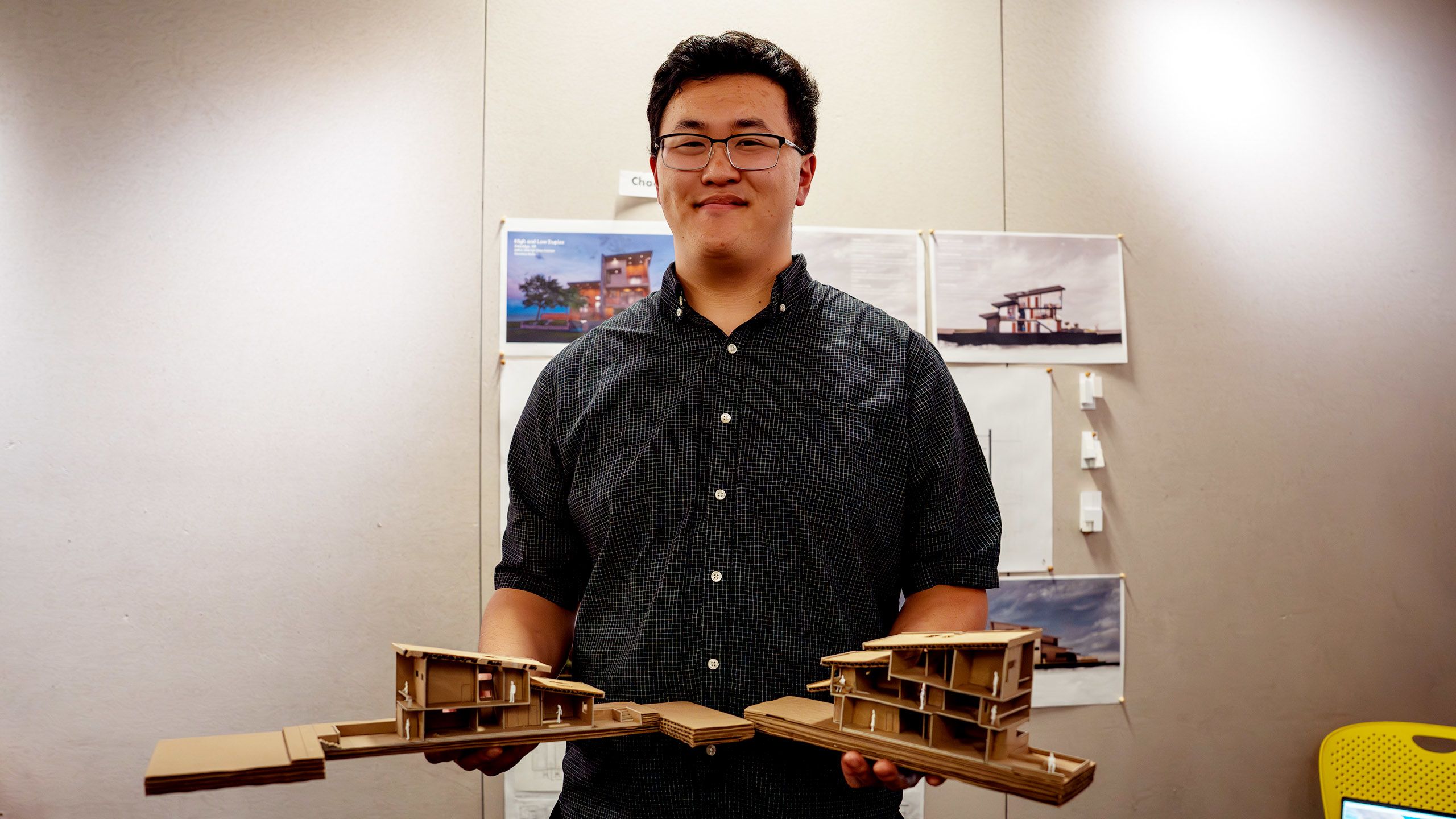
It's one thing to design an ambitious building where the sky's the limit, but the Oakridge projects were grounded in the reality and the struggles of the community."
That broad understanding of a community and its residents is foundational to the work of architects, Bollo said. And the students aren't the only ones who benefit. Although the designs are theoretical, one role of an architect is to transform aspirations into tangible ideas that people can envision.
When students discuss ideas and present their drawings and models to the community, that moves solutions forward, Bollo added, even if the path forward takes unpredictable twists and turns.
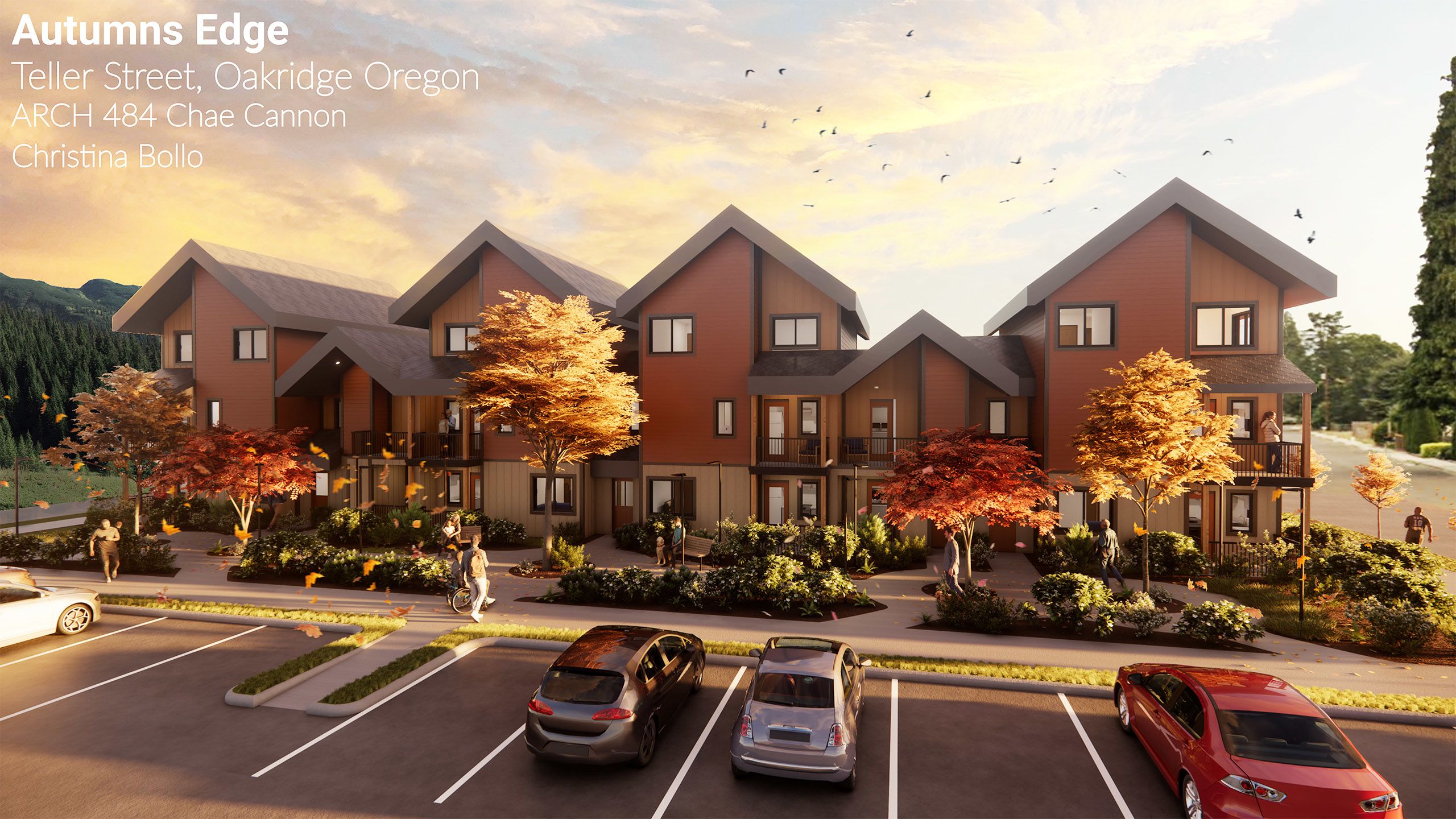
Design idea for affordable housing in Oakridge by architecture major Chae Cannon
The class projects help planners, neighbors and developers picture what could be. Sometimes they help spur meaningful policy changes.
Student work from Bollo's 2024 studio was instrumental in helping the city evaluate zoning codes and take steps to encourage construction and increase housing capacity.
"It can be very influential," Bollo said. "What our students contribute is imagination. That's why they chose architecture, because they can visualize the future and manifest that visualization. For people who aren't wired that way, having access to those visions helps a lot."
Discover more about Sustainable City Year Program

SCYP Story
SCYP Story


