
Springtime means cultural celebrations for UConn students
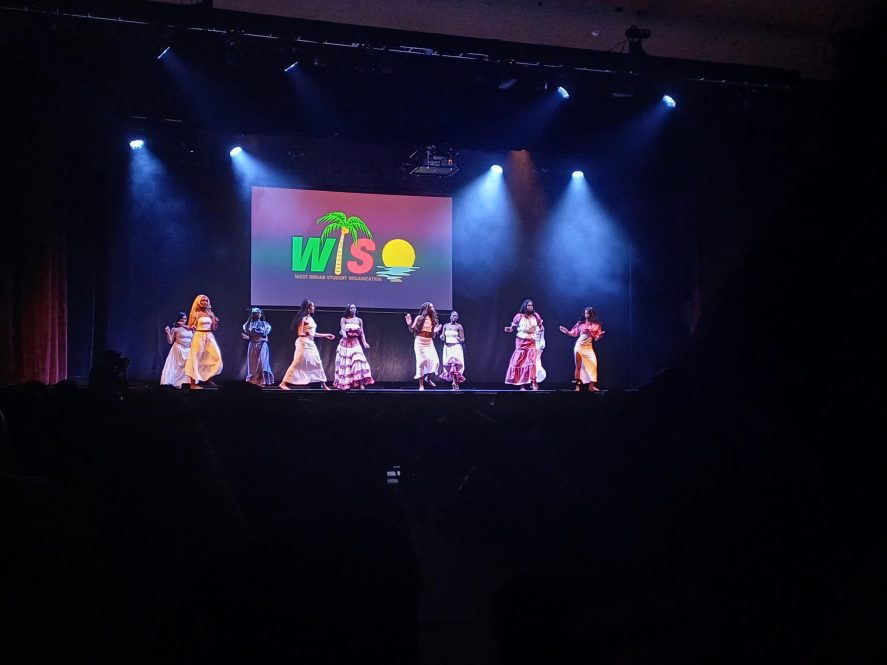
Opening ceremony for the West Indian Student Organization (WISO) fashion show. (Anna Heqimi/UConn Photo)
Springtime at UConn isn't just about basketball. Through research, teaching, service, and outreach, UConn promotes the health and well-being of state residents through enhancing the social, economic, cultural, and natural environments of Connecticut and beyond. Dedicated to its mission, every Spring, UConn hosts a vibrant mix of cultural events organized by students to uplift their heritage and traditions, one of the many ways the University helps to cultivate individual and collective well-being. Below is a sampling of some of those events from the Spring of 2026:
Cultura en Cada Hilo (Culture in Every Thread)
Alethia Patterson'26 (CLAS) - originally from Jamaica - felt pride and excitement as she saw her nation represented during the annual West Indian Student Organization (WISO) fashion show. "I think it's a nice showcase of culture," she said. Patterson was one of many celebrating Caribbean expression on Feb. 5 at The Jorgensen Center for the Performing Arts.
WISO President Lovelle Johnson'26 (CLAS) said what inspired her to hold the fashion show is her love for West Indian culture. "My inspiration was that I had West Indian heritage around me growing up, and I wanted to portray that somewhere else."
The show began with an exhibition of traditional wear, highlighting pre-colonial times. The two scenes that followed were flag scene and streetwear, displaying national pride and appreciation for "Black American culture" respectively. The final scenes were carnival - where extravagant costumes and routines mesmerized the audience - and evening wear. During the evening-wear scene, models captured everyone's attention with either their formal attire or beautifully designed sarees.
The sarees exemplified Indian influence in Caribbean nations, which dates from a system of contracted labor called indenture. Individuals from India were brought as migrant workers during the 19th century to countries including present-day Guyana, Trinidad and Tobago, and Jamaica for a designated time frame. Yet these workers usually established permanent residency, bringing with them culture, religion, and traditions that now shape Caribbean identity.
Music such as Chutney, Dance Hall, and Kompa were played throughout the show representing students from the nations of Trinidad and Tobago, Jamaica, and Haiti respectively.
Mikhailia Howard'27 (CLAS) is the senior advisor for WISO and walked in the show during the carnival scene and flag scene, carrying her Jamaican roots with pride. "I love to represent myself and my country," Howard said.
Farrell Nivrose'28 (CLAS) presented a contemporary outfit that reflected modern streetwear culture during the streetwear scene. "I did WISO because I personally identify as a Haitian American student, and I wanted to make more connections within the Black UConn community."
Japanese Student Association Coming of Age: Seijin Shiki Formal
The Seijin Shiki Formal, hosted by the Japanese Student Association (JSA), made its debut on Feb. 7. It was a coming-of-age celebration held in the Student Union that featured a dinner with lo mein, potstickers, and deserts such as Japanese rice cakes called mame daifuku. With a blend of snacks, a photo booth to immortalize the event, and trivia testing attendees' knowledge on the meaning behind Seijin Shiki, it was an evening to celebrate all those who are 20 years old. JSA President Vasu Jain'26 (BUS) was born in Japan, and said he wanted to share the many facets of his culture extending beyond the familiar, such as anime. Those who turned 20 between April 2 of the previous year and April 1 of this year received a certificate and prizes such as a horse plushie - a nod to the lunar new year, "Year of the Horse." Jain said the celebration signifies "a new chapter of their life." Turning 20 is a transformative moment where in Japanese culture, one becomes a legal adult.

Some highlights included a photo card crafting station, where guests could decorate their Polaroid pictures using fashion tapes, stickers, and a multitude of traditional and famous Japanese artwork copies as backgrounds.
Trivia prizes included a Takoyaki maker that makes ball-shaped octopus-filled street food that originates from Osaka, and a table decoration modeling izakaya - a type of venue where people gather to share meals and drinks.
Uyen Pham'27 (ENGR) turned 20 on Feb. 16, and said she was eager to learn about Japanese culture, but could not deny her excitement to be honored during the ceremony.
"This event to me is a celebration because I am turning 20," Pham said.
Jessica Petruff'29 (CAHNR) is an international student from Japan, and will soon celebrate Seijin Shiki in the coming year.
"I wanted to find a community. I like how I get to celebrate my culture while being in America," she said. As an international student who found her sense of belonging far from home, Petruff was proud that Japanese culture was accurately represented.
CUSA x VSA x MISSA Lunar New Year 2026
2026 is the "Year of the Horse," celebrating 365 days of vitality, strength, and independence. The 15th annual Lunar New Year celebration had cultural elements incorporated from the Chinese Undergraduate Student Association (CUSA), the Vietnamese Student Association (VSA), and the Malaysian Indonesian Singaporean Student Association (MISSA), in collaboration with the Student Union Board of Governors (SUBOG) on Feb. 15 at the Student Union Ballroom. Everyone in attendance received a red envelope with a gold coin enclosed to symbolize fortune and bring good luck during the new year.
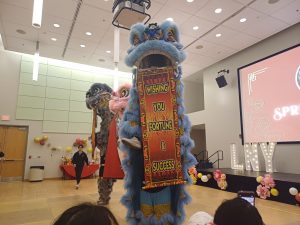
Smiles, laughs, and applause filled the room as a lion dance was performed to ward off evil spirits and welcome good fortune. Three lions danced around the ballroom, greeting and teasing the audience, and the excitement continued when KCONN - a K-pop student organization - dance group Seoular performed to the song "Shooting Star" by XG - a Japanese girl group based in South Korea.
The evening was a beautiful blend of upbeat entertainment and personal artistic expression.
Meijin Hsiao'26 (NUR) sang a Vietnamese song from the 1960s called "Biển Tình," popular before the fall of Saigon. Her father was a refugee from Vietnam and said that all the Vietnamese songs he introduced to her were from before the war. Singing honored her heritage and emphasized that Lunar New Year means family, "celebrating a new beginning with your loved ones," she said.
Like Hsiao, Daren Ngo'29 (BUS) - a member of VSA and CUSA - said the celebration represents his heritage. "It represents family, culture, and tradition. I'm Buddhist, so it also represents a part of my religion. It connects me back to my community and back to my roots."
The trend of family and heritage continued with Adam Putra'26 (ENGR) - the president of MISSA - who is Indonesian. He shared what Lunar New Year means to him: "Indonesians, Malaysians, and Singaporeans, a lot of us have Chinese roots, and for us, that's just a way to connect back to our Chinese heritage."
Toward the beginning of the evening, dinner was served with traditional and savory food options such as Indonesian "Beef Rendang," - certified halal this year - and "Gulai Buncis" - a vegetable curry.
All those in attendance were encouraged to wear their cultural clothing representing their respective countries. At the event's conclusion, a fashion show was held spotlighting traditional attire from China and southeast Asian countries.
Threads of Time
The "Threads of Time" pageant-style fashion show hosted by the African Students Association (ASA) highlighted continental identity across time. Traditional African culture, and the modern and Western–influenced era served as two symbolic opponents competing to represent the truest expression of African identity. The ASA Fashion Show promoted cultural awareness and unity through a showcase of African fashion, history, and student creativity in a campus-wide event on March 25 at The Jorgensen Center for the Performing Arts.
Pokuaa Amofa-Agyemang'27 (BUS) is the vice president of ASA and wanted the event's focus on history to be prominent. "I wanted to show how the past is not forgotten."
Following an artistic display of unity between the past and present, models performed creative routines while proudly displaying the flags of African nations. As each pair or trio performed a distinct routine, everyone holding a flag lined up in two rows. Once everyone lined up, models performed a spirited dance and ran around the audience twice, celebrating African identity and national pride.
The women's and men's segments featured women and men modeling modern and traditional attire to emphasize how the past and present blend, "a visual representation of how the past and present work together," as Amofa-Agyemang phrased it.
Granting equal respect to present-day culture, a streetwear scene impressed the audience as models performed unique acts displaying modern-day attire.
The final scene was swim, and models were given full creative freedom as they captivated the audience with their performances and swimwear selection.
Afrobina - an Afro-Fusion dance team dedicated to performing traditional and modern African dances - filled the room with energy and excitement. Kayla Audrey Obolo Njoh Sam'26 (CAHNR) is the president of the group and had the fashion show dancers open the event with a traditional dance.
When intermission came, dancers performed modern dances in contemporary attire, featuring music such as Ghanaian duo DopeNation's song "Kakalika," - a track and dance that went viral on TikTok - as another statement that the present is merely a continuation of the past. Then, just as the show began, Afrobina closed the event with a mix of Ghanaian, Nigerian, and South African representation, performing dance routines such as the Ghanaian "Azonto," a dance style that preserves the past while adding modern elements.
"Our mission is to not only honor our roots, but always share them and be our own ambassadors," Obolo Njoh Sam said. Summarizing the significance of the night, ASA Vice President Amofa-Agyemang said the artistic display recognized the past but "gave flowers to the present."
Albanian Mock Wedding
The double-headed eagle soared high on March 29 as the second-ever Albanian Student Association (ASA) Mock Wedding brought energy and life to the Student Union ballroom.
Arlida Rakipi'27 (ENGR) is the president of ASA and loved last year's mock wedding so much, she wanted to make it a tradition. Before entering the venue, everyone got a taste of the sweet "lokum" with a little Albanian flag placed on top of it, blending hospitality and a reminder of the nation's Ottoman influence. The nuse - Albanian word for bride - made her grand entrance. All eyes were on her as she walked down the "aisle" carrying two loaves of bread as a symbolic gesture of bringing growth to the family and good luck. The night was filled with dancing or "Valle," where the bride, groom, and guests held hands and danced in a circle as traditional folk music was played, with a few of the nation's hit pop songs sprinkled throughout the festivity. The only times guests were seated after the bride's grand entry were during two culturally significant performances.
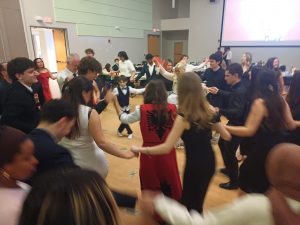
"Plaku Plaka," which translates to "old man, old woman," is a dance where traditionally two men dance to showcase the beautiful yet discordant relationship dynamic of an old Albanian married couple. For a fun twist, gender roles were swapped, with a woman dressed as an old man and a man dressed as an old woman, stirring up laughter and shock as the pair playfully hit each other while dancing.
Guests also had the pleasure to hear traditional folk music played in-person as a father and son duo sang while strumming the çifteli - a long-necked lute which is one of the nation's traditional and staple instruments used in folk music, "marrying" storytelling, and tradition.
Ottoman influence was on display as the food served honored history and family gathering customs. Baklava, Burek, and Qofte - Albanian-style meatballs - were among the various options on the dinner menu.
2026 UConn Spring Pow Wow
Community, history, and education were at the forefront during the 2026 Pow Wow on April 4 at the Ratcliffe Hicks Arena.
Chris Newell - director of the Native American Cultural Programs and part of the Passamaquoddy Tribe - said the annual celebration was a way to bring Native and non-Native individuals together. The social gathering also acted as a "resistance to colonization," he said.
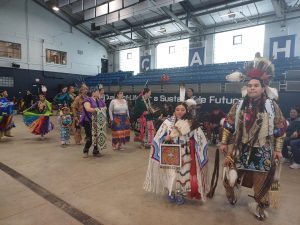
The five-hour festivity began with an opening prayer asking the Creator to send protection over everyone in attendance and to pay respect. During the grand entry, an eagle staff was carried, followed by the American flag, to honor and remember all those who fought for their homeland. The victory song and dance proceeded the grand entry as a celebration for veterans returning home after battle. All veterans were then honored during the dance immediately after.
Cassidy Robideau - a sophomore journalism major at Mercy University in New York - came to perform as a dancer. "I came to dance, to honor my ancestors, and my people," they said. A proud descendant of the Anishinaabe people, Robideau's performance of a victory dance symbolized perseverance in the face of colonization and the strength of tradition. Robideau said they are the first in four generations in their family to take part in traditional dance.
Intertribal dances were held from start to finish, where everyone joined and danced in time with music from Iron River Singers, Blackstone Valley Singers, and Yootay Singers - all singing groups from an array of Native American nations.
Dance competitions were also held toward the end of the day. During the Women's Fancy Shawl, dancers performed while displaying their intricately designed shawls, made with varied patterns and beadwork. During Women's Jingle, dancers performed wearing dresses adorned with 365 metal cones, representing each day of the year and symbolizing healing. Robideau wore a jingle dress and said partaking in the dance symbolizes healing for themself, for loved ones, and for all community members.
During every dance Robideau partook in, their regalia and real eagle feathers were symbols of pride and heritage. It is illegal for most people to possess bald eagle feathers unless they are enrolled members of federally recognized Native American tribes and apply to receive the feathers through a government repository for religious and cultural use. Robideau said owning bald eagle feathers is the "biggest blessing one can receive," as the bald eagle is believed to be the messenger that brings prayers straight to the Creator.
With every beginning, there must come an end, and the closing ceremony retired the eagle staff and U.S. flag after a day filled with social gathering and joy.


