
A new startup spun out of research at the Institute for Quantum Computing (IQC) at the University of Waterloo is accelerating its push toward commercialization with $10.7 million in dilutive and non-dilutive funding and a public listing after launching just more than six months ago.
Co-founded by Dr. Christopher Wilson, IQC faculty and Chief Technology Officer, and Eugene Profis, CEO, the company is developing an amplifier that boosts read-out signals produced by a superconducting quantum chip at near absolute zero temperatures and gets the signal into room temperature. This could solve one of the many hard engineering challenges in quantum computing.
"It's a necessary product for quantum computing companies that are just a few years away from launching computers with thousands of qubits," says Wilson, who is a professor in the Department of Electrical and Computer Engineering.
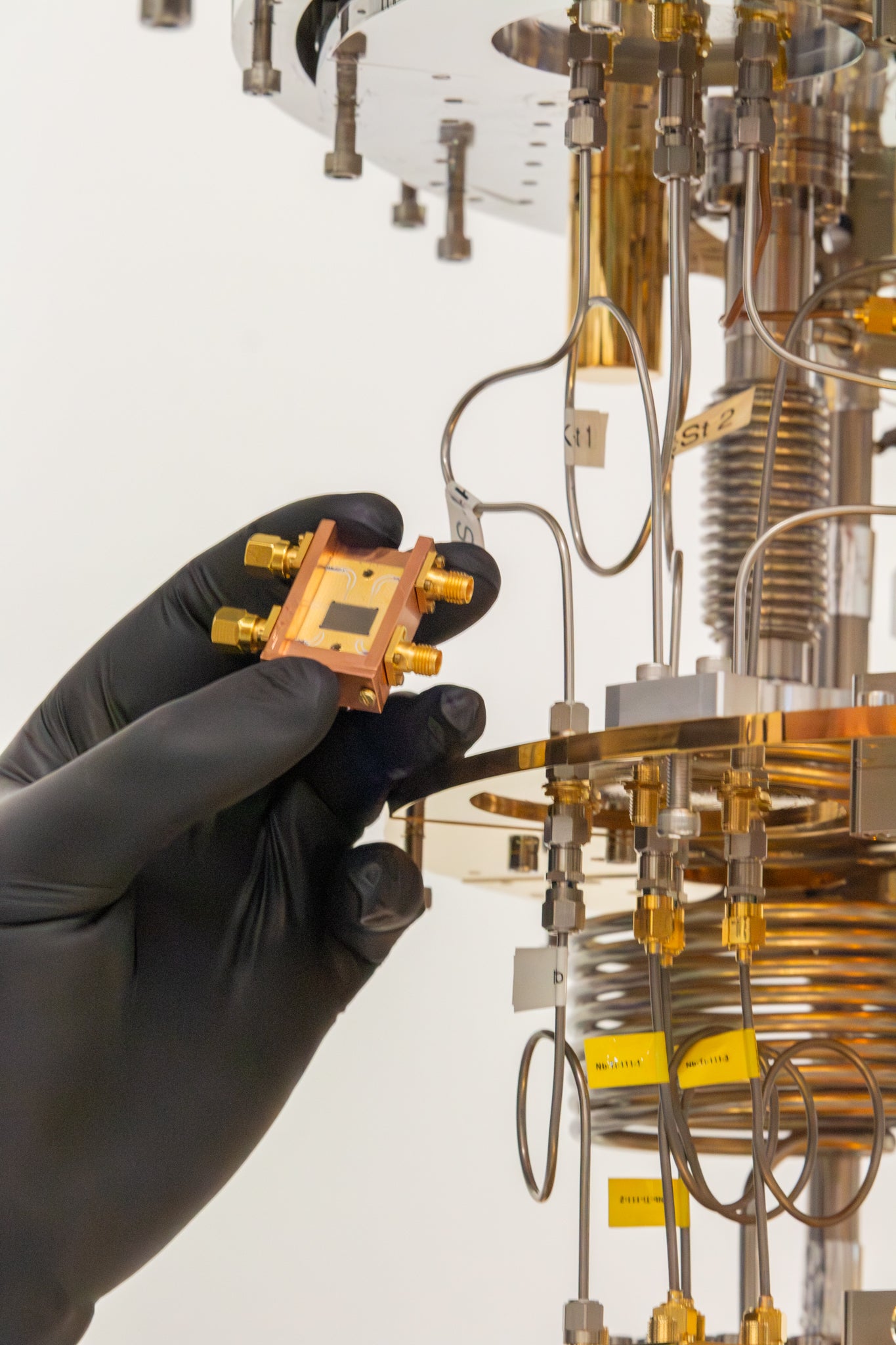
QuantumCore's amplifier next to a quantum computer, which will boosts read-out signals produced by a superconducting quantum chip at near absolute zero temperatures and gets the signal into room temperature.
Since October 2025, QuantumCore has closed two rounds of private funding totaling $9 million. The company chose to raise money through non-brokered and brokered private placements with Canaccord Genuity Corp. as lead intermediary and PowerOne Capital Markets Limited. This type of investment brings in capital by selling shares to investors through an intermediary instead of specialized VC firms. It was publicly listed on the Canadian Securities Exchange earlier this month.
The startup also secured $1.7 million as an IQC industry partner through the Natural Sciences and Engineering Research Council of Canada's (NSERC) Alliance Grant program which gives them access to Wilson's lab to accelerate technology development without impacting shareholder value.
"The quantum industry and the technology are evolving so quickly, and we wanted to be thoughtful about how we access funding," Profis adds. "We are acting with urgency because of the rapid acceleration of the large quantum computing programs as seen by the recent Q-Day announcements out of Google Quantum AI Labs. Our combined experience in quantum computing and finance have been received well by the investment community."
Wilson says brokered private placements are an established funding route in Canada for quantum startup companies' risk profiles, given investor's experience in funding the mining industry. This gave QuantumCore access to more money from Canadian investors than would be available through venture capital.
"Canada has this homegrown way of financing ventures like quantum tech, and our investors understand how to think about high risk," Wilson says. "Superconducting quantum computing is one of the biggest sectors in terms of industrial development, and there is a lot of Canadian experience and appetite to fund ventures with these startup risk profiles."
Profis says the startup's first product is crucial for quantum computing companies to fulfill their development goals.
"We are not trying to build the most powerful quantum computer; we provide scalable components to all the major platform companies that are competing to build the world's first commercial quantum computers," Profis says. "These companies have raised a lot of capital to build computers, and we want to help them get their quantum processors to the next level."
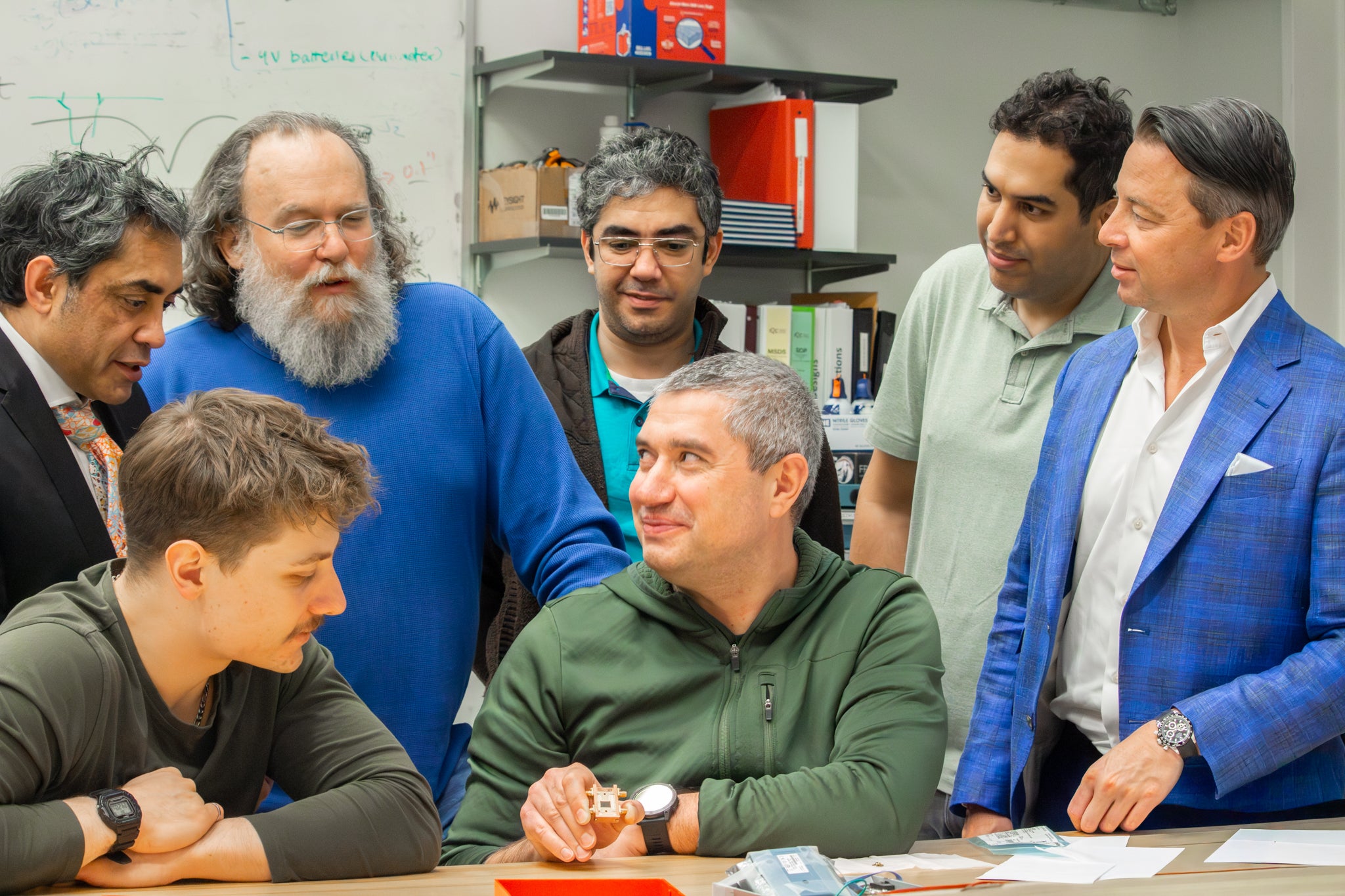
QuantumCore's team discussing the amplifier. Back row from left to right: Saleem Huda, Dr. Chris Wilson, Farzad Yazdani, Dr. Mohammad Soltani and Eugene Profis. Front row: Jayke Boghean and Dr. Dmytro Dubyna holding the amplifier.
Since launching, QuantumCore has hired five full-time, technical employees and opened an office and lab in uptown Waterloo to complement other operations, including at the University's Quantum Nano Fabrication and Characterization Facility.
"Growing the company in the Waterloo ecosystem is crucial because of the big pool of local technical experts, in quantum and other engineering disciplines, access to specialized production resources and the region's big industrial manufacturing base," Wilson says.


