
The UN80 initiative, launched by the Secretary-General in March 2025 to make the United Nations system more effective, coherent and better able to deliver, has entered a decisive phase.
Over the past year, the reform effort has gathered momentum across its three workstreams, from efficiencies and improvements to mandate implementation and broader programmatic and structural changes.
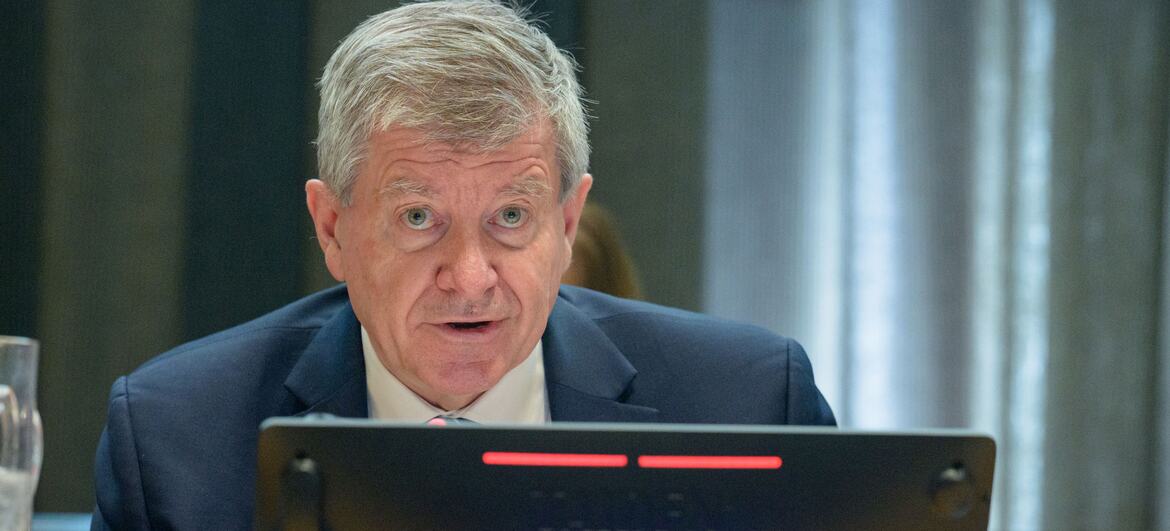
As the process shifts from diagnosis to action, UN News spoke with Guy Ryder, Under-Secretary-General for Policy and head of the UN80 taskforce, about what has changed, what results are already emerging, and what success would mean for the United Nations and the people it serves.
UN News: What has changed since the UN80 initiative was launched?
Guy Ryder: We've come a long way in one year. This is a reform that has gathered a lot of momentum.
What is quite remarkable is the extent to which Member States have engaged with UN80. When the Secretary-General launched it, it was uncertain whether Member States would take it seriously and work with us on what are difficult and complex problems. The answer has been yes.
On the first workstream, efficiencies and improvements, we have adopted a programme budget for the Secretariat for this year. The level of the budget is down, 9.2 per cent in monetary terms, but it embodies new efficiencies and new ways of working.
We've also adopted a significant resolution on how we manage mandates - all those resolutions and decisions that are handed to us for action. If we hold the course, this will radically change and improve the everyday workings of the UN system: how we create mandates, allocate responsibilities, resource them, assess results, hold ourselves accountable and eventually decide whether mandates need to be retired.
And then we have this current workstream ( Workstream 3 ), which covers programmatic and structural issues. Each of the pillars of the Charter - sustainable development, peace and security, human rights and humanitarian action - is being strengthened. All of this is underpinned by new enablers: technology, data and much else.
I hope that by the end of this year, this will produce results that truly strengthen the United Nations and, most importantly, the impact we have for the people we serve.
What tangible results are already emerging?
The different work packages are at different levels, but there are concrete results.
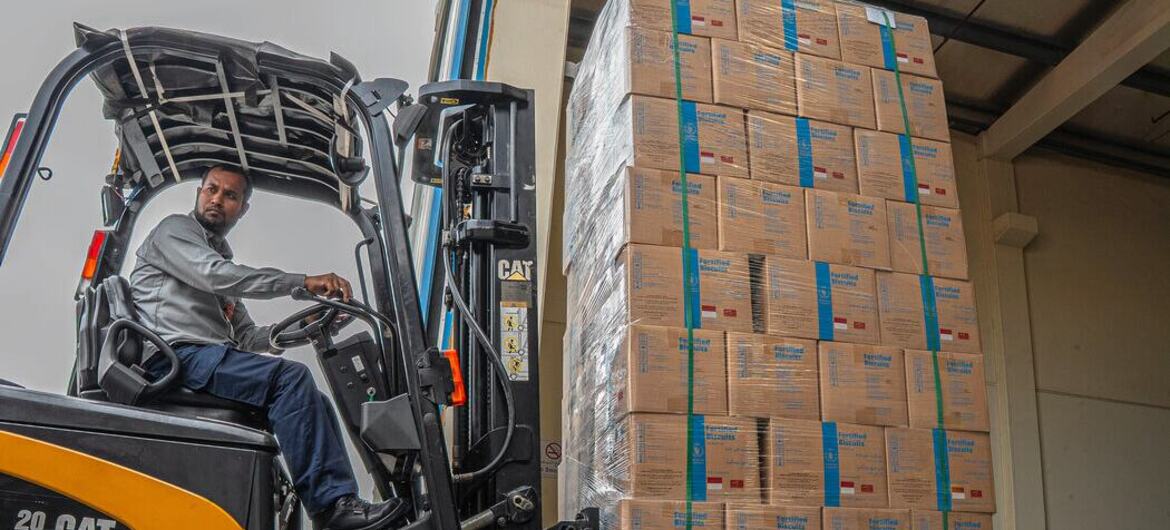
Taking the Humanitarian Compact , one thing we are trying to do is unify humanitarian supply chains. Seventy per cent of our humanitarian spend is on supply chains - from procurement to global logistics to in-country delivery. We are piloting this in five important settings right now, with a view to taking it to scale and applying it across the board.
On mandates, what we have done is already producing results in the preparation of future budgets, including addressing duplication across different parts of the UN system.
We also have a data commons nearly ready to be launched in September. In the past, if you wanted information from the United Nations, you would have had to consult data and statistics presented in 26 separate websites. As of September, you can go to one website and get all of this information in one place.
So it is producing concrete results, and there is a lot more to come.
The most recent Secretary-General's report speaks of a decisive phase for the Initiative. What does that mean?
We have spent a lot of time on diagnosis. It has been heavy, but necessary: recognising the problems and working out what solutions would look like.
That has brought us to where we are today: preparing decision points for action.
Some parts of UN80 will require intergovernmental decisions to become effective. In those cases, we have to prepare draft decisions for the General Assembly, the Security Council or whichever intergovernmental body is concerned. In the coming months we have to prepare 19 draft decisions for intergovernmental bodies to decide.
At the same time, there are things the Secretary-General can do on his own authority, and in those cases, he is going to do them. We will move ahead decisively, while keeping Member States informed.
I think we have every opportunity, if we seize it, to deliver really important results this year.
In practical terms, how is UN80 strengthening the three pillars of the United Nations?
On sustainable development, we are building on reforms made at the beginning of the Secretary-General's mandate, when the resident coordinator system was put in place.
That means relooking at country teams and trying to tailor our country presence to different circumstances and contexts, rather than having a one-size-fits-all approach. It also means making sure expertise from across the UN system can be brought to support UN country teams when they need it.
On peace and security , the Peace Operations Review will enable us to take stock of a changing landscape. It is a pretty depressing landscape, a deteriorating landscape. But we have to recognise that the nature of conflict and warfare is changing, and our peace and security toolbox needs to evolve with it.
And then there is the new Humanitarian Compact . At a time when humanitarian needs are skyrocketing and the resources we can bring to humanitarian assistance are going down sharply, we have to make the very best use of the means at our disposal.
The price of success or failure there is not about bureaucracy or budgets. It is about lives. People die if we do not do this as well as we possibly can.
The Secretary-General insists that we do this in a balanced way. No one pillar is more important than the others. We need to operate across them all and improve the way we use technology, data and shared services across the UN system.
Civil society groups and other stakeholders have expressed concern about budget pressures and changes under UN80, and what they could mean for the UN's mandated work. How do you respond?
It is really important to say that what UN80 is trying to do is produce a more effective, stronger and more impactful United Nations system - not a smaller one. There is no benefit in having a smaller system.
Of course, we are under financial pressure. We estimate that our overall revenues are probably going to fall by about 25 per cent over 24 months. That is dramatic.
Many entities in the system have suffered badly from this, not because of UN80 decisions, but because of decisions taken by Member States outside UN80.
What is really at stake is whether we shape change, which is inevitable, in a way that strengthens the United Nations - or whether we let change happen and be externally imposed. That could be chaotic, damaging and result in a weakening of the UN system.
So UN80 has to get ahead of all of that and produce a stronger organization.
I do not deny that this process of change, however well designed and carefully consulted, is difficult. It produces uncertainty, and uncertainty is always uncomfortable. There will be areas where difficult decisions have to be made.
But we are doing everything possible to make sure that change is orderly, undertaken in the proper way, and that the maximum is done to mitigate the impact on people working in the system.
Above all, we have to make sure that what we are doing respects the Charter, respects our mandates and does not depart from them.
The way forward is to be intransigent on principles - those do not change - but bold and creative on reform.
What is next for the rest of the year?
What is coming now is the preparation of a series of decisions for our intergovernmental decision-making process.
We have until the end of the year under UN80, although the Secretary-General is encouraging us to front-load the process so that we get as much ready as possible for High-Level Week in September.
There will be unfinished business. I do not expect that every work package - we have 31 of them - will be fully completed by year's end. It will be for others to decide how to take them forward.
The working group on mandates, for example, will continue its work through to May 2027. The programme budget for the Secretariat for 2027 is also already under consideration. These processes naturally go on beyond the mandate of Mr. Guterres.
What will success look like by the end of this year?
Success will look like decisions taken that put the United Nations in better shape to face the challenges ahead: political challenges, resource challenges, and the challenge of winning support for multilateralism at a time when people question how effective we really are.
If we come out at the end of the year with recognition that we are acting in a way that makes the UN better capable of responding to these formidable challenges, that will have been a success.
Even if incomplete, UN80 can set a course for the UN of the future.
And what will that mean for the people the UN serves?
The people we serve are the metric by which success will be judged.
If we are having more impact in supporting sustainable development, if we make our peace and security operations better adjusted to today's conflicts, if we get more humanitarian assistance to those who need it, and if we make human rights more effective in protecting people's basic rights, then we will have done something that impacts the everyday lives of the people we have to serve - and do serve.


