
Published on
The Centre universitaire d'informatique will be dissolved and its activities reintegrated into the faculties. At the same time, a research platform in artificial intelligence will be created.
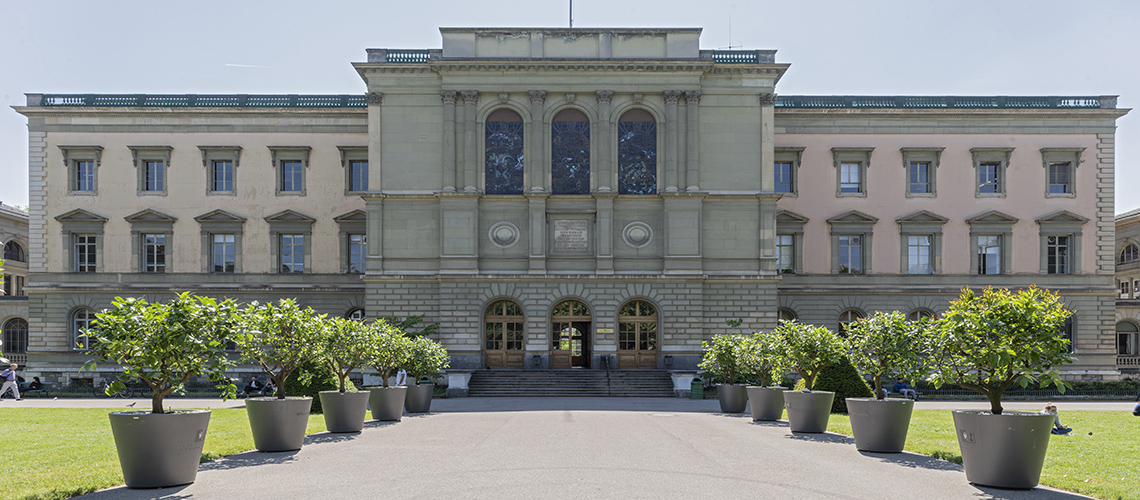
Fifty years after its creation, and following an extensive evaluation process, the Centre universitaire d'informatique will be dissolved. This decision by the Rectorate marks an important step in the institution's efforts to adapt to the evolving needs of the faculties and of society. The activities, expertise, and teaching programmes will be preserved, enabling both staff and students to continue their work and studies within a stable framework. This development is accompanied by a strategic investment with the announced creation of a new research platform in artificial intelligence (PIA).
The Centre universitaire d'informatique (CUI) was founded in 1975 to support the integration of computing at the University of Geneva (UNIGE). Since then, the faculties have developed their own digital expertise in a constantly evolving technological environment. They are also facing the growing challenges and opportunities presented by generative artificial intelligence, both in their teaching and research activities and in their contributions to society.
Against this background, UNIGE launched an evaluation process of the CUI in 2024, as it regularly does to ensure that its structures and teaching remain aligned with the needs of the University community and of society. On the basis of recommendations from an independent expert report and the positions expressed by several partner faculties, the Rectorate decided to dissolve the CUI. The implementation of this decision will take place in stages to ensure a smooth transition, with the concrete steps to be defined over the course of 2026.
The staff of the CUI, whose commitment and expertise have enabled the Centre to fulfil the mission entrusted to it, will continue their work within the University.
Students currently enrolled in the Bachelor's programme in Systèmes d'Information et Sciences des Services and in the Master's programme in Systèmes et Services Numériques will naturally be able to continue and complete their studies and obtain the degree foreseen. These two programmes will therefore be maintained for the next seven to eight years in order to support each individual academic pathway, including for those who choose to embark on a consecutive Master's degree. In order to limit the financial impact of this measure, the enrolment of new students in the CUI's core programmes will be suspended for the 2026–2027 academic year.
At the same time, a working group, in which students will also be involved, will be tasked with identifying the best way to ensure the long-term quality and relevance of these programmes and to guide their further development. The teaching provision in the field of digital studies will thus be strengthened.
Reallocation of assets
At the same time, UNIGE will examine how best to reposition the CUI's key assets within the institution. The activities of Scientific Computing Support (SciCoS) will continue to support researchers at the University and at the HES-SO Genève schools. The FacLab—an open space dedicated to creation, sharing, and collaborative learning around the fabrication of tangible or intangible artefacts—will also be maintained, as will the Digital Innovation Hub.
The staff of the CUI, whose commitment and expertise have enabled the Centre to fulfil the mission entrusted to it, will continue their work within the University, either in connection with the transferred assets or within other units of the institution. This reorganisation will therefore not entail any staff reductions.
In parallel, the University will establish a research platform in artificial intelligence (PIA), in line with the objectives of its Digital Strategy 2025–2028. Attached to the Rectorate, this interdisciplinary structure, set up for an initial period of five years, will foster collaboration between faculties and respond to the cross-cutting challenges associated with artificial intelligences.


