A Systematic Review of Intervention Tools, from Classical Theory to Generative AI
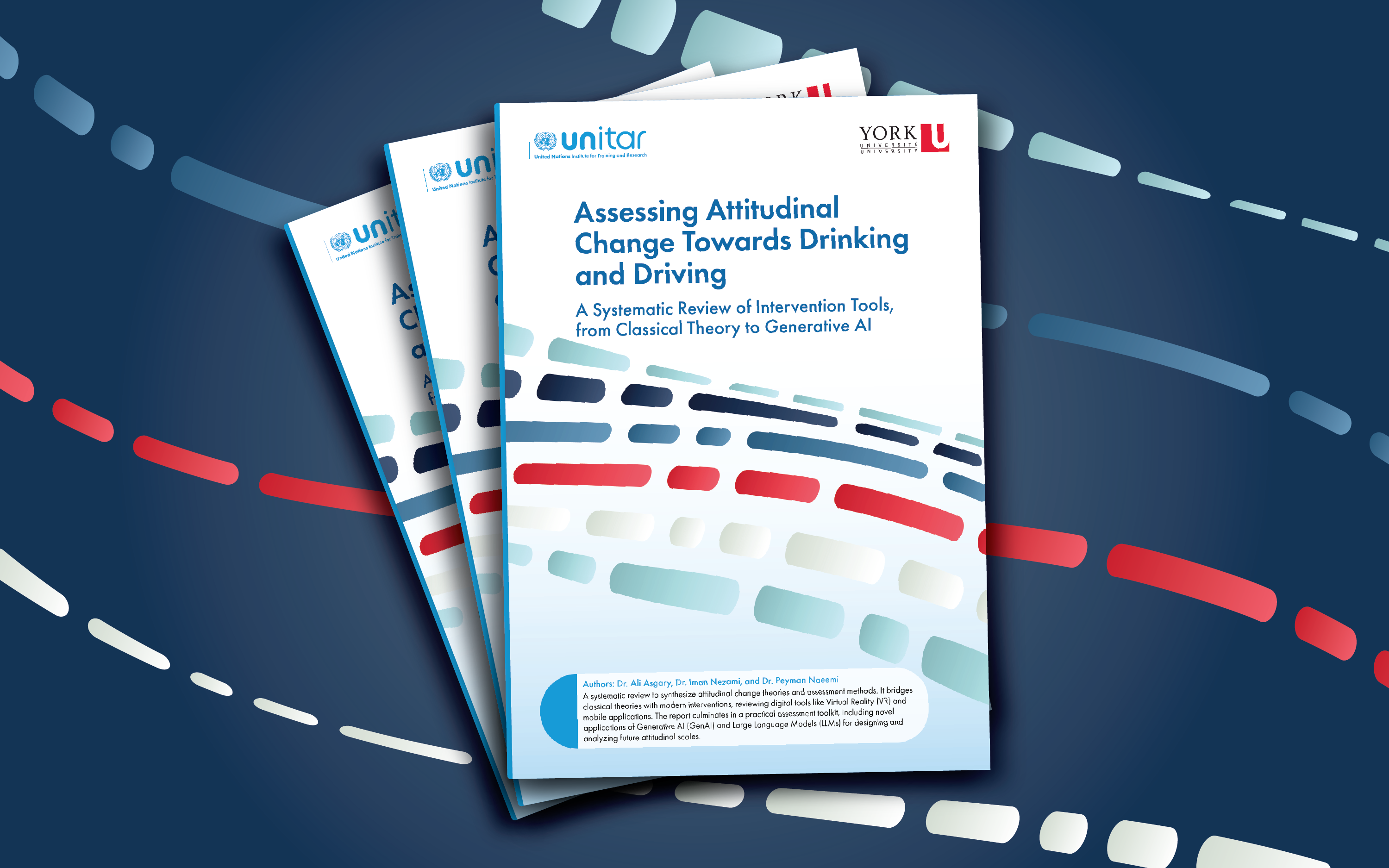
17 September 2026, Geneva, Switzerland - UNITAR, in collaboration with York University in Canada, released the study, "Assessing Attitudinal Change Towards Drinking and Driving: A Systematic Review of Intervention Tools, from Classical Theory to Generative AI". Understanding why many interventions produce only short-lived results, while providing a practical and evidence-based toolkit that governments, NGOs, and road-safety practitioners can use to measure and, ultimately, increase attitudinal and behavioural change are the key objectives of this study.
It places emphasis on drink-driving as one of the most prevalent contributors to global road trauma, causing an estimated twenty-seven percent of all road death injuries and costing economies billions of dollars each year. Despite decades of campaigns, self-reported rates of driving within two hours of drinking still range from 5 per cent to 34 per cent across countries, and the behaviour continues to kill or injure tens of thousands of other third parties annually.
The review presented bridges classical theories with modern interventions, reviewing digital tools like Virtual Reality (VR) and mobile applications. It includes a systematic review of high-quality studies about interventions spanning four decades, a map and analysis of nine dominant theories of attitude and behaviour change, aligning them with thirteen intervention categories that include legal reform, mass-media awareness, brief motivational counselling, alcohol-interlock programmes, virtual-reality simulations, alternative-transport incentives, family-based initiatives, and multi-component community projects.
The report culminates in a practical "Attitudinal Change Assessment Toolkit", including novel applications of Generative AI and Large Language Models for designing and analysing future attitudinal scales. The toolkit aims to enable users to match the appropriate intervention type for their specific needs alongside the most sensitive, cost-effective, and culturally adaptable measurement methods. It also includes a one-page selection grid to help practitioners to choose instruments by answering four questions.
- What is the primary aim of the intervention (education, emotion, or behaviour)?
- Is quantitative or qualitative evidence required?
- Are participants reached individually or in groups? and
- Do we need direct self-report or indirect behavioural and implicit measures?
Methods that appear consistently across the selected criteria are flagged as "optimal first-line tools," reducing both measurement error and evaluation cost.
To address drink-driving, understanding patterns of alcohol use and how drink-driving varies across contexts due to environmental, socioeconomic, cultural, religious, and individual behaviour factors is essential. Equally critical is the design and implementation of tools and methodologies capable of identifying, understanding, and tracking changes in public attitudes and behaviours over time. The toolkit and review presented in this publication aim to serve as a tool for road safety practitioners, non-governmental organizations, and governments in evaluating intervention effectiveness, protecting vulnerable road users, and demonstrating measurable progress towards safer roads.