
A University of New Mexico research team spent several weeks in northern Alaska this summer studying how permafrost thaw may be changing water quality and the movement of carbon through Arctic watersheds.
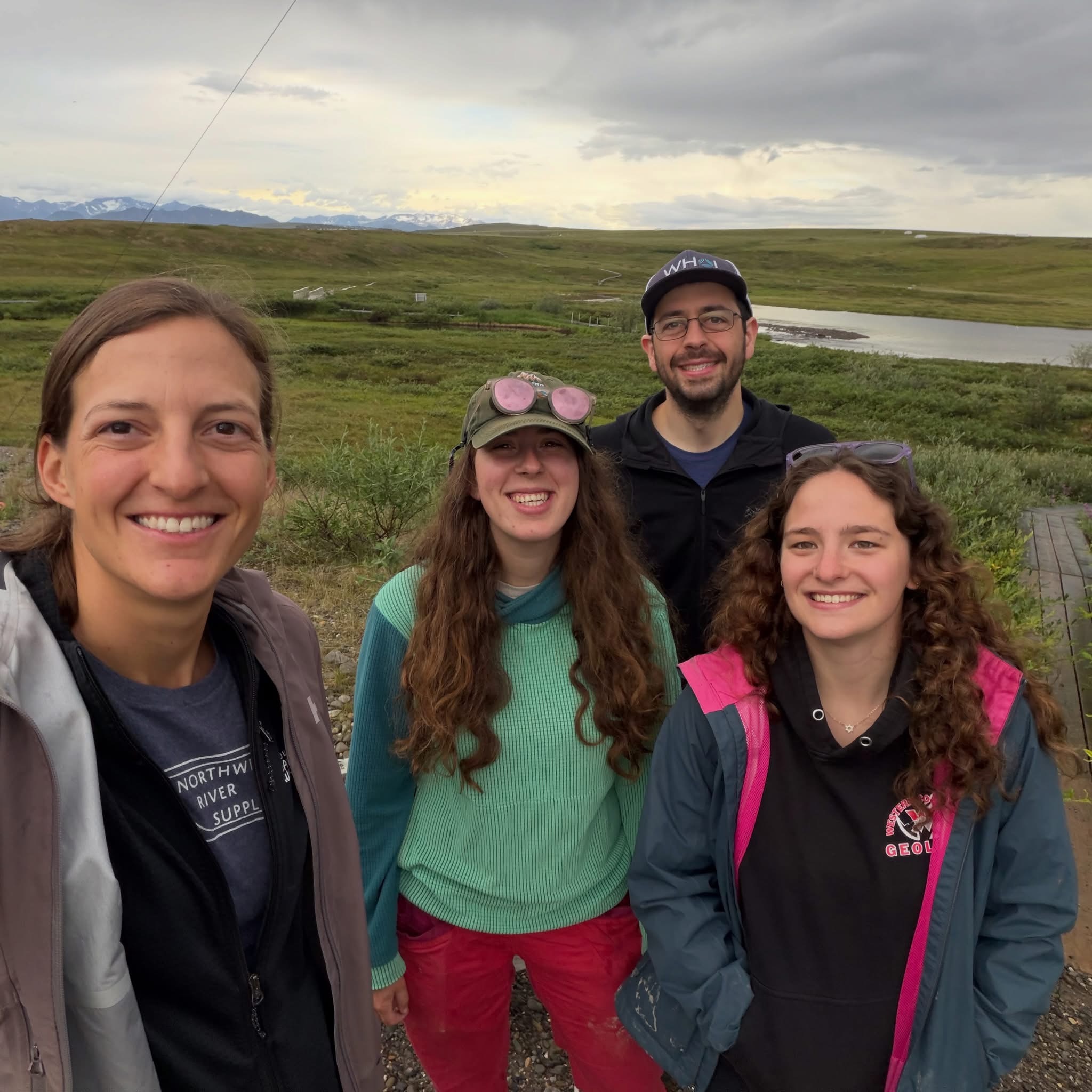
Led by Assistant Professor Marisa Repasch, the July field campaign focused on the Kuparuk, Atigun and Sagavanirktok River watersheds on the North Slope of Alaska, about 33 degrees north of Albuquerque. The team collected soil, soil pore water and river and stream water samples to better understand how thawing permafrost affects groundwater chemistry and the broader Arctic ecosystem.
The research is part of a growing program at UNM focused on understanding how Earth surface processes, including erosion and weathering, influence the global carbon cycle.
"The main goal of our recent field campaign in Alaska was to investigate how permafrost thaw may be impacting surface and groundwater quality in Arctic watersheds," Repasch said.
As the Arctic warms, the layer of soil above permanently frozen ground — known as the active layer — can become deeper. This exposes previously frozen minerals to water and oxygen, potentially changing the chemistry of groundwater and streams.
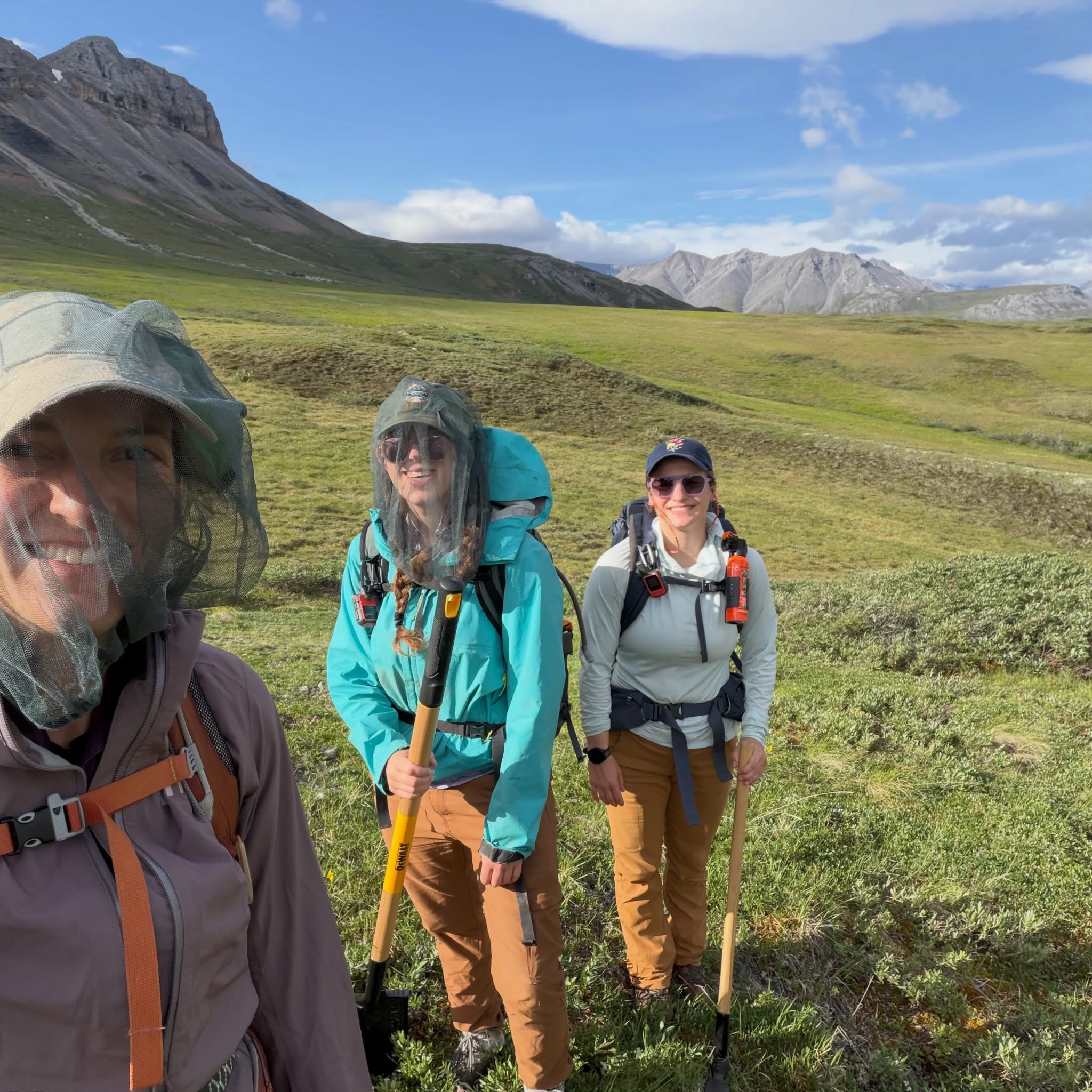
The researchers are developing a reactive transport model to simulate shallow groundwater flow and chemical reactions within the active layer. The model will allow them to examine how water chemistry could change under future climate scenarios.
One concern is the oxidation of pyrite, an iron and sulfur bearing mineral found in some soils and bedrock. When pyrite reacts with oxygen and water, it can generate sulfuric acid, lowering the pH of groundwater and creating acidic conditions that can negatively affect Arctic ecosystems and aquatic habitat.
The team is also working with researchers at Sandia National Laboratories to examine how proposed solar geoengineering strategies, including stratospheric aerosol injection, could affect water quality in Arctic systems. Funding from the Sandia-University Partnership program helped support the field campaign and the collection of data needed to establish initial and boundary conditions for the model.
Getting into the field
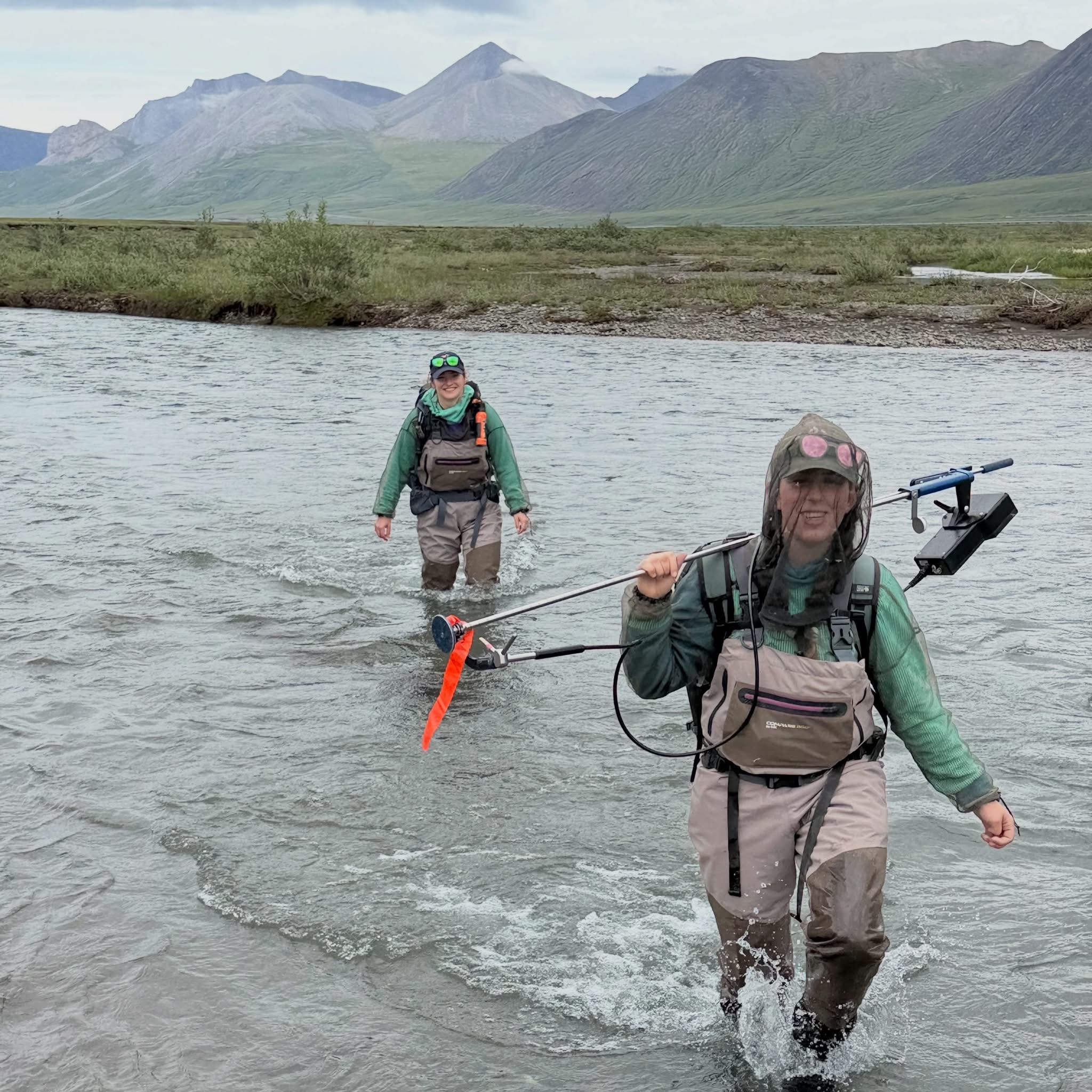
Collecting samples in the Arctic required researchers to work across a landscape shaped by permafrost, snowmelt, rain and changing water pathways.
For soil sampling, the team used a motorized SIPRE corer, a tool designed to drill through frozen soil and ice. Researchers collected soil cores from floodplains to depths of about 1 meter, allowing them to examine soil and groundwater chemistry at the boundary between thawed and frozen ground.
Collecting samples in this landscape was not always easy.
"Frozen ground prevents infiltration, causing the soils to become saturated with water from snowmelt and rain," Repasch said.
In some locations, researchers dug soil pits by hand. Incoming graduate student Misha Toor, who has experience digging soil pits through previous work with the U.S. Geological Survey, was able to put those skills to use in Alaska.
For Toor, an incoming Ph.D. student, one of the most striking aspects of the fieldwork was the diversity of the landscape.
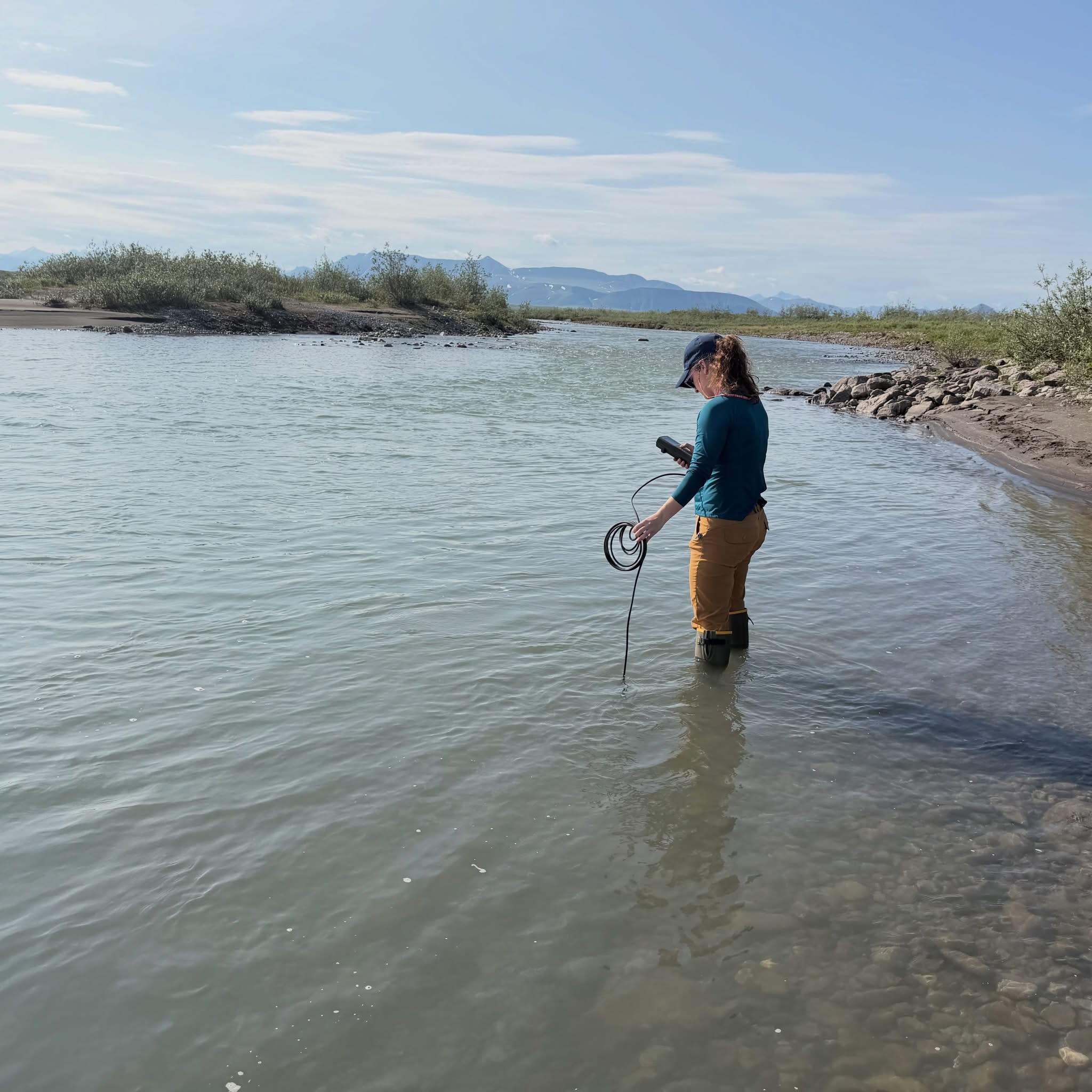
"Following rivers from their headwaters in the mountains to the Arctic coastal plain, I was surprised by the heterogeneity in the landscape," Toor said. "Alluvial fans border swamps, where standing water sits above dry gravel streambeds. It was very interesting observing this landscape and trying to understand how water moves through it, often in unintuitive ways. I'm excited to study how these flow paths may be changing in a warming Arctic."
For Miranda Noonan, a current M.S. student, the field campaign offered an opportunity to see firsthand the landscape she had been studying for nearly a year.
"Getting to see my field site in person after researching it for almost a year was an unforgettable experience," Noonan said. "I was able to apply skills that I learned in the desert in a permafrost landscape. I also got to see the iron oxidation I had been reading about in my study area."
Noonan said the experience will be valuable not only for her research, but also for her development as an early career scientist.
"This work is so valuable for my research but was also such an amazing opportunity to learn and grow as an early career scientist," Noonan said.
Connecting Alaska to the global carbon cycle
The Alaska research is one part of a broader research program Repasch is building at UNM. Her work examines how processes occurring at Earth's surface influence the global carbon cycle.
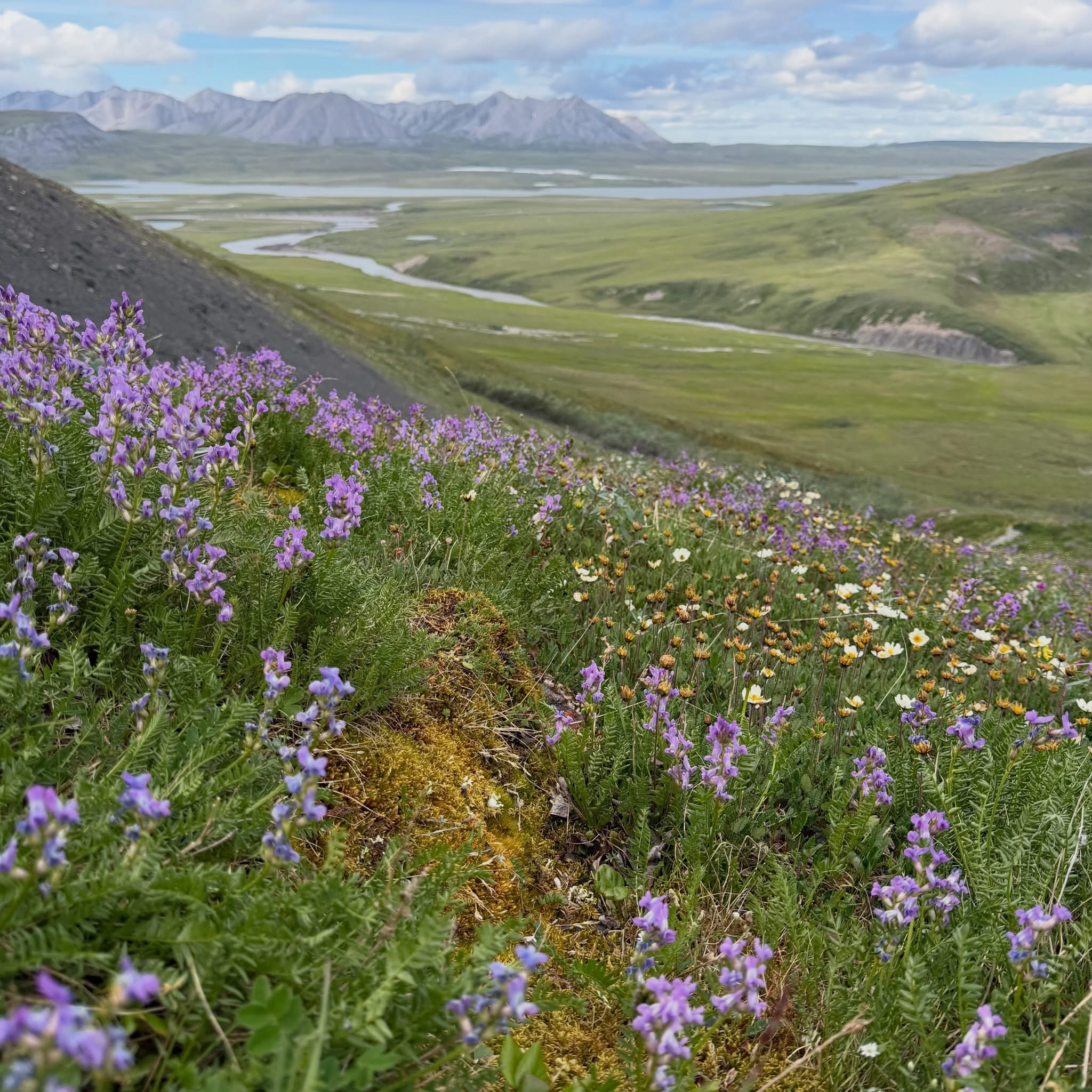
The program has two primary study areas: the Rio Grande floodplain in New Mexico and the Brooks Range and North Slope of Alaska.
In New Mexico, climate change and water management practices are contributing to a warmer and drier Rio Grande, potentially reducing the river system's capacity to store organic carbon.
In northern Alaska, warming temperatures are changing the way organic carbon cycling is stored and cycled across hillslopes and floodplains. Because permafrost soils and bedrock store substantial amounts of organic carbon, changes in erosion, sediment transport, groundwater flow and river runoff could affect how carbon moves between land, water and the atmosphere.
The rivers on Alaska's North Slope offer researchers a natural laboratory for observing those changes.
"Because the Arctic is warming rapidly, these watersheds provide natural laboratories for observing how permafrost thaw and changing hydrology alter surface processes and their role in the global carbon cycle," Repasch said.
The samples collected during the July field campaign will now provide researchers with data to help build and test their models. Ultimately, the work could offer a clearer picture of how continued Arctic warming may affect water quality, aquatic ecosystems and the movement of carbon through Arctic landscapes.
Top photograph caption: Researchers etting up for water sampling in the Atigun River headwaters.


