
Seven professors from the University of Würzburg are among the Highly Cited Researchers 2026. This list includes researchers whose work is cited particularly often by other scientists.
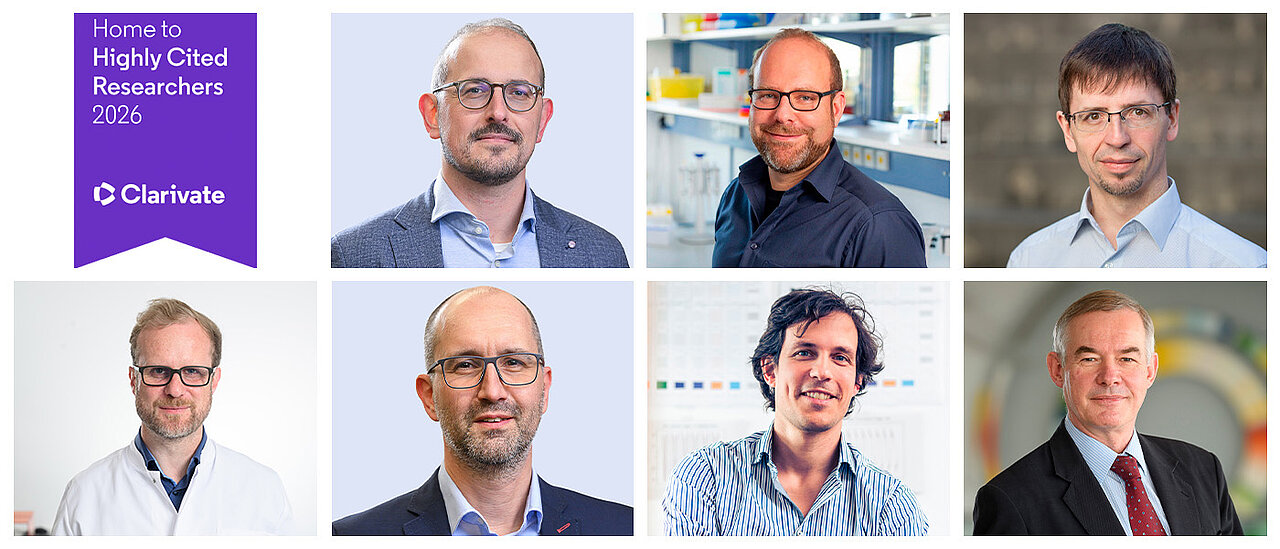
Clarivate Analytics, a company specialising in citation data, has published a new list of Highly Cited Researchers worldwide. Once again, professors from Julius-Maximilians-Universität Würzburg (JMU) are included: cell researcher José Pedro Friedmann Angeli, physicians and immunologists Michael Hudecek, Georg Gasteiger, and Wolfgang Kastenmüller, systems biologist Dominic Grün, physicist Ronny Thomale, and physician Christoph Wanner.
Publications are considered highly cited if they are among the top one per cent most cited in their field in their year of publication. Only those who are involved in a particularly large number of such publications are included in the circle of Highly Cited Researchers.
In 2026, this circle consists of 7,090 individuals. Most of them work in the United States (36.8 percent), followed by China (20.9 percent) and the United Kingdom (7.3 percent). Germany ranks fourth, accounting for 5.3 percent of the frequently cited researchers.
Congratulations from the President
JMU President Paul Pauli congratulates the researchers: 'The fact that seven Würzburg scientists, two more than last year, are among the Highly Cited Researchers is impressive proof of our university's highly positive development over the last years and our researchers' international visibility. My congratulations to the honourees!'
Prof. Dr. José Pedro Friedmann Angeli
The professor at the Rudolf Virchow Zentrum - Center for Integrative and Translational Bioimaging, recognized as a Highly Cited Researcher for five consecutive years, is redefining our understanding of how cells live and die. His research shows how metabolic cues regulate oxidative forces at cell membranes and how changes in this balance can trigger ferroptosis, a regulated form of cell death. His goal is to turn basic principles into practical tools: new ways to predict and influence cell fate, and to transform membrane redox biology into precise treatments. This work is opening paths to more targeted treatments for difficult cancers and setting a blueprint for innovation across translational cell biology.
Prof. Dr. Michael Hudecek
Professor of Cellular Immunotherapy at the University Hospital Würzburg and head of the Würzburg branch of the Fraunhofer IZI, Michael Hudecek has played a key role in advancing the scientific and clinical development of CAR T-cell therapy. This treatment involves genetically modifying the body's own immune cells so that they can specifically recognise and attack cancer cells. Prof. Hudecek is working to further improve the efficacy and safety of this therapy, explore new applications for CAR T cells in haematology and oncology, infectious diseases, and cardiovascular diseases, and translate innovations into clinical applications and medical practice. His major contributions include the further optimisation of CAR receptors, virus-free methods for genetically modifying T cells, and the discovery of new target molecules on tumour cells. His research aims to further develop the concept of immune cell therapy, make it available to additional patient groups, and bring it into clinical use.
Prof. Dr. Georg Gasteiger
The founding director of the Max Planck Research Group for Systems Immunology at the University of Würzburg and head of the JMU Chair of Systems Immunology II is a leading international immunologist. His team investigates how lymphocytes interact with the various organs and tissues of the body. The research group has gained important insights into how the innate and adaptive immune systems are regulated depending on the specific tissue and what role these processes play in the development, regeneration, and ageing of organs. Building on these findings, Gasteiger's team investigates how these mechanisms influence immune responses to infections and tumours and contribute to the development of inflammatory diseases.
Prof. Dr. Dominic Grün
The head of the Chair of Computational Biology of Spatial Biomedical Systems and director at the Institute of Systems Immunology investigates how cells develop, specialise, and work together to regulate organ functions. He has conducted pioneering work in developing innovative bioinformatics methods for analysing individual cells. Using these methods, his research group created a comprehensive cell atlas of the human liver, providing new insights into the diversity of cell types and their spatial organisation. His team also identified previously unknown cell populations and precursor cells. Grün is currently investigating the molecular and cellular processes that regulate the regeneration of the liver, heart, and bone marrow, and how these findings can be used to gain a better understanding of tissue damage and diseases.
Prof. Dr. Wolfgang Kastenmüller
The founding director of the Würzburg Max Planck Research Group Network and head of the Chair of Systems Immunology I at the University of Würzburg investigates how immune cells organise themselves in space and time to effectively combat pathogens. His fundamental research has shown that successful immune responses depend on precisely coordinated interactions between different immune cells. In particular, he has demonstrated that T-cell activation is not a single event but occurs in several successive stages, each controlled by different cellular interactions. These processes determine whether T cells develop an effective immune response or enter a state of functional exhaustion. His work has fundamentally advanced our understanding of how immune responses are organised and provides important starting points for the more targeted development of vaccination strategies and immunotherapies.
Prof. Dr. Ronny Thomale
The head of the Chair for Theoretical Physics I deals with the theoretical description of strongly correlated electron states. Materials with these properties give rise to astonishing phenomena such as superconductivity, quantum Hall effect, spin liquids, topological insulators and magnetism. Fundamental research at the chair aims to predict new quantum states of matter and to better understand potential material candidates in combination with experimental investigations and state-of-the art methods such as artificial intelligence. This also extends to synthetic solid-state systems that can be used as simulators of special properties of quantum materials.
Prof. Dr. Christoph Wanner
The senior professor and former Head of Nephrology at the Medical Clinic and Polyclinic I of the Würzburg University Hospital is an expert in kidney disease in diabetes mellitus and cardiovascular disease in dialysis patients and after kidney transplants. Through worldwide clinical studies, he was able to show for the first time that a drug that is effective in the kidney can significantly delay the progression of kidney disease in diabetics up to renal replacement therapy. His work also focuses on the diagnosis, prognosis, and treatment of lipid metabolism disorders in kidney patients.


