
Since its founding in 1956, USF has built its identity around a thriving research culture. As USF marks its 70th anniversary, that vision has grown with the institution from modest labs with limited technology into an R1 university and membership in the prestigious Association of American Universities.
That growth didn't happen overnight. It required decades of adaptation, investment and a willingness to evolve. That spirit of evolution would come to define USF's research enterprise.
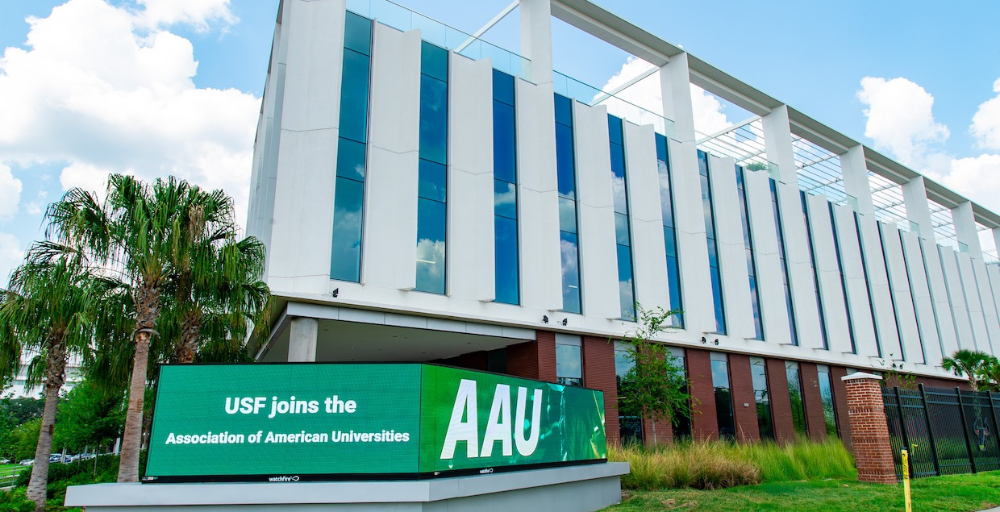
USF was designated an AAU university in 2023, marking a turning point as a leading research university
USF's research enterprise is driven by bold thinking and a commitment to solving real problems with actionable solutions. Our scholars are shaping innovations that improve lives locally, nationally and around the world.
Prasant Mohapatra
USF Provost and Executive Vice President
LAYING THE RESEARCH GROUNDWORK
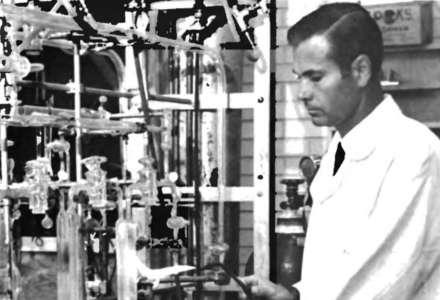
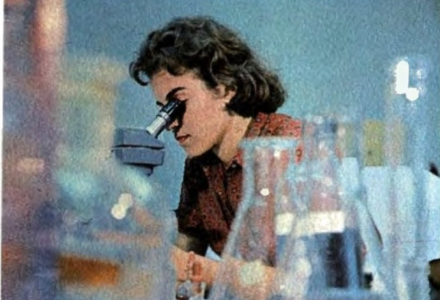
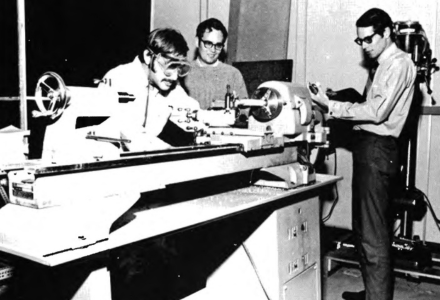
A quick look through USF's archives shows simple microscopes, chalkboards and beakers in standard labs of the 50s and 60s. Though USF lacked a sprawling research infrastructure, it had curious minds eager to explore science and mentor the next generation of researchers.
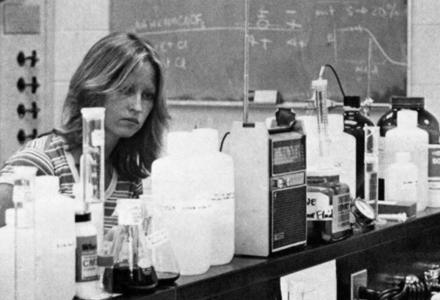
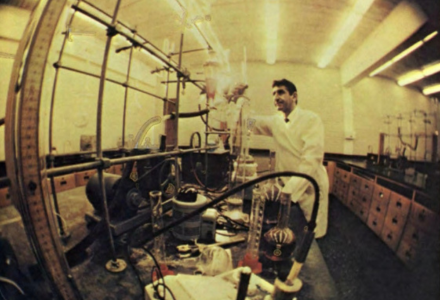
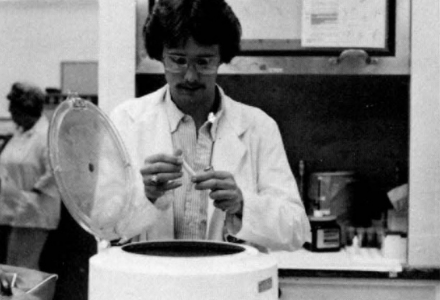
"In many ways, being a young university has been key to our success," said Randy Larsen, professor and associate dean for research in the USF College of Arts and Sciences. "While older universities have a more rigid and traditional framework, USF has had opportunities to be flexible and experimental in its research approach. Since we were smaller, our administration really listened to the needs of faculty as we grew our core research infrastructure."
That dedication sustained the university's research in its early decades. It attracted students like James Leahy, who earned his bachelor's and doctoral degrees in chemistry from USF in 1984 and 1990. He's now a professor and chair of the Department of Chemistry and researches treatments for HIV.
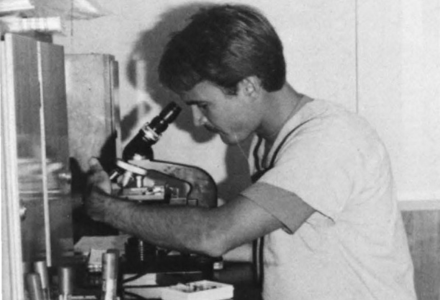
A USF chemsistry student in 1985 studying microorganisms [Photo courtesy of the USF libraries]
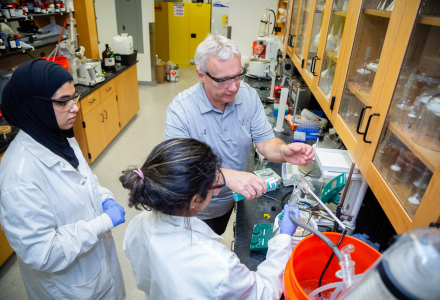
USF alum and current professor and department chair James Leahy educates future chemists
"Most of the research buildings didn't exist back then, with only a few labs doing any kind of research," Leahy said. "I was fortunate to be selected for one of the few undergraduate research opportunities. It's remarkable to see the growth-from more students conducting research to bringing in faculty and their labs from top institutions."
BACKED BY ACADEMIC MEDICINE
As USF's research enterprise expanded, one area quickly emerged as a driving force. USF Health plays a foundational role in the university's research portfolio. Health-related work has been part of USF's mission since its early years, with a major expansion in 1971 when it launched the medical school, later renamed the USF Health Morsani College of Medicine. In 2005, USF Health was born, unifying the university's colleges of medicine, nursing, public health and later pharmacy, along with USF's multispecialty physicians' group.
Matthew Anderson, senior associate vice president for research, joined USF Health the following year and has seen the vast expansion of biomedical research.
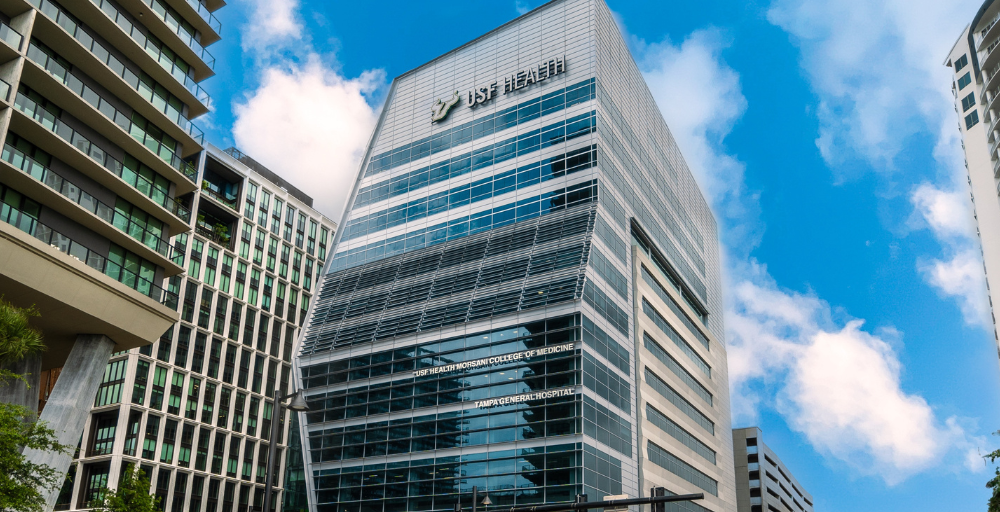
USF Health leads the university's research productivity with a vast portfolio of projects and luminary faculty
Early assessments of USF Health showed too much reliance on basic sciences and very little research being conducted in clinical sciences. Our leadership saw the importance of growing this area of research, which has led us to where we are today-driving 70% of the university's research with strengths in big data, neuroscience, infectious disease and cardiovascular research.
Matthew Anderson
Senior Associate Vice President for Research
The USF Health Morsani College of Medicine reached nearly $500 million in research funding in fiscal year 2025. One of the major drivers is Jeffrey Krischer, who is ranked among the top 1% of National Institutes of Health-funded researchers for his expertise in diabetes.
In conjunction with its primary teaching hospital, Tampa General Hospital, USF Health's prominence continues to grow. It now anchors the Tampa Medical & Research District-a hub for clinical care, academics, research and biotechnology.
A RESEARCH ENTERPRISE AT WORK
With a strong foundation in place, USF began scaling its research enterprise in more targeted and strategic ways. Since being designated a Preeminent State Research University by the Florida Board of Governors in 2018, USF has expanded its capacity while sharpening areas of distinction. That designation helped accelerate new initiatives, including the Department of Medical Engineering - a collaboration of the College of Engineering and Morsani College of Medicine-which is attracting top faculty and strengthening connections between health, technology and applied science.
USF's research portfolio reflects an institution that aligns with national priorities, from health and technology to national security initiatives, including projects that support the U.S. Department of War - many funded by contracts with the U.S. Army and U.S. Special Operations Command. Additionally, the launch of the Bellini College of Artificial Intelligence, Cybersecurity and Computing demonstrates the university's leadership in AI, which actually began in the 1980s.
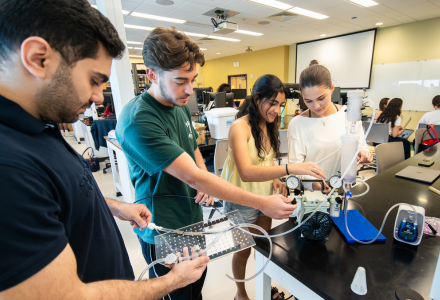
USF medical engineering students collaborate with companies to develop projects as part of their capstone experience
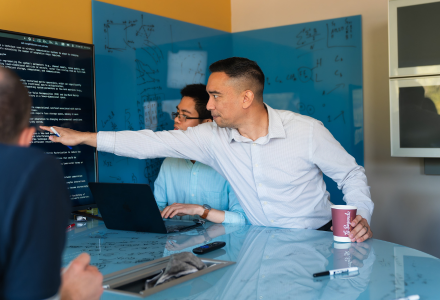
USF faculty, such as associate professor John Licato, are positioning the university as a leader in artificial intelligence
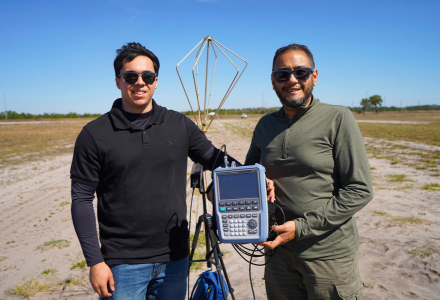
USF student Ryan Cartagena and Mina Tawadros of the USF Institute of Applied Engineering are working on radio-frequency training technology for the U.S. Army
"Each milestone underscores USF's trajectory as a national leader in comprehensive research excellence," Mohapatra said. "Across the university, our scholars are driving discovery and fueling impact."
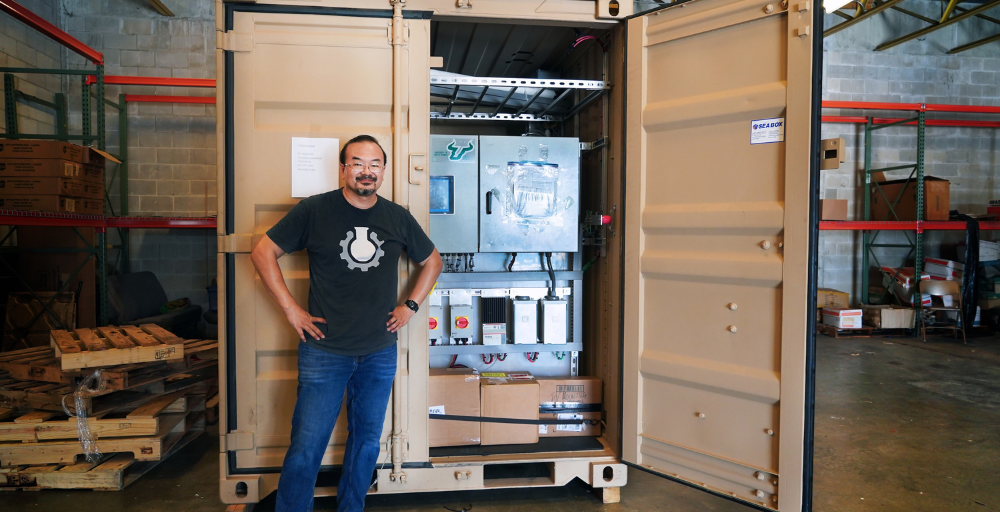
USF engineer Daniel Yeh invented and commercialized the NEWgenerator, which has been installed across the world
That spirit of innovation is reflected in faculty like civil and environmental engineering Professor Daniel Yeh. He invented the patented NEWgenerator-a solar-powered machine that generates nutrients, energy and water by safely recovering them from human wastewater. The now-commercialized technology was built to address sanitation concerns and is used worldwide.
A COLLABORATIVE LANDSCAPE
As its research capacity grew, so did the need to translate discovery into real-world impact. Innovation and commercialization remain central, with USF advancing discovery as the home of the Florida Inventors Hall of Fame and advancing ideas through programs such as USF Connect. The initiative provides resources, mentorship and a collaborative environment needed to launch and scale high-impact startups, such as NeuroEM, which invented a medical technology designed to fight cognitive decline.
As USF modernized with new technology and discoveries, its portfolio expanded. By 1989, the USF Research Foundation was established - developing specialized laboratory space and infrastructure to support USF research.
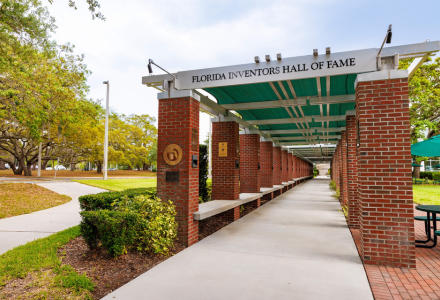
USF is home to The Florida Inventors Hall of Fame, which was established in 2013 to honor the state's innovative ecosystem
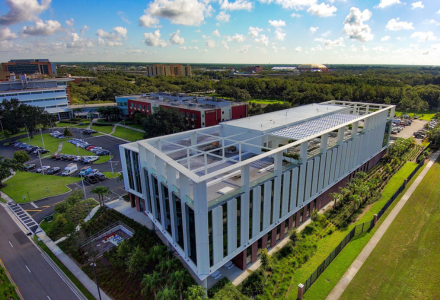
USF Research Park covers more than 112 acres and was named the 2022 Research Park of the Year by the Association of University Research Parks
"Our role is to create an environment where researchers can get to work and be brilliant," said Allison Madden, chief operating officer and corporate secretary for the USF Research Foundation. "The ecosystem of USF Research Park, with a built environment of more than 765,000 square feet, provides infrastructure for faculty and mixed-use projects, allowing work to scale and reach beyond Tampa Bay."
A BOLD RESEARCH FUTURE
As USF marks its 70th anniversary, its research enterprise is defined by decades of growth and sharpened direction. In 2025, that momentum translated to a record $750 million in research awards and ranking as a top producer of U.S. utility patents.
"The foundation and culture established over the last 70 years have laid the groundwork for what comes next," Larsen said. "We're witnessing the continued maturation of the research enterprise, positioning USF to sustain excellence and expand its national and global footprint."
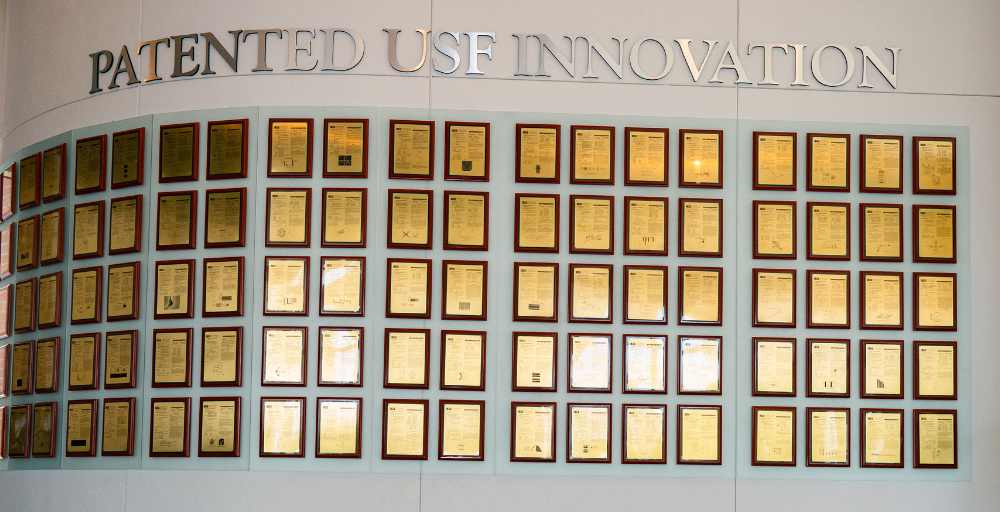
USF ranks among top 20 public universities for new patents
USF continues to bridge academic innovation with real-world startup application, recently becoming the first university to join startup hub Embarc Collective's new University Partnership Program. In collaboration with the Florida High Tech Corridor, it also reinforced its ties to Tampa Bay's innovation ecosystem by joining the ARK Innovation Center, creating a new avenue for entrepreneurs to connect and collaborate with the university's research and strengthen Florida's talent pipeline.
Our next chapter is about connecting talent, ideas and partners in ways that continue to move discovery beyond campus boundaries. When we empower our researchers to collaborate and translate their work into real-world solutions, we strengthen USF's role and help shape the future.
Prasant Mohapatra
USF Provost and Executive Vice President
Students remain central to USF's research mission, supported by expanded undergraduate opportunities that allow them to work alongside faculty on funded projects and gain valuable hands-on experience. Faculty continue to spearhead new discoveries, often in collaboration with colleagues and students across colleges and departments, while regularly serving as trusted experts with growing local and national visibility.
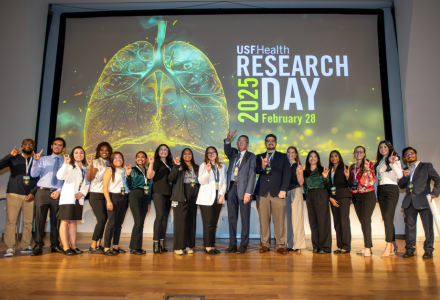
Events such as USF Health Research Day proudly showcase research innovation across all levels
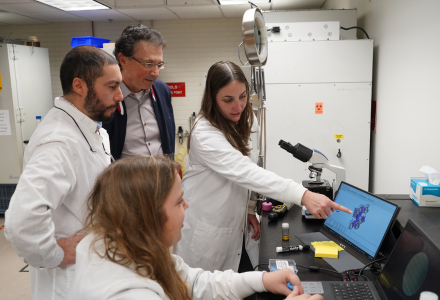
Scientists in chemistry and global sustainability collaborated with their doctoral students on a material to combat red tide
Seventy years after its founding, USF's research mission remains rooted in the same principle-bold ideas, real-world impact and a future shaped by discovery.


