
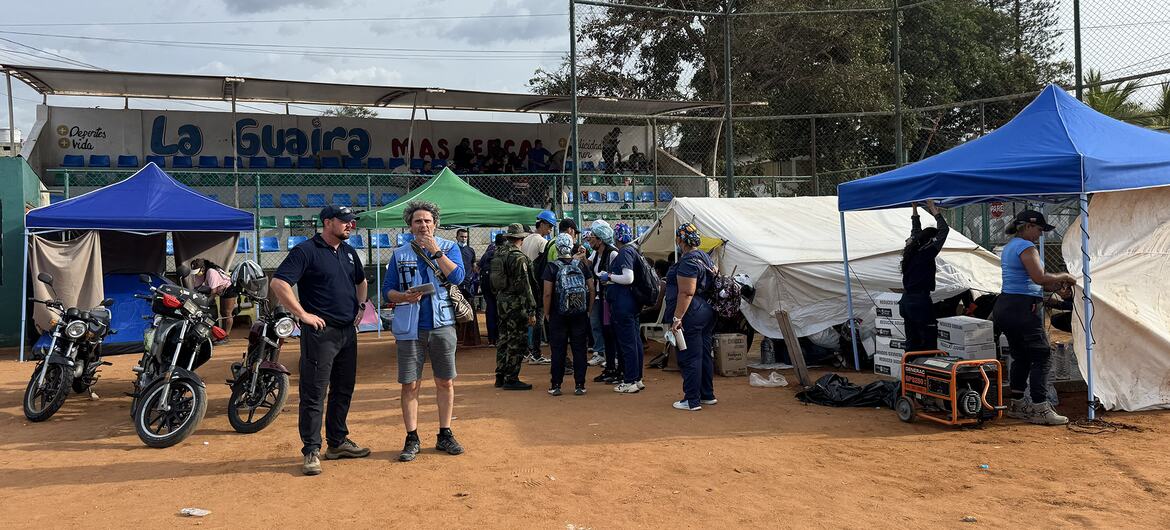
Where children once trained as baseball players, families now sleep under tarpaulins. The stadium at Playa Grande, on Venezuela's central coast, has become an emergency shelter for people who lost their homes - or cannot safely return to them - after the deadly quakes that struck the country on 24 June.
Venezuelan authorities have declared seven days of national mourning. At least 2,295 people have died and 11,256 have been injured, with around 6,400 rescued so far.
Fourteen camps for displaced people have been set up in La Guaira alone, as hospitals remain under severe strain and search and rescue operations continue.
Two nights sleeping rough
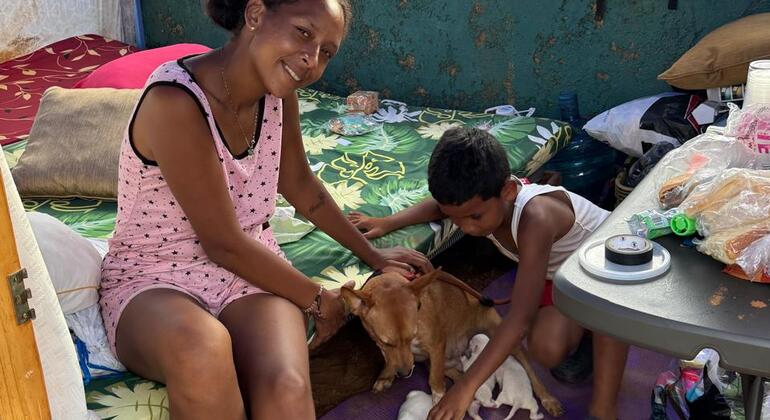
Daniela Jaramillo arrived at Playa Grande with her husband, her father, her five children - the youngest just ten months old - and the family dog, who was pregnant, after two nights sleeping rough outside a police station.
The earthquake struck as the family talked in the hallway of their home. "We grabbed the children, put them in the middle and held on to each other," Ms Jaramillo said. "We watched the pieces coming down, the walls. The most important thing was protecting the children."
When the shaking eased, they ran for a sturdier-looking building across the street - only for gas canisters to start exploding. They scaled a wall to reach open ground. "Everything blew up," her father recalled.
Two nights outdoors followed. "We were very afraid," Ms Jaramillo said. Her house was damaged but not destroyed, something she mentions almost apologetically, aware other families lost far more.
Bodies under rubble
"Thank God we had no loss of life," she said. "It would be selfish to say a house is the most urgent thing right now. While we're stable here, across the way there are still people trapped under rubble."
UN aid operation at a glance
- Rescue: At least 51 international search and rescue teams from 28 countries - 2,276 specialists and 165 dogs - remain deployed in the worst-hit areas.
- Funding: The UN released $15 million from its emergency fund and activated the Venezuela Humanitarian Fund. The United States contributed $100 million to the fund and a further $100 million for response operations.
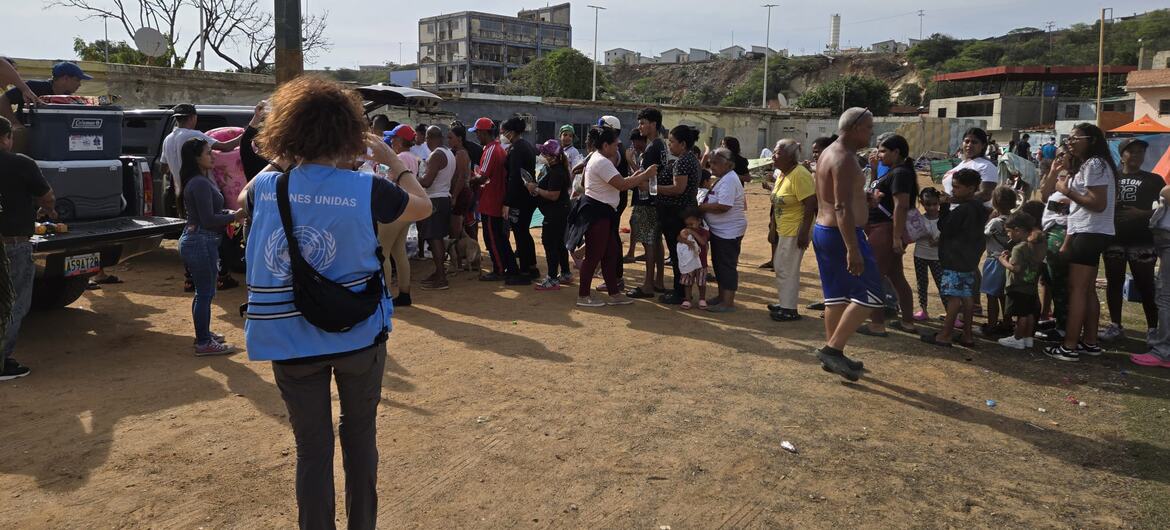
- Food: The World Food Programme has reached 2,000 people in La Guaira with ready-to-eat rations and a communal kitchen at Playa Grande.
- Shelter and protection: The International Organization for Migration is supporting shelters and registration of affected people. UNHCR is backing protection, data management and psychosocial support.
- Multisector response: The UN and partners are concentrating health, food, water, sanitation, protection and psychosocial services at three designated sites - the Polideportivo Vargas and the César Nieves and Playa Grande stadiums.
The Government has designated Playa Grande as one of three sites where the UN system is providing assistance, alongside the Polideportivo Vargas and the César Nieves stadium.
The World Food Programme ( WFP ) aims to have a communal kitchen running for displaced families by Friday. Children's agency, UNICEF , is identifying child protection spaces and working on water and sanitation. The UN migration agency ( IOM ) is helping plan temporary shelter.
"Search and rescue teams are still working tirelessly. Up until last night they were still finding people alive," said Vanessa May, head of the UN humanitarian affairs office for Venezuela.
Coordination with authorities is under way at what officials are calling "transitional camps," she said, aimed at providing healthcare, food security, nutrition and psychosocial support in one place.
Washed out
Conditions at the camp are harsh. Temperatures climb from around 24ºC in the morning to near 29ºC, and recent rain has soaked tents, bedding and belongings. "We'd rigged something up with sheets, but a huge bucket of water just came down," Ms Jaramillo said. "The children got soaked, our things got soaked. Most people lost their belongings all over again."
Amid the loss, one small piece of good news: the family's dog, rescued from their damaged house by Ms Jaramillo's father, gave birth to five puppies two days into their stay at the camp. A volunteer Brazilian veterinarian confirmed the mother and pups were healthy.
As evening falls, families prepare for another night under canvas. Ms Jaramillo said she tries not to think too far ahead. "There are still people missing."


