
There were fewer cases of breast cancer between two screening rounds, and of the cancers that did develop, fewer were advanced or aggressive. The final results from Lund University's MASAI trial are now available, and they show further benefits of AI-supported breast cancer screening. The study has already shown that AI support in mammography screening contributes to a 29 percent increase in detected breast cancers compared to traditional screening.
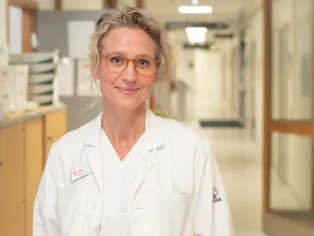
"Interval cancers are cancer that are diagnosed in the interval after a normal screening examination and the next scheduled screening round. Interval cancers are typically more aggressive and should be as low as possible. The frequency of these cancer is a central measure of how effective a screening test is," says study lead Kristina Lång, associate professor in Diagnostic Radiology at Lund University and consultant in breast imaging at Unilabs Mammography unit in Malmö.
In Sweden, women between the ages of 40 and 74 are regularly invited to mammography screening. 106,000 women participated in the MASAI (Mammography Screening with Artificial Intelligence) trial. In previous reports from the trial, the research team had shown that the AI-supported screening method was safe and resulted in 29 percent more detected cancers, mostly small, lymph node negative invasive cancers. The strategy also made the screening more efficient since the screen-reading workload for radiologists was reduced by 44 percent (see links to previous news articles). By December 2025 all participants had completed a two year follow up.
"Now, enough time has passed for us to assess the cancers that we did not detect within screening," says Kristina Lång and presents the latest findings:
- Overall, there were 12 per cent fewer interval cancers with AI-supported screening compared to standard screening (82 compared to 93).
- Interval cancers after AI-supported screening also had more favourable profile:
- There were 16 percent fewer invasive cancers, i.e. those that can spread
- There were 19 percent fewer large cancers
- There were 27 percent fewer aggressive subtypes
With AI-supported screening the sensitivity, i.e. the ability of the test to detect cancer, increased, without increasing the number of false positives.
"A false positive occurs when a woman is recalled for further assessment but does not have breast cancer," says Kristina Lång.
Now that MASAI is coming to an end, Kristina Lång talks about a milestone that has been achieved.
"In the study, the research team has been able to demonstrate clinical safety, accuracy and effectiveness. Many regions in Sweden have already started to implement AI-supported mammography screening, and more are expected to join. It is a rather low bar to get started, in principle it is merely to integrate an AI software into existing IT systems," says Kristina Lång.
AI support has already begun to be implemented in other parts of Europe.
"As the method is simple and effective and we can now demonstrate good results, it will probably have a general international impact in countries that use mammography screening," says Kristina Lång.
For the individual woman participating in screening, there is no noticeable difference; the mammography examination proceeds as usual. It is afterwards, when the images are to be read, that AI support is used. In traditional screening, the mammograms are read by two breast radiologists, a medical speciality that is in short supply. In the MASAI trial, AI was used to triage mammograms to single or double reading based on AI risk scores. AI was also used as detection support for the radiologists where it marked suspicious findings in the mammogram.
Key facts about the study: Clinical research // Peer-reviewed publication // RCT study // Randomised intervention // Single-blind trial
Publication
DOI: 10.1016/S0140-6736(25)02464-X
Funding
The MASAI study was funded with support from the Cancer Foundation, Lund University/ALF, RCC Samverkan, MAS Cancer


