
The latest release includes protein structure predictions for thousands of viruses, which could improve the response to future outbreaks
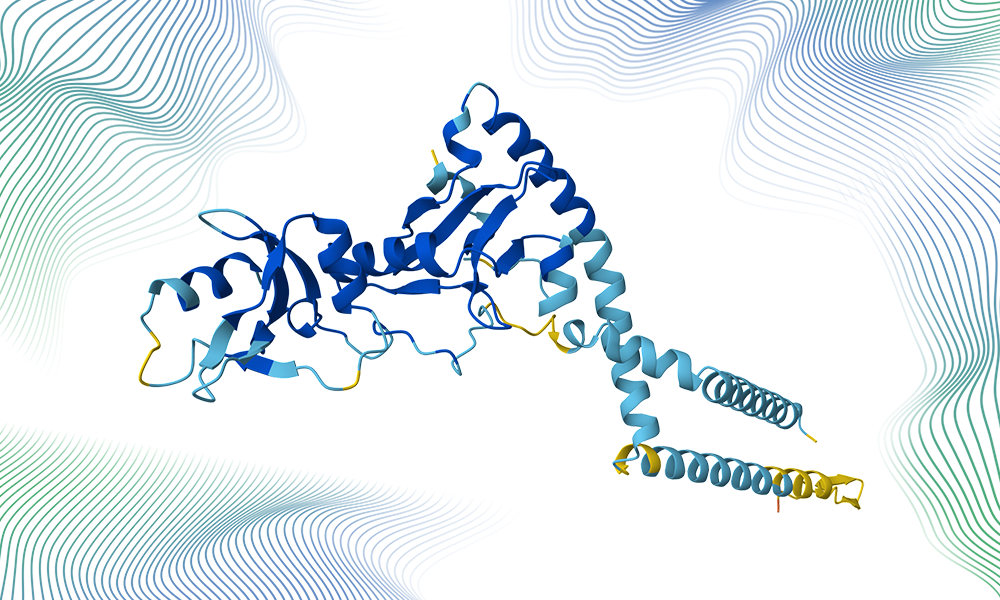
AI-predicted protein complex structures for over 2,800 viruses are now openly available in the AlphaFold Database . To better understand and protect against emerging pathogens, the dataset prioritises proteomes from viral families known to infect humans.
This work was made possible thanks to an international collaboration between EMBL's European Bioinformatics Institute (EMBL-EBI), Google DeepMind, NVIDIA, Seoul National University, the University of Glasgow, the Swiss Institute of Bioinformatics (SIB), the Coalition for Epidemic Preparedness Innovations (CEPI), and Sungkyunkwan University (SKKU) in South Korea. This release also includes complexes computed independently of this collaboration by colleagues at Lund University in Sweden.
Viruses rely on a complex network of specialised proteins which, among other things, allow them to interact with human cells. Visualising the 3D structure of these proteins can reveal the regions on a virus's surface that are key targets for diagnostics, therapeutics, and vaccines. Such information could help scientists respond more quickly in the event of a future pandemic.
"Making these data open is critical for understanding viral diagnostics and developing treatments and vaccines," said Jo McEntyre, Interim Director of EMBL-EBI. "They can support faster and more effective responses to future pandemics. They also cover lesser-studied viruses and lower the barriers for scientists in low-resource settings, who are confronting outbreaks first-hand."
Anticipating future health emergencies
The COVID-19 pandemic exposed how unprepared the world was to prevent and respond to emerging viral threats. An analysis by the Center for Global Development estimates a nearly 50% chance of the world facing a pandemic as severe as COVID-19 by 2050.
Despite this looming threat, many global health experts believe it is possible to reduce the impact of future pandemics by suppressing outbreaks faster and more effectively. One initiative - aptly called the 100 Days Mission - aims to deploy safe and effective treatments and vaccines within the first 100 days of identifying a new viral pandemic threat.
Achieving such an ambitious goal would require, among other things, access to structural information about viruses long before they pose a global threat. By making predicted viral protein complexes openly available in the AlphaFold Database, this release could help scientists understand what these proteins look like and which regions may interact with human cells. This information could, in turn, support the development of vaccines and other countermeasures if an outbreak were to occur.
The dataset release coincides with the United Nations General Assembly High-level Meeting on Pandemic Prevention, Preparedness and Response , taking place on 25 September at the UN headquarters in New York. The meeting will review progress towards commitments made in 2023 to strengthen global pandemic preparedness.
Collaborators will announce the new dataset release for the first time on 24 September, ahead of the UN meeting, at a roundtable hosted by CEPI and the World Economic Forum. Participants will also explore how AI can accelerate the development of diagnostics, therapeutics, and vaccines.
Open access to protein structure predictions
Over five years ago, Google DeepMind partnered with EMBL-EBI to create the AlphaFold Database , giving scientists around the world open access to predicted protein structures. Since its launch, the database has grown to more than 260 million protein and protein complex predictions, covering nearly every catalogued protein known to science.
For this new dataset release, the collaborators came together to develop and run a large-scale prediction workflow for analysing viral proteins, including optimisation from NVIDIA BioNeMo Inference Runtime. They also leveraged a curated set of viral proteomes, benchmarking models, and tools, to reach high throughput and accuracy.
A resource for discovery and pandemic preparedness
Guided by the UK Health Security Agency's priority pathogen tool , this new dataset focuses on systematic structure predictions for viral families known to infect humans. This approach provides invaluable molecular details for known protein complexes and permits the discovery of previously unknown interactions.
These structures cover a wide diversity of viruses, from 'common cold' viruses such as those in the Picornaviridae family, through to emergent viral threats such as Mpox, providing targets relevant for vaccine and drug development.
Responsible use and limitations
While predicted protein structures show what viral proteins may look like and how they might interact, they do not predict the impact of genetic variation on a virus or host-pathogen interactions. Scientists can't use these protein structure predictions to see how changes make a virus more deadly or transmissible, or to engineer viruses that infect humans. Predicted protein structures alone cannot tell scientists how a virus actually behaves; this requires experimental investigation in a laboratory.
"A protein complex structure alone doesn't tell us what happens when a virus mutates," explained Joe Grove, Professor of Molecular Virology at the MRC-University of Glasgow Centre for Virus Research. "The new dataset provides valuable foundational knowledge that can enable fundamental research and the development of countermeasures, but it doesn't shed light on why some viruses thrive and others don't, and it doesn't make it easier to engineer more dangerous pathogens."
All viral data can be accessed on the homepage of the AlphaFold Database website , using the Pandemic Preparedness Portal.
Supporting quotes
"Predicting virus family structures that infect humans is an important breakthrough," said Anna Koivuniemi, Head of Google DeepMind Impact Accelerator. "Adding these 3D models to the AlphaFold Database makes them immediately useful for real-world science. It gives researchers everywhere - especially in regions dealing with sudden disease outbreaks - the free tools they need to protect public health."
"Pandemic preparedness depends on having high-quality molecular information before an outbreak begins," said Anthony Costa, Director of Digital Biology at NVIDIA. "NVIDIA researchers worked with our partners to benchmark and run large-scale predictions of viral protein complexes, helping turn broad viral coverage into an open resource that scientists can use to advance countermeasure research."
"This work clearly demonstrates how the combination of powerful AI models and accurate data generated through human expertise can help address global health threats," said Philippe Le Mercier, Resource Manager, Swiss Institute of Bioinformatics (SIB). "This is especially critical for pandemic preparedness, as many viruses can only be studied using computational and AI tools."


