![[Translate to English:] Datierung der vielfältigen Wanderungsbewegungen auf einer Landkarte.](https://uni-tuebingen.de/fileadmin/_processed_/3/c/csm_map_PR_De_81309b3c73.webp)
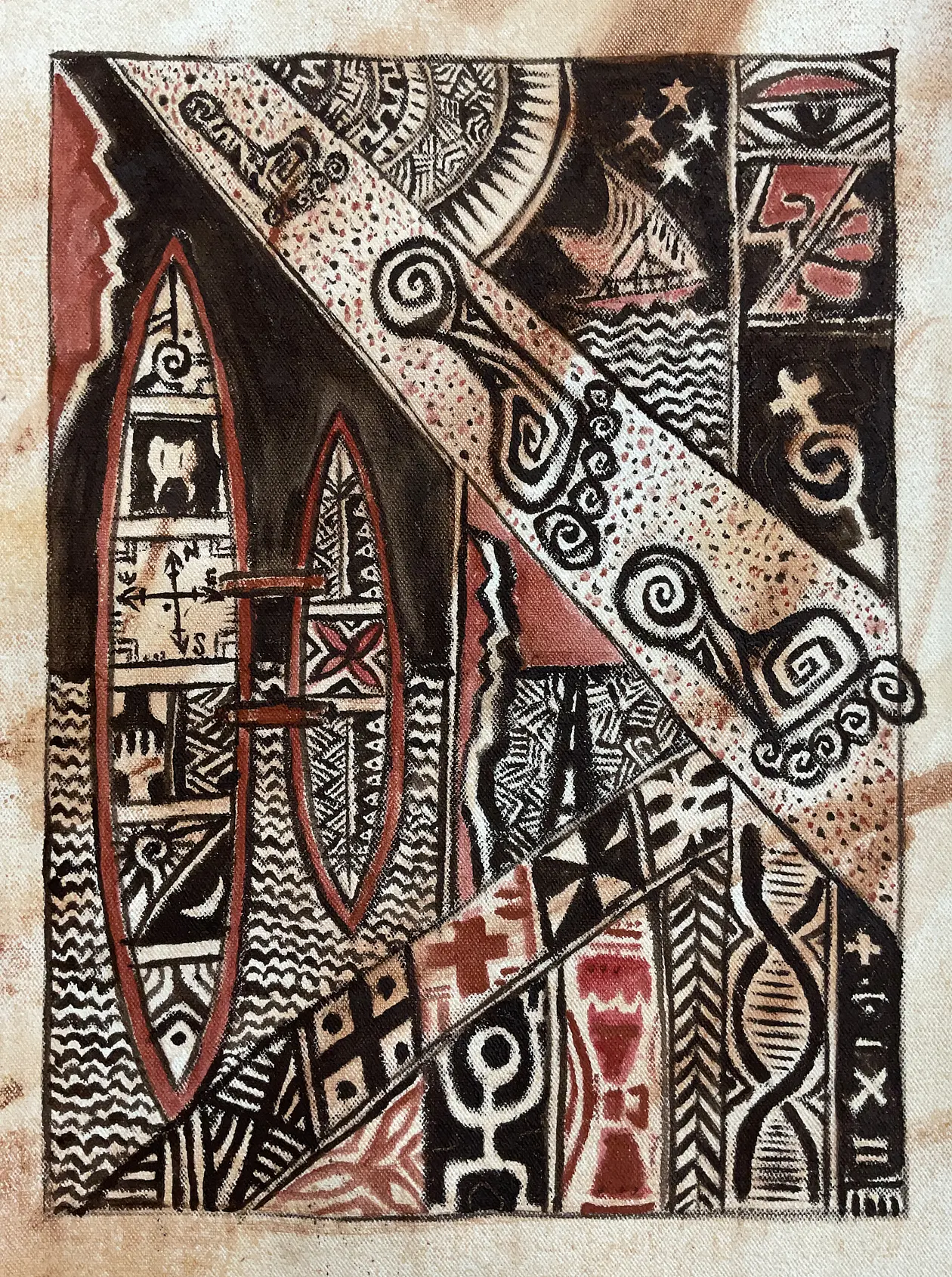
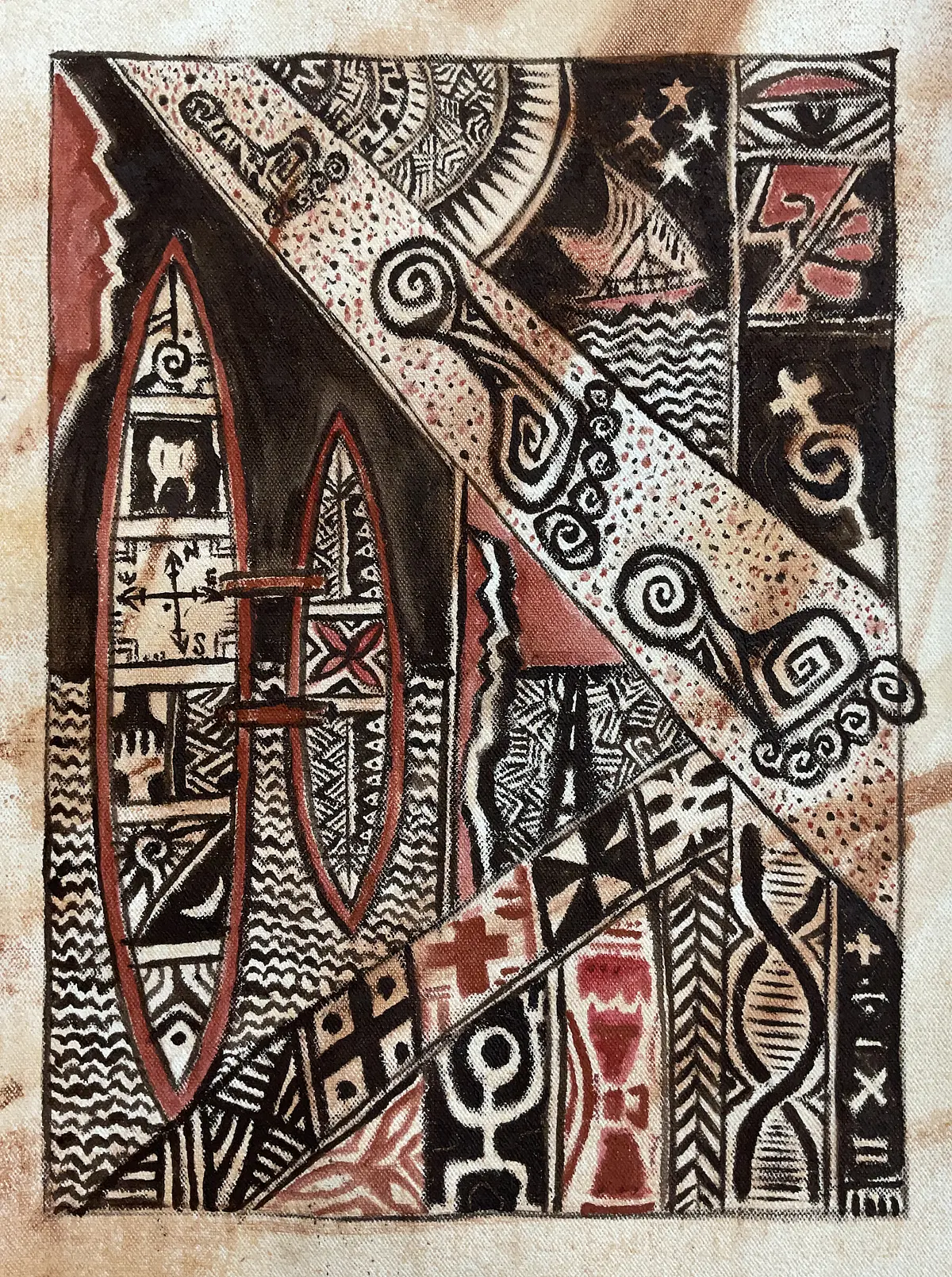
New genetic analyses of ancient human skeletons from western Remote Oceania are now shedding light on the complex history of settlement in this vast Pacific region over the past 3,000 years. With island nations such as Vanuatu, Fiji, and Tonga, the region is home to societies with a remarkably high degree of linguistic and cultural diversity. An international research team led by Professor Cosimo Posth of the Senckenberg Centre for Human Evolution and Palaeoenvironment at the University of Tübingen in collaboration with interdisciplinary research groups from the Southwest Pacific and Europe traced the major human migrations that helped shape the diversity of the western Remote Oceanian islands. The team was able to date the chronology of the migration waves more precisely than ever before. The new study has been published in the journal Cell.
Remote Oceania encompasses the major island groups of Vanuatu, New Caledonia, Fiji and Polynesia, the island region that forms an almost triangular shape on the map, stretching between New Zealand in the south, Hawaii in the north, and Easter Island in the east - Remote Oceania altogether spans a region of more than 30 million square kilometers of the Pacific Ocean. With more than 200 spoken languages, Remote Oceania is home to island societies shaped by past encounters between highly divergent groups, making it one of the most culturally and linguistically diverse maritime areas on Earth. "People first reached this region during one of the greatest human expansions into the open ocean, which began in Southeast Asia around 5,000 years ago, reaching the previously uninhabited archipelagos of Vanuatu, Fiji, and Tonga as early as 3,000 years ago," reports the study's first author, Dr. Michal Feldman of Posth's research group.
First ancient human genomes from Fiji
"While the first Remote Oceanians were primarily derived from a Southeast Asian source population, most present-day inhabitants of the region have ancestry from both Southeast Asian- and Papuan-related groups, due to later movements from Near Oceania," says Michal Feldman. "The geographic extent of the Papuan-related dispersals and their timing have not been well understood, mainly because we were missing information from key regions along the expansion routes, such as Fiji."
To better understand these processes, the research team generated new genomic data from human skeletal remains of 72 individuals dating through
Difference in the pace of migration waves
The researchers found differences in the pace of the two migration waves: "Based on genetic admixture dating, we were able to determine that the Southeast Asian-related early dispersal spread faster than the Papuan-related wave," says Cosimo Posth. "While we date the presence of Papuan-related ancestry in Vanuatu to as early as 2,700 years ago, another 500 years or so passed before this ancestry is detected further east in Fiji." In contrast, archaeological evidence shows that the early Southeast Asian wave travelled along this route much more rapidly. "Later, a second wave of Papuan ancestry reached Fiji," Posth adds. This second wave is likely to come from neighboring archipelagoes, such as Vanuatu, showing previously unknown genetic connections between islands in western Remote Oceania.
The study also investigated the genetic history of the enigmatic "Polynesian outlier" communities in Vanuatu. These contemporary communities maintain Polynesian cultural and linguistic features, despite being located outside of the Polynesian Triangle. "Polynesians who travelled across the sea gave rise to the Polynesian outlier communities in southern Vanuatu. We find direct evidence of this migration around 1,000 years ago," Posth explains.
A glimpse into early social structures
In Fiji, the research team conducted a detailed study of a community dating back some 1,500 years, based on burial findings and genomic kinship analyses, including the reconstruction of a family tree spanning five generations. "This community experienced recent Papuan-related admixture, but this ancestry was unevenly distributed within the community," Michal Feldman says, "We identified a biological kin group that was distinct in its ancestry profile and followed social practices possibly aimed at maintaining wealth or social status within the family."
"Overall, the new study outlines the major migrations involved in the settlement of western Remote Oceania", says Posth, "it also provides new insights into the complex interactions between human migration and social structures in early island societies".
Publication:
Michal Feldman, Lara R Arauna, Selina Carlhoff, Kathrin Naegle, Rita Radzeviciute, Dorothee G Drucker, Claudine Stirling, David Barr, Malcolm Reid, Patrick D Nunn, Elia Nakoro, Laurence Kiko, Martin Gibbs, Robert B. Rechtman, James Flexner, Wanda Zinger, Edson Willie, Richard Shing, Takaronga Kuautonga, Johannes Moser, Julia Gresky, Stuart Bedford, Geoffrey Clark, David V Burley, Hallie R Buckley, Rebecca L Kinaston, Frederique Valentin, Adam Powell, Johannes Krause, Cosimo Posth: Ancient genomes reveal distinct human dispersals and so-cial stratification in the settlement history of western Remote Oceania. Cell, https://doi.org/10.1016/j.cell.2026.07.044