
The Department of Climate Change, Energy, the Environment and Water (DCCEEW) is temporarily withdrawing staff from Macquarie Island research station due to the psycho-social risk to expeditioners of a potential H5 avian influenza (bird flu) outbreak.
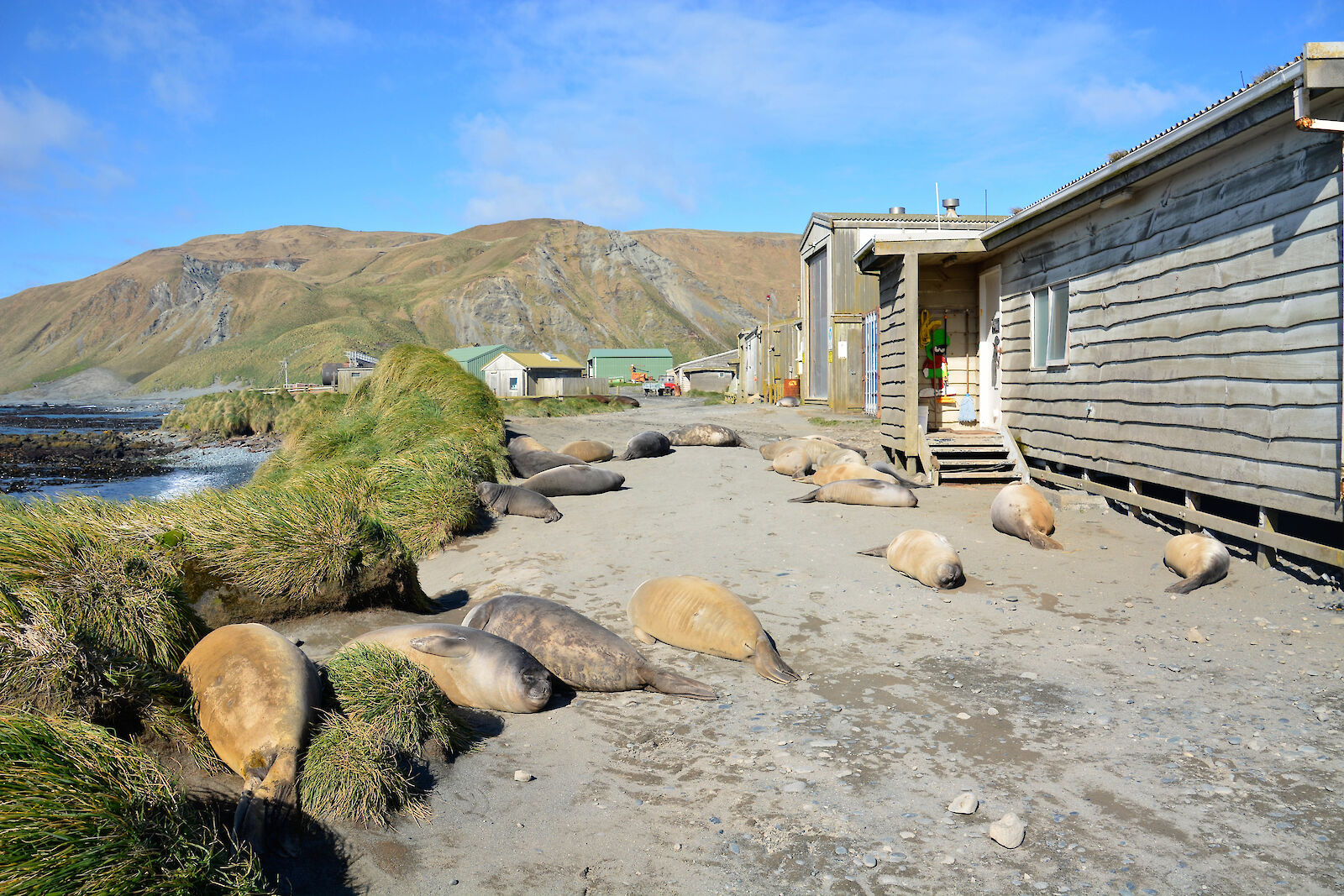
The research station is currently home to 24 tradespeople, scientists and support staff. The island is located in the Southern Ocean, about 1,500km south-east of Tasmania.
"This is an unusual measure but it's the most appropriate course of action based on our assessments of risk and operational realities," DCCEEW Deputy Secretary Sean Sullivan said.
"Our first priority is the health and safety of our expeditioners."
Macquarie Island is home to large elephant seal populations close to station buildings. Thousands of elephant seals are born close to the Macquarie Island research station every spring.
While H5 bird flu has not yet been detected there, expert assessments predict a high likelihood of a significant mortality event during the upcoming breeding season.
Elephant seals have proved particularly susceptible to H5 bird flu, with pup mortality rates of more than 90 per cent discovered in some areas on the sub-Antarctic external Australian territory of Heard Island and McDonald Islands.
"While the risk to humans of H5 bird flu is considered low, we can't ignore the psychosocial risks of living near potentially large numbers of affected animals," Mr Sullivan said.
"Our expeditioners already live and work in one of the world's most remote and challenging environments.
"It is important that we minimise any additional risks that could affect their wellbeing and the safe operation of our stations."
The Australian Antarctic Division is currently working through steps to mitigate impacts on Australia's international monitoring obligations, wildlife monitoring and infrastructure.
It is also developing plans to prepare the station for temporary closure.
Overseas experience shows few direct actions can be taken to mitigate the impacts of H5 bird flu on native species. Owing to the island's remoteness and harsh conditions, active control measures for wildlife are not planned at this stage.
Fortunately, wildlife on Macquarie Island exists in a largely undisturbed state.
The territory is free of most invasive species that threaten native species and ecosystems commonly found in mainland Australia.
This follows significant investment and effort in previous years to eradicate rabbits, rats and mice, which has boosted resilience and increased chances of recovery among island seals.
Australia's icebreaking research and supply vessel, RSV Nuyina, will travel to the island in late September or early October to retrieve personnel and essential cargo.
"The Australian Antarctic Division is exploring options for monitoring the situation on Macquarie Island, with a view to returning expeditioners to the station in coming seasons," Mr Sullivan said.
"We remain committed to maintaining a long-term presence on Macquarie Island."


