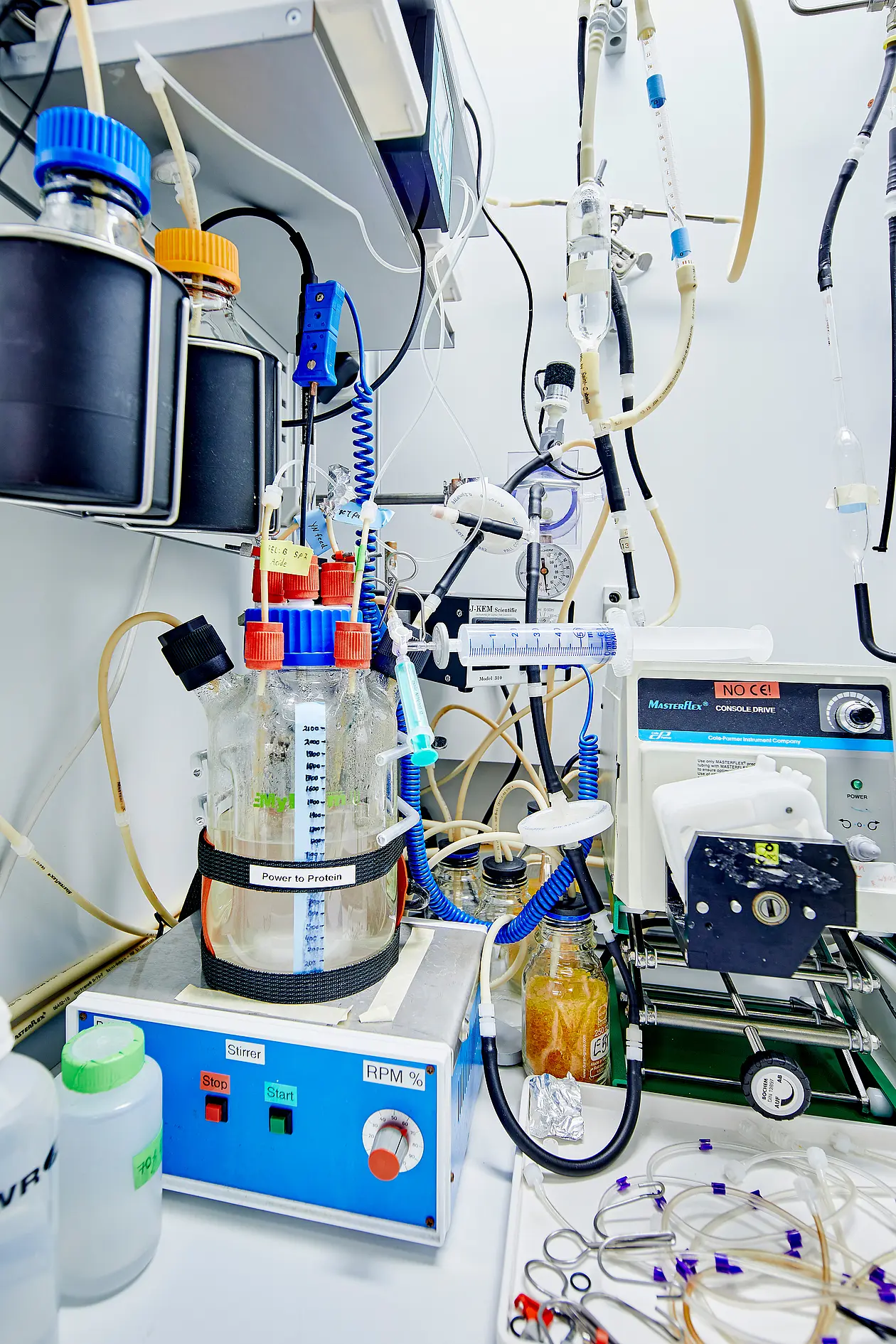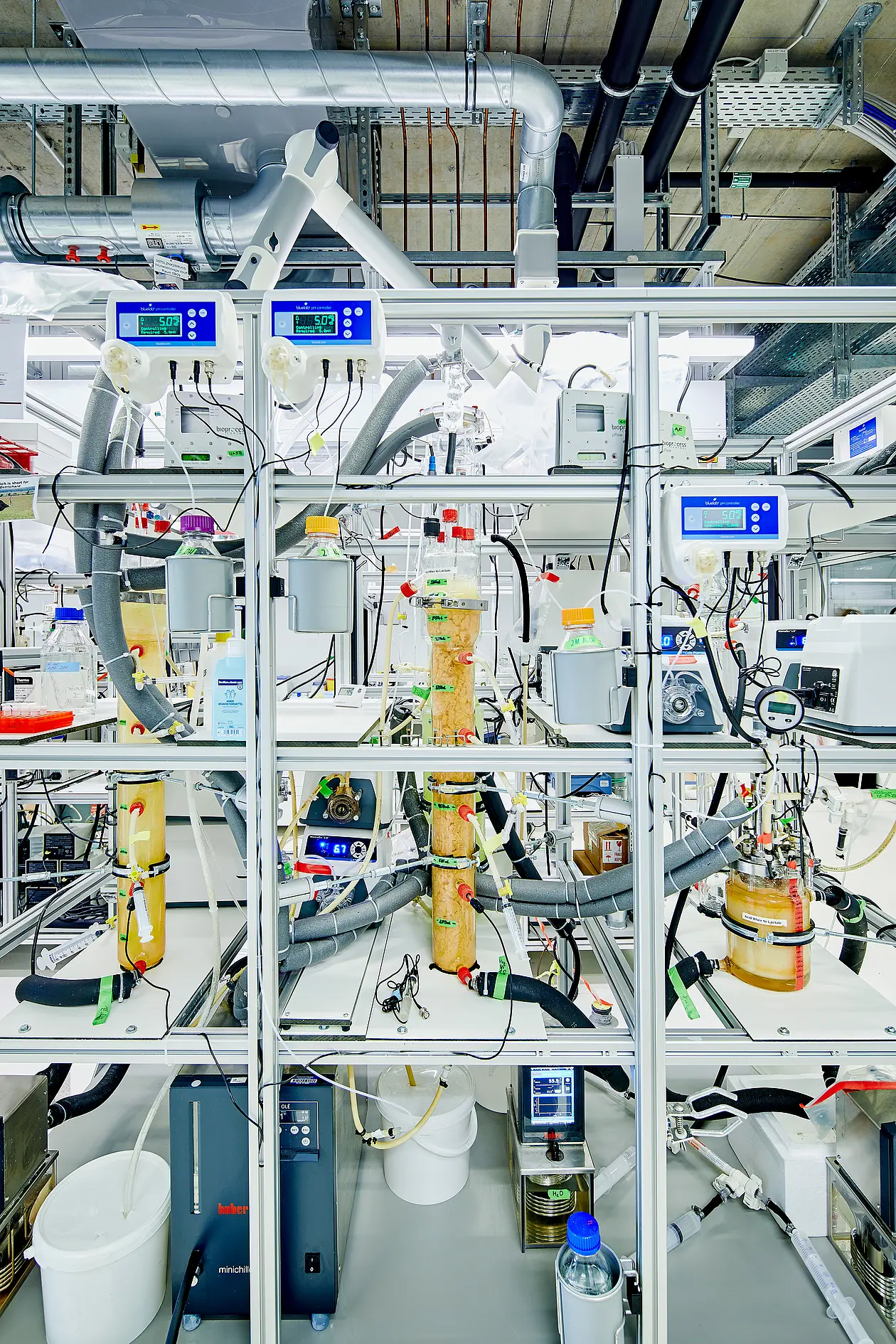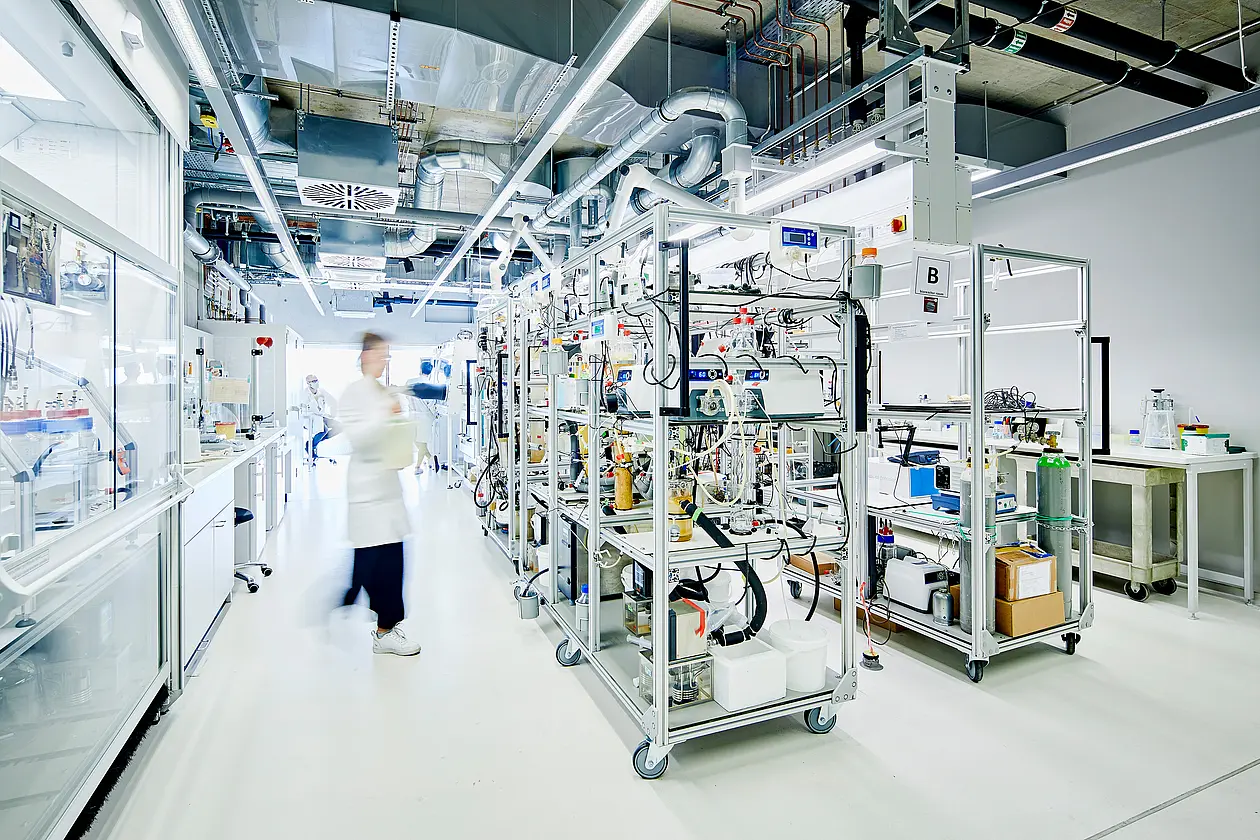
Researchers are developing biotechnological processes that enable microbes to produce proteins and vitamins for human consumption using basic chemical ingredients, such as carbon dioxide, hydrogen and oxygen - entirely bypassing livestock farming and agriculture. Because these methods also require energy input, they are popularly called "power-to-protein" and "power-to-vitamin" processes. Environmental biotechnologist Professor Lars Angenent, of the University of Tübingen's excellence cluster, Control of Microorganisms to Fight Infections (CMFI), has optimized one such process in the laboratory; it produces proteins as well as vitamin B9, also known as folic acid.
The process is unique in that it comprises two steps, using two different microbes sequentially. Angenent and his team have been working to find out if it can be scaled up to technically and economically viable industrial production. They have found that a production facility capable of supplying 5.6 million people with the recommended daily dose of vitamin B9 and contributing to their protein intake at market prices would pay for itself after just five years. The study has been published in the journal PNAS.
The growing world population and global warming pose major challenges for conventional agriculture. Livestock farming, in particular, uses up a lot of resources and contributes significantly to the release of substances harmful to the environment. According to United Nations estimates, as early as 2023, 733 million people - more than nine percent of the world's population - were suffering from undernourishment. "It is feared this number will continue to rise. Especially in poorer countries, protein needs cannot be met," says Lars Angenent. The human body cannot produce all essential nutrients on its own and relies on the intake of certain proteins and vitamins.
Electricity prices have a major impact on overall cost
Power-to-protein and power-to-vitamin plants need energy to operate the bioreactors. These are containers holding the liquid in which microbes convert raw materials into the desired products under controlled conditions, such as constant temperature and pressure. Further energy is required to produce free hydrogen from water. In Angenent's two-stage bioreactor system, the bacterium Thermoanaerobacter kivui reduces carbon dioxide to acetate using hydrogen in an oxygen-free environment during the first production step. The bacterium is undemanding and produces the folic acid required for acetate production. Subsequently, baker's yeast - a fungus called Saccharomyces cerevisiae - converts the acetate into proteins in the presence of air. "The yeast itself, enriched with proteins and folic acid, is safe to eat. As a dietary supplement taken in small daily amounts to meet vitamin B9 requirements, it is a safe food," says Angenent. "If the full protein requirement is to be met through microbially produced proteins, the yeast must be purified to remove substances that can trigger gout, for example. In that case, the manufacturing process becomes more complex accordingly."
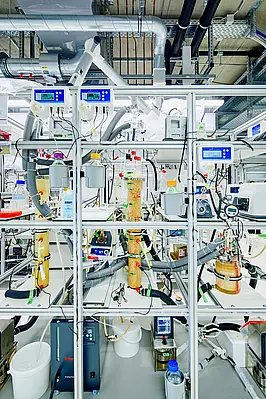
A two-stage bioreactor facility with a volume of 1,750 cubic meters, as outlined in the biotechnology research team's sample calculation, could produce 12.9 kilotons of yeast annually, containing 813 kilograms of folic acid and 5.6 kilotons of protein. This amount would be sufficient to provide 5.6 million people with the recommended daily dose of folic acid and 5 percent of their protein needs. At a price of 20 dollars per kilogram of the enriched yeast, the production facility would pay for itself in five years. "According to our calculations, the minimum price for economically viable production is determined primarily by the price of electricity and the energy required for electrolysis, which is used to produce hydrogen," says Angenent. "Under ideal conditions, the price could be reduced to 4.53 dollars per kilogram if, for example, there were no costs associated with producing carbon dioxide, and the yeast production rate could be further increased." If the two-step process is primarily used to fully supply people with protein, the yeast must be heat-treated for purification. "This would raise the minimum price to 14.24 dollars per kilo of yeast; at a price of 20 dollars, the equipment would pay for itself in seven years."
In both production models, testing revealed no technical problems with scaling up to an industrial facility. "The products generated would be in the same price range as other protein products derived from yeast, plants, whey, or algae and could likely hold their own against the competition in the food market," says Angenent. However, the calculations also showed that, in the power-to-protein and power-to-vitamin processes, the electrochemical processes for hydrogen production in particular would need to be further developed to achieve greater efficiency. "Yet the processes have great economic potential from several perspectives. For example, the carbon footprint of protein and vitamin production could be significantly reduced compared to production from animals and plants."
Publication:
Lisa Marie Schmitz, Juan E. Ramírez-Morales, Andrés E. Ortiz-Ardila, Shan He, Ievgen Duboriz, Joseph G. Usack, Dorian Leger, Milena Ivanisevic, Largus T. Angenent: Power-to-Vitamins or Power-to-Protein: An Evaluation of the Integrated System at Industrial Scale from Techno-Economic Perspectives. Proceedings of the National Academy of Sciences, https://doi.org/10.1073/pnas.2535684123