
Researchers at Oregon Health & Science University have made a concerning discovery about preterm infant brain health: A mild, temporary lack of oxygen that many babies born prematurely may experience has a significant impact on long-term brain development, and may hinder memory and learning into adolescence and adulthood.
The new study published today in the Journal of Neuroscience.
While receiving care in the Neonatal Intensive Care Unit, or NICU, preterm babies can experience low oxygen in their tissue and cells, known clinically as hypoxia. Because many complications of being born preterm can compromise the flow of oxygen, and preterm babies have immature respiratory control and lung function, short intermittent hypoxic events can be common.
Prior studies have focused on the effect of severe or prolonged hypoxic events associated with brain injury, inflammation and seizures in older children or adults; this is the first study to explore the brain's susceptibility to mild intermittent hypoxia in the preterm period.

"The sobering message of this research is that hypoxia, even when mild to moderate, is not benign and the consequences could be considerable," said Stephen Back, M.D., Ph.D., professor of pediatrics in the OHSU School of Medicine and lead author of the study.
"These episodes of hypoxia are targeting very fundamental functions of the brain that are vital for long-term health. Essentially, just one bad day in the NICU could be all it takes to change the trajectory of brain development throughout life."

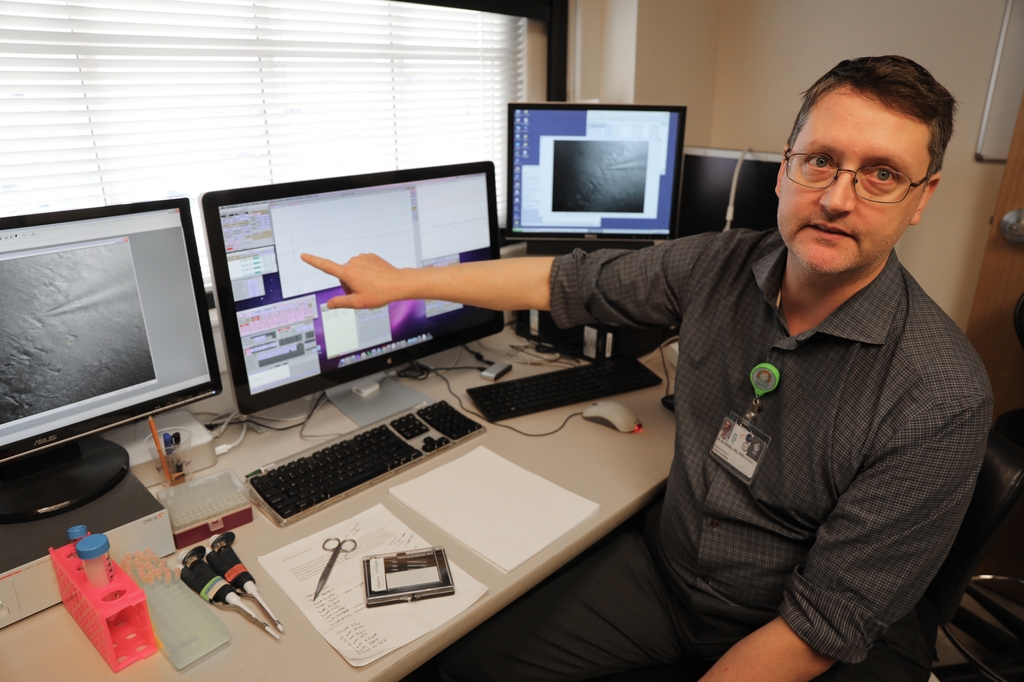
The research team, led by Art Riddle, M.D., Ph.D., assistant professor of pediatrics in the OHSU School of Medicine, used a mouse model to evaluate the effects of mild hypoxia following premature birth. Researchers discovered a mechanism in the hippocampus — the part of the brain responsible for memory and learning — that may explain, at least in part, why these impacts occur.
When evaluating brain tissue in the mice after intermittent hypoxic events, researchers found that neural communication was impacted. Particularly, communication was hindered between the hippocampus region and the cortex — the brain's outermost layer responsible for reasoning and problem-solving. Furthermore, neurons in the hippocampus matured abnormally and did not recover by adulthood.
Discovery could inform treatment
Neural communication is a critical function: It is the brain's way of sending messages to and from different regions to relay critical information throughout the body. If neural communication is compromised, it can affect human function, including physical tasks like breathing and movement, and cognitive ones like emotional regulation, learning and memory.
Researchers warn of the implications for children's overall health, well-being and life trajectory. Alterations in the development of these critical brain regions could impair attention, memory and emotional regulation, potentially leading to academic difficulties and behavioral concerns.
Future research should continue to examine the severity of these impacts and broader long-term consequences, the research team says, as well as investigate how other brain regions may also be susceptible to hypoxia.
Intermittent Hypoxia sometimes isn't avoidable among preterm babies, Back notes. While the findings are concerning, neonatal providers say they provide the opportunity to advance treatments and early interventions for preterm infants to optimize health and quality of life.

"Historically it is prolonged, significant hypoxic events that were the primary concern for long-term adverse outcomes, but this research tells us that mild intermittent episodes may also be a cause for concern," said Cindy McEvoy, M.D., professor of pediatrics in the OHSU School of Medicine, who cares for critically ill preterm babies.
McEvoy says these results, if translated to humans, may prompt the use of additional interventions, including extending nasal continuous positive airway pressure, or CPAP, which has been proven to improve respiratory development in preterm babies and also to decrease episodes of short intermittent hypoxemia. These results may also be helpful in identifying early on which patients may need additional early interventions throughout childhood and adolescence.
"These impacts are not something we would see on standard tests or scans in the NICU; they are happening deep within the connections of the brain, and may present years later as the child develops," she explained. "If we know these children are at risk for learning and memory challenges, we can intervene earlier and provide the support and resources they need to thrive."
This study was supported by the National Institute of Neurological Disorders and Stroke, of the National Institutes of Health, under Award numbers R01NS138147, R01NS116674 and R01HL163517. The content is solely the responsibility of the authors and does not necessarily represent the official views of the NIH or other funders.
All research involving animal subjects at OHSU must be reviewed and approved by the university's Institutional Animal Care and Use Committee (IACUC). The IACUC's priority is to ensure the health and safety of animal research subjects. The IACUC also reviews procedures to ensure the health and safety of the people who work with the animals. The IACUC conducts a rigorous review of all animal research proposals to ensure they demonstrate scientific value and justify the use of live animals.


