
An ACIAR-supported chicken breeding approach proven in Cambodia is now being adapted across the region and has gained international recognition.
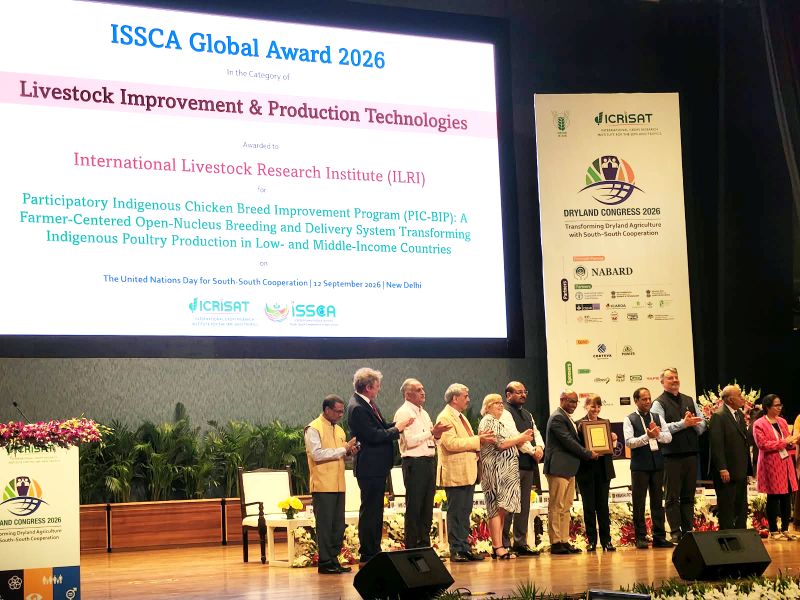
The 'Participatory Indigenous Chicken Breed Improvement Program' (PIC-BIP) recently received the 2026 ICRISAT Centre of Excellence for South-South Cooperation in Agriculture (ISSCA) Global Award in Livestock Improvement & Production Technologies, recognising high-impact and scalable innovations from the Global South.
PIC-BIP is an innovation developed and advanced as part of a A$5.5 million ACIAR investment, led by the International Livestock Research Institute (ILRI) with national research partners and farming communities, that is strengthening indigenous chicken breeding across Cambodia, Laos and Vietnam.
In Cambodia, the program has established four nucleus breeding farms, engaged more than 500 farming households, and produced and disseminated more than 190,000 improved native Skuoy chicks since 2020.
The model is now being adapted in Laos and Vietnam, showing how ACIAR-supported research can grow from addressing a local farming challenge to generating knowledge relevant across borders.
Enabling South-South collaboration
Chicken production is a cornerstone of food security, income generation and rural livelihoods across Cambodia, Laos and Vietnam. It provides households with an affordable source of nutritious food, regular cash income, and an important asset to support resilience and economic development.
PIC-BIP combines scientific selection and performance recording with farmer preferences and locally adapted chicken genetics to improve production, rather than replacing indigenous chickens with commercial breeds developed for different production systems.
This means that countries are not simply sharing an improved chicken breed, but an approach that collaborating countries can adapt to their own chickens, farmers, markets and research systems.
This adaptability is central to ACIAR-supported 'Asian Chicken Genetic Gains' (AsCGG) project, which aims to improve smallholder access to productive and locally adapted chickens while strengthening national research capacity and regional collaboration.
'The value of this investment goes beyond improving chicken genetics in one location. ACIAR is supporting the partnerships, research capability and evidence needed for countries to adapt the approach to their own farming systems and priorities,' said Dr Nick Harris, ACIAR Research Program Manager, Livestock Systems.
The approach builds on lessons from chicken genetic improvement research in Africa, adapting that experience with researchers and farmers in Southeast Asia
Experience generated in Cambodia is now contributing to adaptations in Laos and Vietnam, allowing participating countries to test and strengthen the approach within their own contexts.
'This is more than technology transfer. It is South-South collaboration that allows countries to learn from one another and adapt research to their own realities,' said Dr Wondmeneh Esatu, ILRI livestock genetics scientist overseeing AsCGG.
Recognition for impact
The 2026 ISSCA Award was presented on 12 September 2026 at the annual United Nations Day for South-South Cooperation, reinforcing the wider significance of knowledge developed and shared among countries of the Global South.
It came after PIC-BIP progressed to widespread dissemination and regional adaptation. It recognised demonstrated impact rather than an early-stage idea.
Dr Wondmeneh, who received the award on behalf of the research team and partners, described the achievement as a journey 'from an idea, through research and piloting, to demonstrated impact and international recognition.'
'The achievement demonstrates how ACIAR investment can extend beyond a single project: from research to farmer impact, from local experience to regional learning, and from demonstrated results to global recognition,' concluded Dr Harris.
Through to 2029, the ACIAR-supported partnership will continue strengthening chicken genetic improvement, local research capability and knowledge exchange across Cambodia, Laos and Vietnam.


