
A computing server corridor in CERN's main data centre. (Image: CERN)
One exabyte of experimental data has now been gathered from the Large Hadron Collider (LHC), marking a major milestone for CERN's storage system.
The LHC smashes billions of protons together every second. By collecting information about the ensuing particle showers, physicists can test the Standard Model and look for signs of new physics beyond it.
The challenge for analysts is the sheer quantity of data generated. A highly selective filter system, known as a trigger, is therefore used to remove all but a tiny fraction of the data collected by the detectors. This remaining data goes on to the CERN storage system and can then be analysed by the scientists.
Now, after running the LHC for over 15 years, CERN has collected and stored one exabyte of experimental data from the superlative machine. To put this into perspective, a standard single-layer DVD holds 4.7 gigabytes of data, or around 2 hours of video, so, to watch an exabyte of film would take nearly 50 000 years.
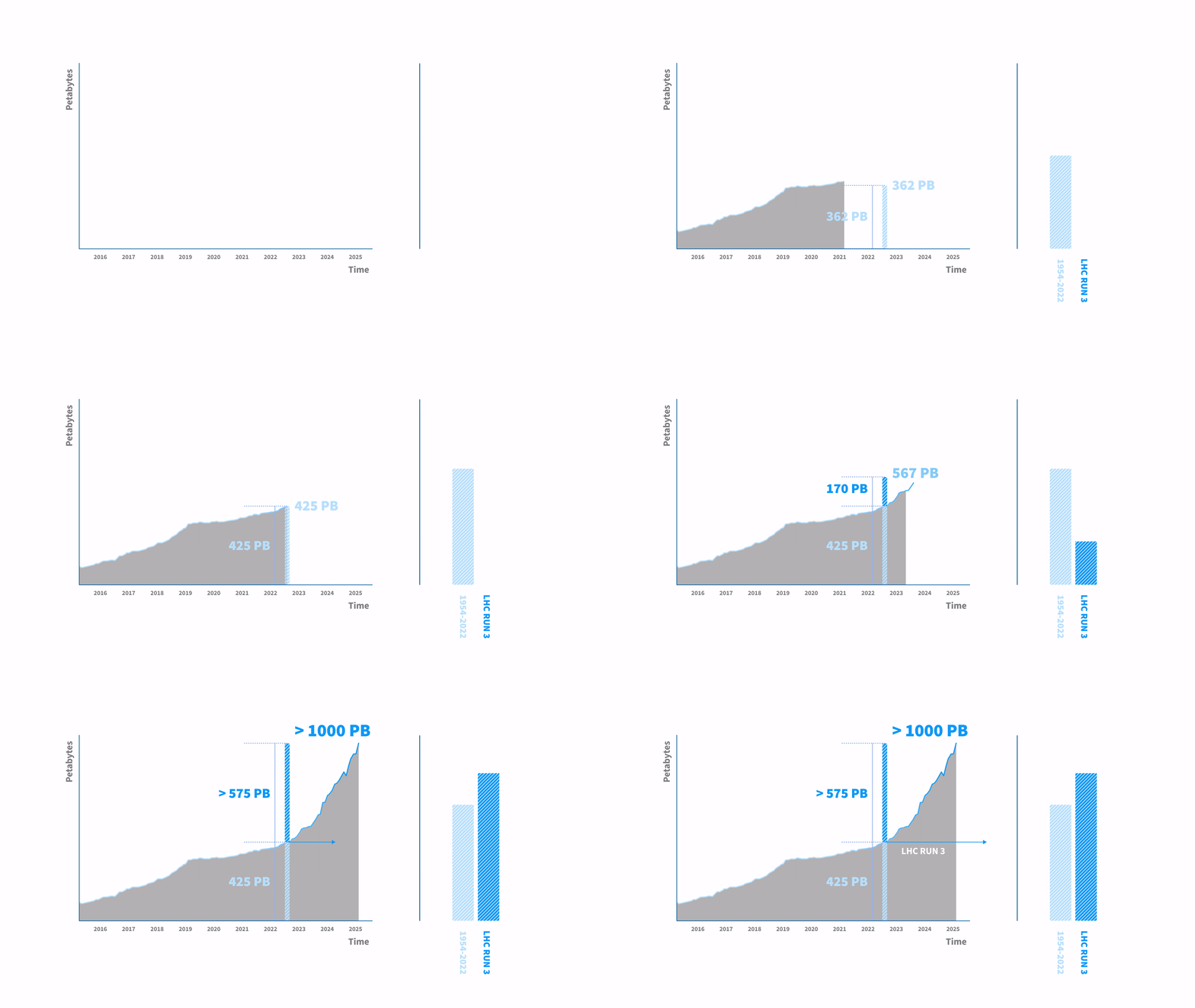
Storing and preserving all this data is crucial as the analysis may be done long after the data has been collected, sometimes even decades later. Most of the data is stored using magnetic tape, which is a very cost-effective, secure and stable means of archiving digital data. This magnetic tape technology has developed significantly over the years since its more well-known use in the 8-track cassesttes of the 1980s and can now be used to store much more data.
"We've reached one exabyte, which is an impressive milestone, but it doesn't end here", said Jakub Mościcki, leader of CERN's Storage and Data Management group. "This is only 10% of what we will have to store and process in the next 10 years, so we have a huge challenge ahead."
CERN is currently preparing for the High-Luminosity LHC, which is expected to come online in the mid-2030s and will generate 10 times more data than the LHC. The CERN Data Centre must work hard to ensure it is ready for the upcoming deluge of data. But past experience shows that it should be able to meet the challenge.
"When I first came to CERN, the entire Data Centre was dedicated to storing and processing the data from the Large Electron-Positron Collider, the LHC's predecessor," said Mościcki. "Now all that data can fit onto just a handful of tapes. So, who knows, maybe in 50 years we will be able to store the exabyte of LHC data that currently takes up 60 thousand tapes on a very small piece of future storage hardware."


