
Lithium-ion batteries are ubiquitous in consumer electronics such as cellphones and in electric vehicles, but the surrounding temperature and speed of charging affects those batteries' performance, safety and lifespan. Fast charging adds convenience, but it further stresses battery life as it can cause "lithium plating" to occur - a process where the lithium ions that should be jumping from the cathode to the graphite material in the anode instead react only on the surface of the anode and become lithium metal.
Charging in cold conditions also can drive plating and, in addition to lowering the battery's lithium capacity, the superfluous metal could potentially cause a fire. It would help to see exactly when and how the plating begins to form, but previous attempts to record and analyze this type of battery chemistry in action have fallen short. Now, engineers at Washington University in St. Louis have tried something new: their operando microscopy platform, which allows them to mimic the conditions of a battery, all under glass tubes.
By recording and seeing the plating in action, they now know exactly how and at what voltage to cut off the charge to "avoid the onset of lithium plating," said Peng Bai, an associate professor of energy, environmental and chemical engineering at the McKelvey School of Engineering.
"Eventually, you will be able to design a new chemistry. By knowing at what capacity you will have plating, you can stop there," he added.
Bai and his PhD students Rajeev Gopal and Bingyuan Ma recently published their research in the journal Small.
Their platform also allows for better testing of battery electrolytes, and the experiments confirmed the potential for ether-based electrolytes to improve lithium-ion battery performance.
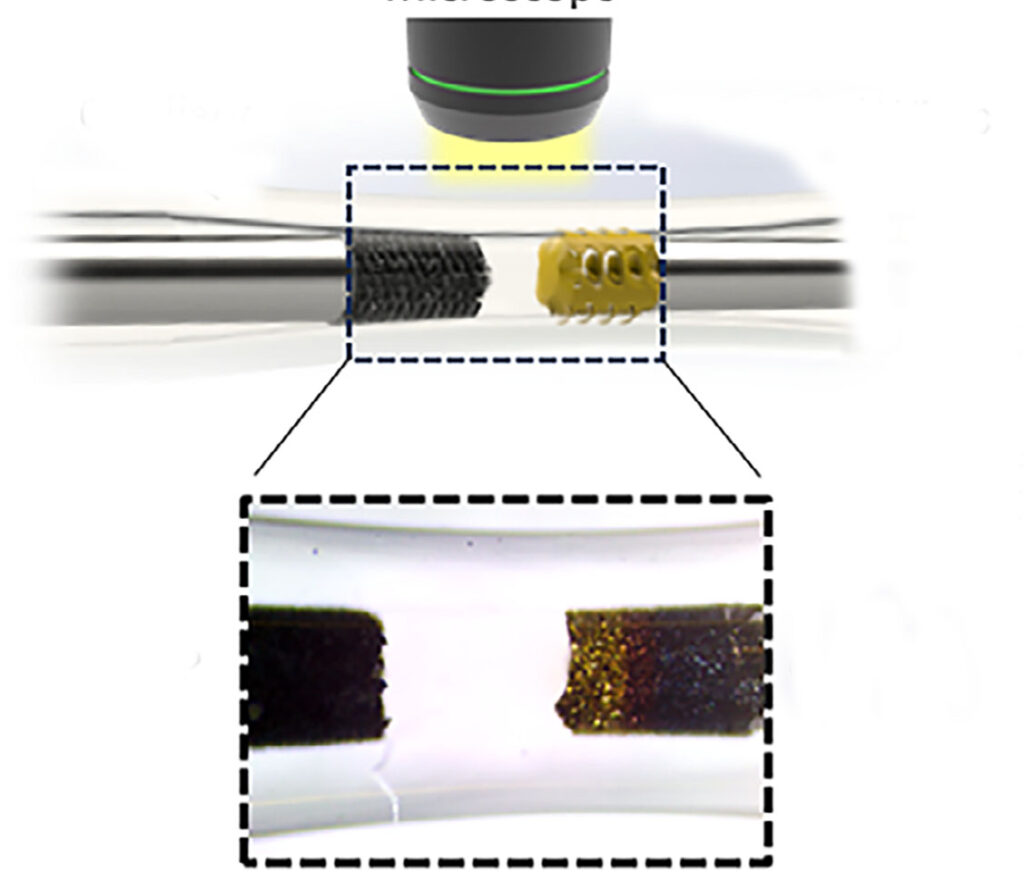
With a clear view of plating, Bai's team was able to mark the exact voltage and timing of when and how plating begins, using that data to develop a "performance map."
This map could provide a key tool to better battery design and development. It can provide quantitative guidance for optimizing fast-charging protocols and enhancing battery performance, Bai said.
Over time, with these tools, battery manufacturers can develop charging technologies that automatically cut off the charge before plating could occur. Until then, consumers should be aware that it might be better to cut that phone charge off at 80%.
"When you do faster charging, depending on the temperature, you'll want to stop early. Don't wait for the cut-off voltage," Bai said.
Gopal RK, Ma B, Bai P. Mapping Out Fast Charging Safe Limits for High-Loading Lithium-Ion Cells by High-Fidelity Operando Microscopy. Small. 2026 Jan 23:e14619. DOI: 10.1002/smll.202514619.
Study supported by a National Science Foundation grant (Award number 2044932) and is partially supported by Toyota Research Institute through D3BATT: Center for Data-Driven-Design of Li-ion Batteries.


