
A UC Davis pediatric pulmonology and sleep medicine team developed a clinic to address a longstanding challenge in pediatric sleep medicine: helping children with obstructive sleep apnea (OSA) successfully adhere to continuous airway pressure (CPAP) therapy.
OSA can disrupt sleep, affect daytime functioning and lead to long-term health complications. While CPAP can be highly effective, adherence among pediatric patients has historically remained below 50% nationwide.
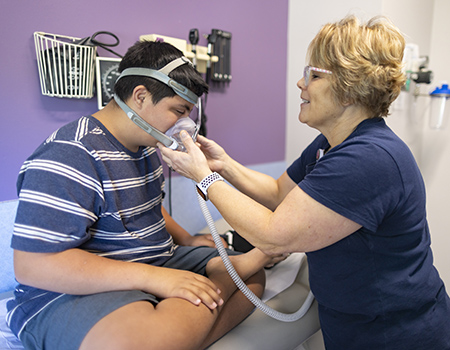
The clinic was launched at UC Davis Health in January 2024 to provide individualized support, identify barriers to treatment and help families build sustainable habits around CPAP use. Rather than focusing solely on equipment, the clinic works closely with pediatric patients and caregivers to troubleshoot issues such as mask fit, pressure settings, sensory sensitivities, irregular sleep schedules and family dynamics that can affect treatment success.
More than two years after opening, the clinic has brought new insights to what helps children succeed with CPAP.
"The biggest lesson we've learned is that CPAP use is truly a family affair," said Audrey Chikalla, a respiratory therapist who spearheaded the clinic. "Success depends not only on the child, but also on caregiver engagement, education and support. When families understand what to expect and how to navigate barriers, children are much more likely to succeed."
The clinic has also been the subject of a research study by Chikalla and UC Davis Health pediatric pulmonologists Kiran Nandalike and Ambika Chidambaram.
During the clinic's first year, the researchers evaluated 58 pediatric patients receiving CPAP therapy. The study found that half of the patients met adherence goals, which were defined as using CPAP for more than four hours per night on at least 70% of nights. In addition, children who adhered to CPAP therapy tended to have more frequent respiratory therapist visits than those who did not, reinforcing the value of ongoing follow-up and personalized coaching.
Helping children with neurodevelopmental and genetic conditions
The clinic expanded in 2025 to focus on children with neurodevelopmental and genetic conditions, including autism, Trisomy 21 and other chromosome abnormalities. Clinicians wanted to better understand whether the support model could help children who often face additional challenges with medical devices and treatment routines.
More than half of neurodiverse patients achieved CPAP compliance. The study revealed that these patients often benefited from more intensive follow-up. On average, neurodiverse children required more than twice as many respiratory therapist visits as neurotypical patients to achieve adherence, highlighting the importance of specialized support.
"One of our most exciting discoveries is that neurodiverse children can be incredibly successful with CPAP therapy when they receive the right support," said Nandalike, chief of the UC Davis Division of Pediatric Pulmonology and Sleep Medicine. "Overcoming sensory barriers can take time, patience and persistence, but many families achieve remarkable results."
The team plans to continue refining the clinic by developing standardized CPAP implementation and desensitization programs, offering group visits for patients and families and collaborating with pediatric endocrinology specialists who care for adolescents with obesity and OSA.


