
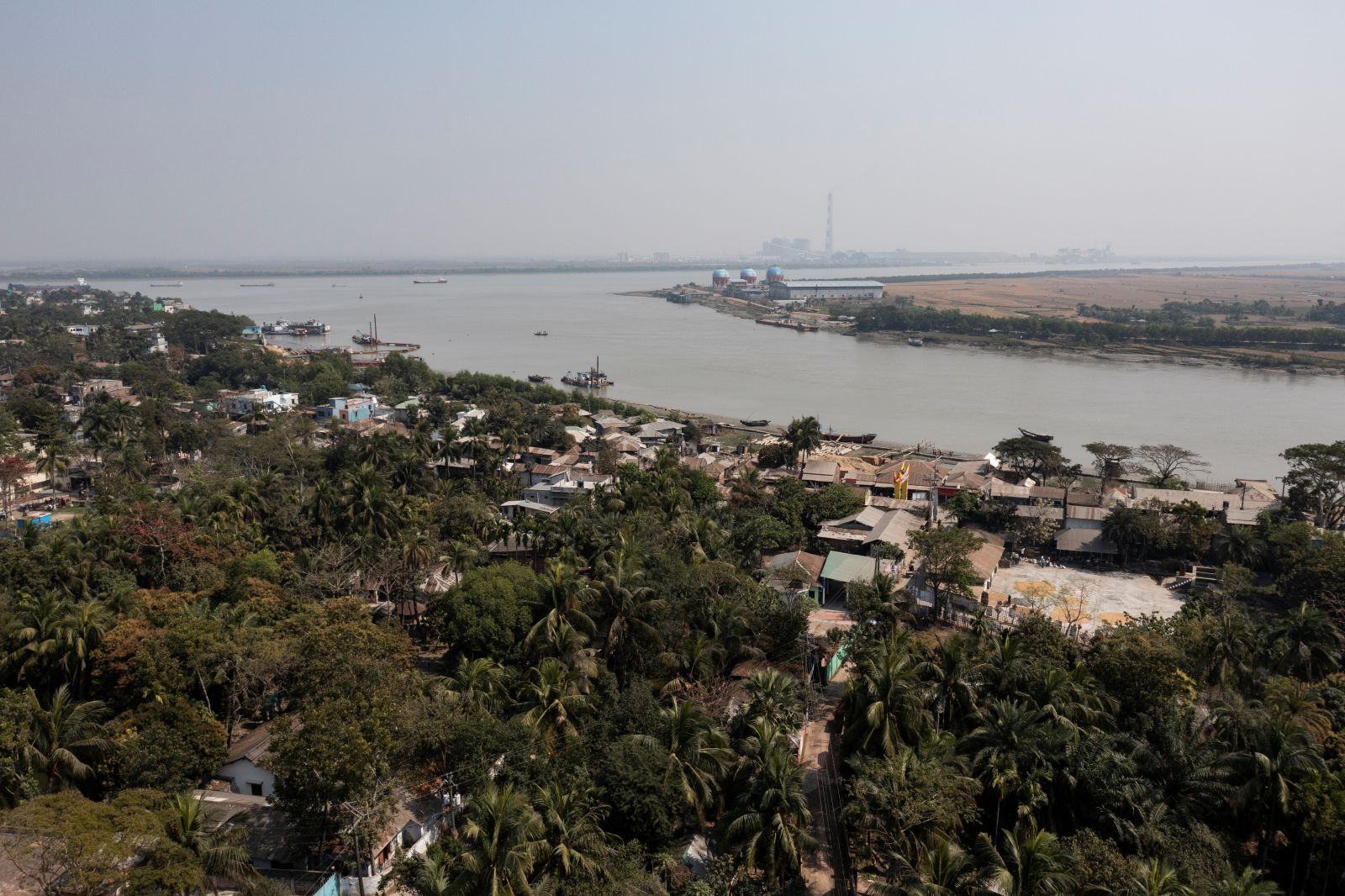
The low-lying coastal areas of Bangladesh and West Bengal are among the most challenging in the world to farm.
Soils and groundwater are highly saline. The land is subject to flooding from both monsoonal rains and seawater, which exacerbates soil salinity challenges. In the dry season, limited fresh water is available for irrigation.
The region is also highly vulnerable to the effects of climate change, including changing rainfall patterns, rising sea levels and more frequent cyclones.
For the past 10 years, ACIAR has worked in partnership with the governments of Bangladesh and India, as well as universities and non-governmental organisations, to intensify cropping systems and boost farm productivity, with the aim of improving food security and alleviating poverty. Led by Australia's national science agency, CSIRO, this research receives co-funding from the Krishi Gobeshona Foundation of Bangladesh.
Now, new crops and low-tech farming methods, combined with increased scientific and agricultural capabilities and new technologies, are boosting production in smallholder farming systems in the salt-affected coastal region of Bangladesh and West Bengal, India.
New varieties of rice
Mr Belal Hossain is a Senior Scientific Officer at the Bangladesh Rice Research Institute. He has worked with the ACIAR-supported research team to introduce modern salt-tolerant rice varieties to coastal areas.
'This is the poorest area compared to the other parts of the country because people in this area are mainly dependent on agriculture, and agriculture is a challenging job here due to the geological conditions,' said Mr Hossain.
His team identified high-yielding, short-duration rice varieties that produced 0.5-1.0 tonne per hectare more than existing varieties grown in the kharif (summer monsoon) season. Since these varieties matured 15-20 days earlier, farmers could plant a second crop in the rabi (dry, winter) season, using residual monsoon moisture to water the crop.
Across Bangladesh and West Bengal, an estimated 800,000 ha of land traditionally left fallow during rabi could now support a second crop.
Salt-tolerant winter rice
One option for a second crop is winter rice, known as boro. Boro is common in other parts of Bangladesh and India. However, identifying salt-tolerant varieties has been the key to success in the coastal regions. Particularly in Bangladesh, where there is some winter irrigation, farmers in coastal areas have been able to produce 2 rice crops a year for the first time by planting salt-tolerant boro.
Bangladeshi farmer Ms Madhury Roy said before her involvement in the project, she had only been able to grow one rice crop per year, during the wet season, when monsoonal rains provided the water needed.
Through the project she has learned how to grow an additional crop during the dry season. This has helped improve her livelihood, with the additional income providing food for her family.
'With the earnings from the cultivated rice, I bought some land, built a well and bought a goat,' said Ms Roy.
Alternative growing options
The research also identified salt-tolerant sunflower, maize, potato, garlic, watermelon, pumpkin and spinach as dry-season options. No-till potatoes proved popular in West Bengal, while many Bangladeshi farmers have adopted watermelon.
On-farm demonstrations, discussion groups, field days and training underpinned extension efforts, driving rapid uptake of new practices beyond direct project participants.
CSIRO researcher Dr Mohammed Mainuddin led ACIAR-supported research in Bangladesh and West Bengal for the past decade. Dr Mainuddin said the project has also developed techniques to intensify cropping in the monsoon season.
'Vegetable seeds are planted into gunny bags - often reused fertiliser sacks - filled with soil and organic manure managed from the farm,' said Dr Mainuddin.
'The large bags are then placed at uniform intervals along the edges of the monsoon paddy field for easy accessibility. They are positioned at the base of trellises made from bamboo and/or tree trunks, with the structures covered by nets to allow creepers to grow freely.
'This method is an excellent way to create additional space on marginal holdings to grow high-value vegetables such as cucumber, sponge gourd, bitter gourd and snake gourd.'
Working with women
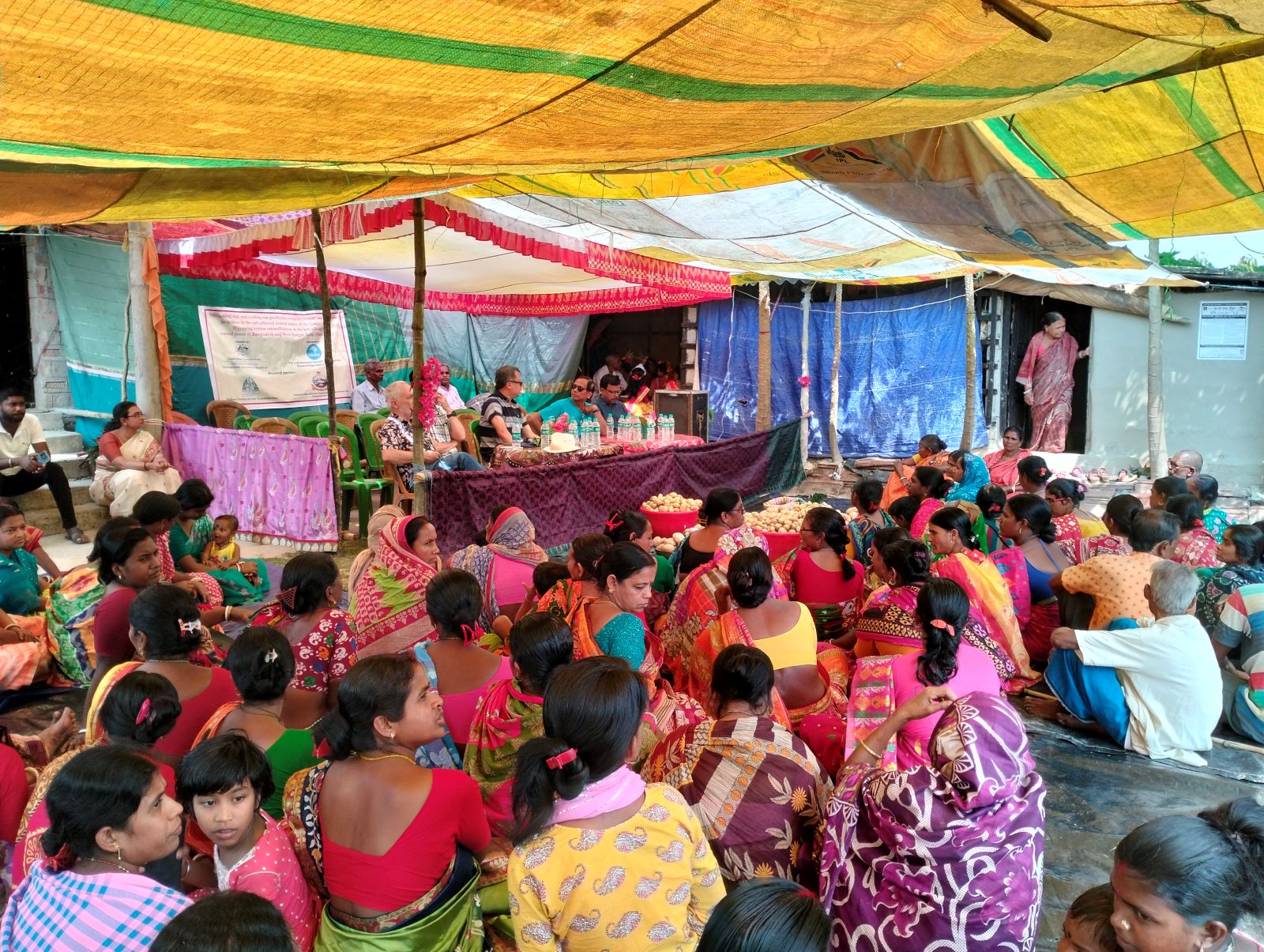
Dr Mainuddin noted that these vegetables provided valuable fresh food for families at a time of year when vegetables were scarce, while also generating extra cash for farmers, particularly women.
He said encouraging the participation of women has been an important aspect of the project.
In 2022, 1,919 farmers, including 563 women, participated in the ACIAR-supported project. As it expanded with demonstration sites in new areas, the number of participants each year also increased. By 2025 there were 4,751 farmers, 1,701 of whom were women.
The number of female scientists and extension officers has also increased over time, providing important role models for others. Of 24 PhD candidates involved in the research team, 13 were women.
Resource management and climate resilience
Through the project, Australian scientists shared expertise in water resource and salinity management, building the capacity of research and agricultural extension communities in Bangladesh and India. Australia has also benefited through advances in water and soil salinity mapping and modelling developed to support land-use planning and resource management.
Dr Mainuddin said electromagnetic soil surveys, field experiments and remote-sensing data were integrated to develop a novel approach to understanding salinity dynamics, waterlogging and land-use change across the Ganges Delta. This enabled the identification of seasonal 'hot spots' for flooding and rising salinity.
The data-integration method has since been applied in Australia, delivering substantial improvements to CSIRO's crop production model, the Agricultural Production Systems sIMulator, for use in coastal farming areas including complex saline agricultural environments.
'The Ganges Delta supports a uniquely sensitive coastal ecosystem that faces increasing pressure from global climate change. Through our project, we have worked with local partners and farmers to develop and successfully trial climate-smart technologies that advance sustainable agriculture and enhance climate resilience in the Delta and in comparable coastal ecosystems in the other Asian mega deltas.'
Dr Mainuddin noted that ongoing scientific exchange has strengthened Australia's relationships with Bangladesh and India at a governmental level, while identifying new opportunities to expand cropping options, improve livelihoods and build resilience in coastal farming systems.
ACIAR Project: 'Cropping system intensification in the salt-affected coastal zones of Bangladesh and West Bengal, India' (LWR/2014/073).


