
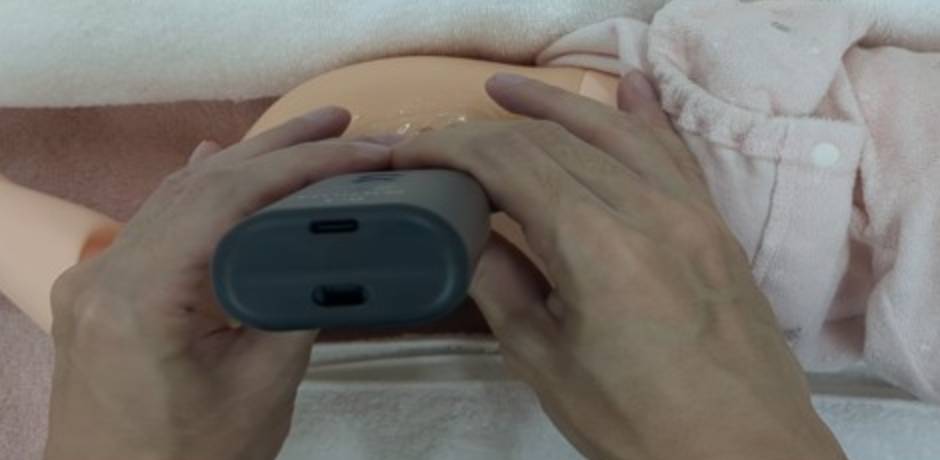
A recent trial of community-based and nurse-led ultrasound screening for hip dysplasia in Japan has been met with great success, according to new research at the University of Tokyo. The trial achieved almost universal reach and 8.7% of infants were found to have suspected developmental dysplasia of the hip (DDH), including children with no clinical signs or known risk factors. DDH is commonly checked for through a physical examination; however, late diagnosis remains a public health issue worldwide, leading to problems for adults later in life. More comprehensive ultrasound screening of infants during community-based public health services could help catch these missed cases without requiring hospital resources to conduct the initial screening.
Hip dysplasia is the most common cause of hip arthritis for people under 50, according to the International Hip Dysplasia Institute. It occurs when a hip socket is too shallow and can't properly support the ball of the thigh bone. In young children, this can cause problems ranging from a mildly wiggly hip to complete dislocation. In adults, it can affect how people walk, lead to early-onset arthritis, and cause pain and mobility issues.
The methods used to screen newborns for DDH vary around the world. Most areas and countries, including North America, South Korea, Taiwan and Japan, have a selective screening program based first on a physical exam or family history. Only a small number of countries, including Austria, Switzerland and Mongolia, provide ultrasound screening for all newborns, which is more accurate.
Associate Professor Kyoko Yoshioka-Maeda from the Graduate School of Medicine at the University of Tokyo met adults who were late-diagnosed with hip dysplasia. Some didn't realize they had the condition until they experienced pain. Yoshioka-Maeda wondered what could be done to catch these missed cases earlier, while also limiting the burden on Japan's medical system and the country's declining number of pediatric orthopedic surgeons.
"I heard about ultrasound hip screening about four years ago from Assistant Professor Chikako Honda, who was one of my colleagues. I started working with my colleagues to develop an educational program for community nurses. I wanted to find out if these devices could be successfully used in a community setting to screen infants for DDH as part of the maternal child and health program," Yoshioka-Maeda explained. "Based on our nationwide survey, approximately 2% of municipalities use ultrasound screening because of workforce constraints. There is also a disparity between the availability of pediatric orthopedic surgeons and hospitals in rural areas compared to urban areas."

In Japan, about a month or two after a mother has given birth, she is given a visit by a public health nurse or midwife to check her recovery and the baby's development. Public health nurses can offer guidance and community-based preventative care but differ from midwives and registered nurses in hospitals, and do not commonly use ultrasound.
Public health nurses and midwives from two rural municipalities in the island prefecture of Okinawa in southern Japan, and one in central Japan's Aichi Prefecture participated in the study between 2024 and 2025. Participants completed an e-learning module and hands-on seminar for the portable ultrasound device and the Graf method (used to diagnose DDH), before taking the ultrasound out on home visits or using it in a public health center.
Ultrasound images were remotely reviewed by pediatric orthopedic surgeons or an experienced senior surgeon. In total, 349 infants were screened out of a target 365, giving an overall coverage of 95.6%. Of these community-based examinations, 85.8% of the images were successfully classified by the surgeons.
Based on the ultrasound findings and other risk factors, 42 infants were referred, and of these, 41 attended hospital visits. Overall, 23 infants (54.8%) required follow-up and 2 (4.8%) treatment. However, only 6 of the 42 children (14.3%) would have previously met the criteria for a referral without ultrasound screening, demonstrating its effectiveness to support early detection of DDH.
"We received strong support from caregivers, municipal administrators, hospitals, public health centers and pediatric orthopedic surgeons, which was key for the success of this study," said Yoshioka-Maeda. "In order to roll this out across Japan, the first hurdle is the budget to purchase the equipment and train and support the staff. The other bottleneck is image interpretation, as there is a very limited number of pediatric orthopedic surgeons in Japan. But maybe we could develop an AI-based system to help us with that. Our next step will be to scale up the study across more prefectures and potentially other countries as well.
"I also think it's important for adults to have an opportunity to be screened. If we can identify DDH before they start to experience pain, we can provide lifestyle and exercise recommendations to help limit the negative impact on their hips and support them in maintaining a healthy and mobile way of living."


