
The University of Copenhagen will lead Denmark's first lunar mission. The mission aims to map the Moon's surface in unprecedented detail to make it safer to land on the Moon and construct bases in the future.
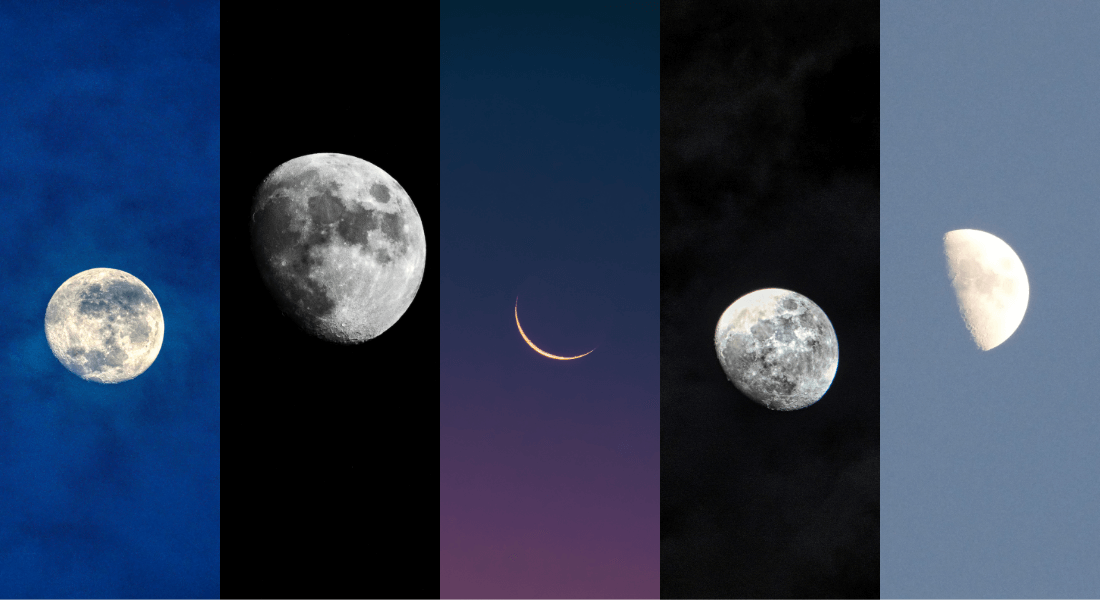
The Moon is covered in fine dust, gravel, large rocks, and enormous craters. But despite millennia of observation through telescopes, satellites, and the naked eye, we still know surprisingly little about its surface.
The Máni mission
The Máni mission is a lunar mission that will use a satellite to map the Moon's surface with high-resolution images and create detailed 3D maps. The goal is to make it safer for astronauts and lunar rovers to land and move around on the Moon. The satellite will orbit the Moon's north and south poles, which are key areas for future human missions.
The mission will also map how light reflects from areas on the Moon that are used to study Earth's ability to reflect sunlight onto the lunar surface - the so-called earthshine. This knowledge could improve our understanding of how Earth's climate will evolve.
The University of Copenhagen leads the mission and is responsible for the mission's Science Operations Center, which will plan which areas to map and analyze the vast number of images generated.
On December 16th, ESA member states approved the work plan for prioritized missions, including the Máni Mission.
The satellite is scheduled for launch in 2029.
Soon, the Moon's surface will be less alien when the first Danish-led lunar mission, the Máni mission, is launched. December 16th, the European Space Agency (ESA) agreed to proceed with a series of missions, including the Danish-led project.
"With this decision, the largest Danish satellite mission ever is on its way to becoming reality. It's the first time Denmark will lead an ESA mission and the first time a Danish-led satellite will leave Earth's orbit. The journey truly begins now - it's about to get exciting," says mission leader Jens Frydenvang, Associate Professor at the Globe Institute, University of Copenhagen.
The Máni satellite will capture high-resolution images of the Moon's surface, paving the way for safer future missions. The mapping can help ensure secure landings for astronauts and robotic explorers.
"Our mapping can make lunar landings safer. And with our data, we can also help identify the best locations for building bases for future astronauts," says Jens Frydenvang.
The University of Copenhagen heads an international consortium of Danish and international research institutions and industry partners to realize the Máni mission. Danish partners include Aalborg University, Aarhus University, the University of Southern Denmark, the Danish Meteorological Institute, and Space Inventor.
Moon shadows help us understand the surface
It is an advanced and groundbreaking technology developed at the Niels Bohr Institute at the University of Copenhagen that the Máni mission will use for the lunar mapping.
The technology is based on the satellite taking multiple images of a specific area from different angles and recording the shadows on the Moon's surface.
"When sunlight moves across the Moon, the shadows change shape, and with the Máni satellite we get images of the same area from different angles. That's information we can use to calculate elevation differences, measure slopes, and learn more about the Moon's terrain. By combining that information, we can create maps with much better resolution than we have today," says Iris Fernandes, postdoc at the Niels Bohr Institute and science data lead for the Máni mission.
That shadows play a central role in the Máni mission is the result of an earlier research project where shadows played a trick on Iris Fernandes.
Back in 2019, she was working on designing a mathematical model that could automatically recognize chalk layers and patterns in the limestone at the Cliffs of Stevns in Denmark from images. But the model misinterpreted the shadows in the cliffs as layers in the limestone.
"At some point, I realized that shadows can also tell us a lot about the landscape, for example the size and shape of what casts the shadow. I'm a big space nerd, so I knew the Moon is a place with plenty of shadows without atmospheric disturbances. So, I started working with lunar data to see if shadows could help us understand the surface instead," says Iris Fernandes.
Together with Professor Klaus Mosegaard from the Niels Bohr Institute, she developed the algorithm that can reconstruct the Moon's surface with far more detail than previously possible.
A milestone for Danish space research
The Máni mission is a collaboration between Danish and international universities and knowledge institutions, slated to generate new insights about the Moon with the new data. Industrial partners play a key role in building the satellite and its components.
Eva Hoffmann, Prorector for Research and Innovation at the University of Copenhagen, welcomes ESA's decision to proceed with the Máni mission:
"The Máni mission is a milestone for Danish space research. I'm proud that a project led by the University of Copenhagen, with participation from other Danish universities, has received ESA's green light. It's a brilliant example of why collaboration between academia and industry is crucial for innovative solutions. And it shows that Denmark is in the big league when it comes to space research," says Eva Hoffmann.
The mission is scheduled for launch in 2029.
International collaboration
The University of Copenhagen heads an international consortium of Danish and international research institutions and industry partners to realize the Máni mission. At the University of Copenhagen, the Globe Institute, Niels Bohr Institute, and Department of Computer Science will lead the mission and process the data generated from the mission.
Academic partners include Aalborg University, Aarhus University, University of Southern Denmark, Danish Meteorological Institute, the Polish Academy of Sciences (Polska Akademia Nauk), and Université Paris-Saclay.
Danish company Space Inventor is the mission's primary industrial partner and will build the satellite and install instruments and components supplied by Polish, Dutch, and Slovenian industry partners.


