- Davos 2026 highlighted a growing sense of societal rupture, as inequality, anxiety, AI disruption and declining trust put people at the centre of conversations.
- Leaders called for deeper investment in people, spanning health, education, skills and resilience.
- The AI transition intensifies the need for evenly distributed growth, with leaders warning that uneven productivity gains could further polarize societies.
'People', whether it's for the benefit they bring to growth or the challenge they pose to the balance sheet, always feature on the Annual Meeting's agenda.
This year, geopolitics dominated the headlines, but a quieter conversation around the investment in people persisted, reflecting a shared recognition that human well-being and human capital is the key to economic resilience.
Topics ranged from AI job fears, the social fall-out of hyper loneliness, forced migration, unpredictable voting patterns, online abuse, and anxieties of all hues. There was an existential tenor to the conversations as questions around the future of a hybrid human-AI world preoccupied participants.
This year's Global Risks Report, launched ahead of Davos, found the most interrelated risk we're facing in 2026 is inequality. It underpins and fuels many other challenges and highlights the urgency of better investing in people.
Inequality is not always an easy thing to address from the stage of Davos, but leaders nevertheless tackled it head-on.
In her closing comments, ECB chief, Christine Lagarde warned, "We have to be careful about the distribution of wealth and we have to be careful about the disparity that is getting deeper and bigger. If we don't pay attention to that, we are heading for real trouble."
Show them the money… but not just the money
As this year's Annual Meeting revealed, yes, monetary investment in people is indeed required, particularly in areas like health, housing, education and upskilling/reskilling. Alongside this however, is a need to take stock. Borne out of an age of rapid tech progress, post-pandemic recalibration, and a sea of mis- and dis-information, human well-being was discussed as never before. Existential questions swirled about what it means to be human, to be part of society, and the tantalizing prospect of achieving a truer picture of the capabilities of the human mind with the aid of new technologies.
Yuval Noah Harari, Distinguished Research Fellow, Centre for the Study of Existential Risk said, "no one has any experience of building a human-AI hybrid society". He called for humility and suggested we start building a "self-correcting mechanism".
Underpinning this focus was the question of narratives; the stories we tell ourselves and each other, often in an effort to try to make sense of challenges and the ways in which we intend to address them. At this year's Annual Meeting, there was consensus on the need to change some of the most dominant narratives we've formed and make them fit for modern purpose.
Healthcare: Cost or investment?
What's both impeding growth as well as the factors that could contribute to it, featured heavily at the meeting. Typically, healthcare accounts on average for almost 10% of a country's budget. It's an unwieldy burden for any nation, and as longevity increases, the issue of mounting costs is coming into sharp focus.
Among the issues covered were the high cost of non-communicable diseases (NCDs), the high returns on prevention strategies (potentially £8 for every £1 spent in the UK), and the boost to growth that could be secured by better supporting women's health and pursuing new areas like the brain economy.
The likes of cardiovascular disease, cancer, chronic kidney disease, diabetes and chronic respiratory diseases, account for a mammoth 75% of deaths worldwide, and more than 80% of premature deaths. Yet typically the care for NCDs is focused on reactive, often late-stage treatment. As a result, healthcare systems struggle with the burden of populations that are living longer but with multiple chronic conditions - rising multi-morbidity.
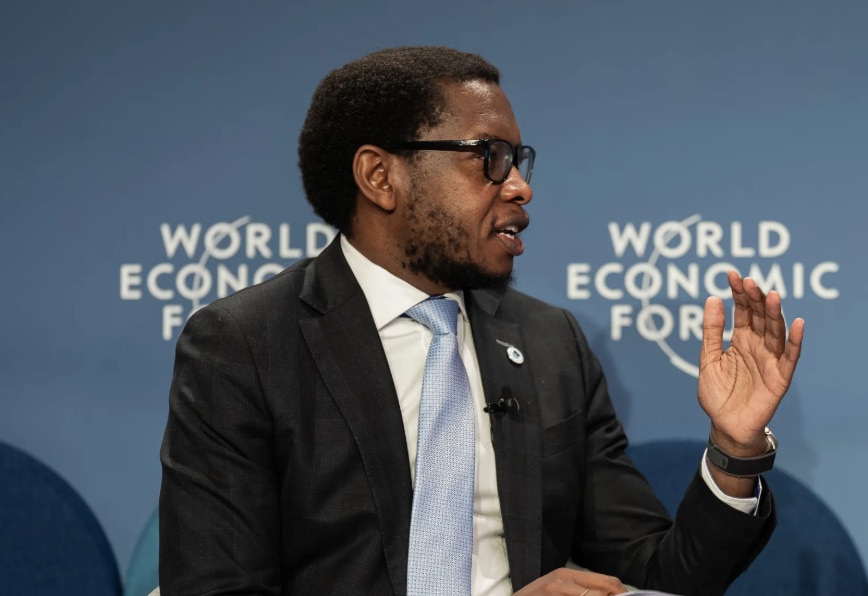
In addressing the rising cost of healthcare, participants agreed that integrated action, not piecemeal reform, is required. Mosa Moshabela , Vice-Chancellor and Principal of the University of Cape Town, called for a "workable financial model, which supports prevention, good citizenship, values and incentives".
In Rwanda, the government is using AI to support plans to quadruple the healthcare workforce within four years. As Paula Ingabire, the country's Minister of Information Communication Technology and Innovation pointed out: "With limited natural resources … technology becomes a natural go to and not an afterthought." Furthermore, as overseas aid spending falls, AI can, according to Bill Gates , Chair and Board Member, Gates Foundation, help disproportionately increase the effects of funding.
Anxiety ails the mind… and society
"I will tell you that behind the scenes the mood is not quite as catastrophic as outside. It's still catastrophic, but not quite as catastrophic." This was Florence Gaub , Director, Research Division, of the NATO Defense College's reading of the situation regarding Greenland, but pointed to the wider issue of anxiety and how our modern-day access to almost unstoppable information is fuelling the problem.
Among the ideas about how to address the challenge of anxiety was the need to change the narrative about it, while a second focused heavily on the role of social media platforms and big tech.
Gaub called for change in the narrative to "debunk the myth that we've ever had a moment in history where we were hugely optimistic about the future". She suggested that the data failed to support this assertion and pointed to JK Galbraith's bestseller from the 1970s called The Age of Uncertainty.
She also cited the recent Global Cooperation Barometer , echoing Borge Brende's remarks ahead of Davos, that cooperation, like water, finds a way. "Cooperation is like water," Brende said. "If it sees it is being blocked, it just finds other ways because cooperation is a necessity, not a luxury."
Becky Kennedy , CEO and Founder of Good Inside, placed greater onus on people, arguing that the antidote to anxiety is capability. She suggested that if by carrying out a task that makes someone feel capable, there is a natural shift to optimizing for happiness.
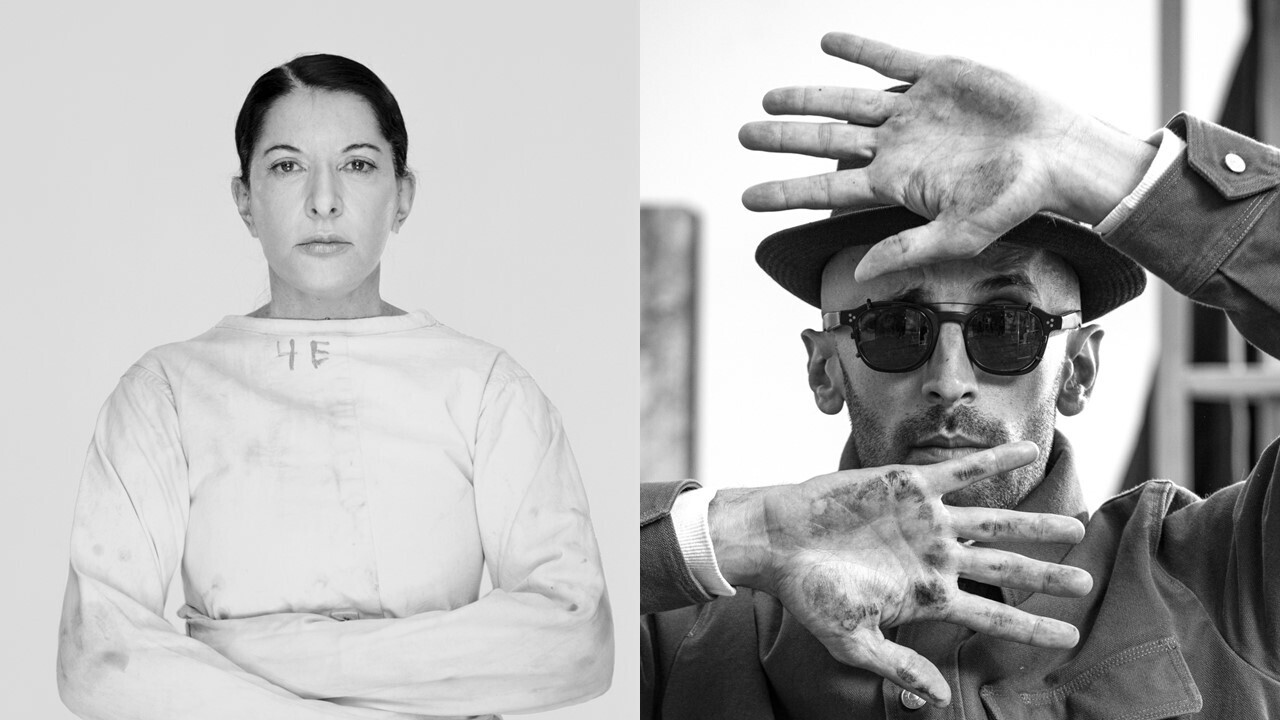
Pursuing this sense that individuals should have greater agency in addressing the environment in which anxiety often develops, other participants called for digital detoxing. This was the theme of the cultural element of the meeting's programme, with an installation by Serbian conceptual and performance artist, Marina Abramović, suggesting a common need - or even craving - for " radical stillness ".
Countering the trust deficit
Well-being and trust were major talking points, with debate centring on how to manage social media, particularly its wider effects and influence on children and youth.
With many children spending between six and nine hours online daily, it's had a profound impact on a generation. It's also created a growing number of hyper lonely , people who have such a narrow range of experiences in their online life that, according to Rachel Botsman , Author, Artist and Trust Expert, they've missed out on key emotions like risk, friction and trust. As a result, that they don't know how to pursue relationships in the real world.
It's also created a world of abuse. As Marija Manojlovic , Executive Director, Safe Online reported, there is a tendency to downplay the effects of what happens on social media and yet the degree of harm related to its use is rising exponentially. A massive 300m children are registered as being abused in the digital eco system annually.

Now we have an AI generation, just like the social media generation before them, that are coming of age. Described as "guinea pigs in a first for humanity" we have the situation where humans are interacting with robots during their childhood. Of particular concern were chatbots, reflecting the intimacy and companion attachments between children and machines that we're beginning to witness.
This prompted calls for at least three things: far greater regulation of social media platforms; research that enables a much better understanding of the effects of online interaction; and a focus on both safety by design and ideally well-being by design.
See people as assets not costs
This gets to the heart of one of the key issues that emerged during the Annual Meeting, the need to place humans - and vitally, their well-being - at the heart of the major transformations we're experiencing, and associated with this, to regard them as an asset. Nowhere is this perhaps more apparent than in changing attitudes towards education and skills training.
Spending on education will necessarily require a rethink. Unsurprisingly, this is front-loaded, reflecting the need for child and youth education; more than 4% of GDP in OECD countries is spent on 0-25 education, but from 25 onwards, it plummets to 0.1%. Now facing virtually an entire workforce that requires some degree of reskilling, it's clear that the government, the private sector and educators will have to come together to find ways to invest in and scale up those schemes that work.
There's often talk of a demographic dividend in many parts of the developing world, reflecting the positive economic impact of growing numbers of young people in the workforce. But as Ajay S Banga , President of the World Bank revealed, this is only a dividend if quality jobs are available. He warned that: "1.2 billion young people are going to get to 18 years of age in the next 12 to 15 years in emerging markets, and those same countries are currently forecast to create around 400 million jobs."
This underscores the need to ensure that the benefits and gains from frontier technologies like AI are evenly distributed.
How do we address creative destruction?
An element that defined earlier transformations - notably the Industrial Revolution - is the need to mitigate creative destruction. According to Peter Howitt , Professor Emeritus, Brown University, this refers to the conflict that emerges when "new technologies inevitably render previous technologies obsolete". The concept is that short-term disruption is vital to long-term growth and efficiency.
AI, as a general-purpose technology, will result in creative destruction. To counter its negative effects, it was suggested that everyone in society work together, reflecting what Philippe Aghion , Professor of Economics at INSEAD termed "basic considerations of fairness and equity". This is cognisant of the reality that if the winners are too small and concentrated a group, the losers - as has been the case in past eras of upheaval - may find ways to block technical progress.
Thinking about this in a different way, Banga distinguished between small and large AI . For him, small AI usage is the everyday applications that provide practical support. It's the app and chatbot that the farmer in a developing country uses to help determine the pest that is attacking his crops, or it's the AI transcript tool that takes the notes in a meeting.
More people are likely to accept - and see the worth in - small AI rather than big AI. Big AI is the more transformative applications, the ones that replace and create jobs. It's also the one, as Banga argued, will exacerbate inequalities. For him, a country requires four capabilities to pursue AI - large quantities of energy, large quantities of data, a means to keep these safe and secure, and technical knowledge. There is no developing country that has all four.
This creates the brutally real question of how we redistribute productivity gains generated by AI. Inequality is growing and participants in many Annual Meeting sessions were agreed that we should take care not to further exacerbate this trend.
Skills versus CVs
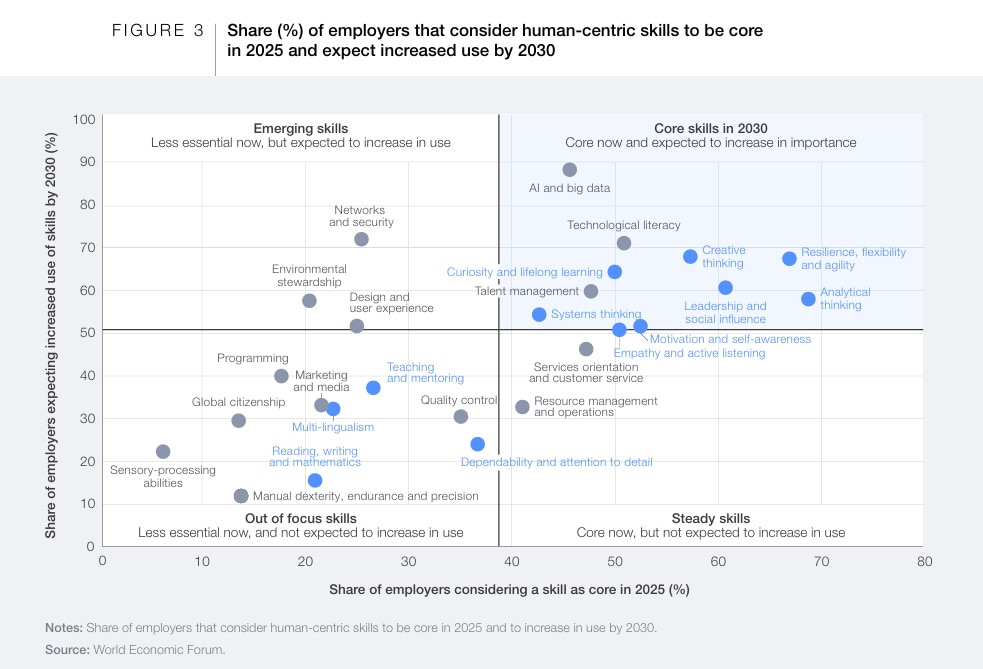
There is a palpable sense that we need to move away from regarding individuals as having set roles and a determined specific career trajectory, to instead focusing on an individual's capabilities.
Participants debated how we get people to continue to think in an era where they don't really have to? There was unanimity that skills like critical thinking and research remain important, but at the same time, there's also a need to prepare individuals for the situation where most people will fundamentally no longer understand something because AI's solutions become too complicated.
As Yuval Harari asked: "How do you train economists or politicians in a world in which humans can no longer understand how finance functions because AIs have created this super complex financial system?"
Resilience was another key skill that was liberally touted. In the face of the challenges modern humans face, how do we make them more resilient? And as a secondary question to this, will this drive and pace be as easy to generate with the cerebral comforts of an AI economy?
Dragoș Pîslaru , Romania's Minister of Investments and European Projects, described what he regards as "an extraordinary transformation within a generation" in Romania.
At the start of his country's democratic journey in 1989, the country's average income was just 10% of that of the EU. Now, it's 80%. He argued that "in continuous uncertainty, what creates resilience is actually the proactive entrepreneurial spirit". He ascribed Romania's transformation to "citizen- and business-driven resilience", which in turn pressured Romania's institutions to adapt in an effort to keep pace. The aim was "a need for a better standard of living, for a better standard of public service", underpinned with a "level of predictability" grounded in the country's progress towards EU and NATO accession.
Kristalina Georgieva, Managing Director of the International Monetary Fund (IMF), summed up the mood of the meeting, with the deceptively simple question: "Perhaps most crucially, we must ask ourselves what people want."