
James Cook University is set to welcome high school students onto its Townsville campus this October to learn from experienced and knowledgeable brain-science experts and participate in engaging hands-on workshops.
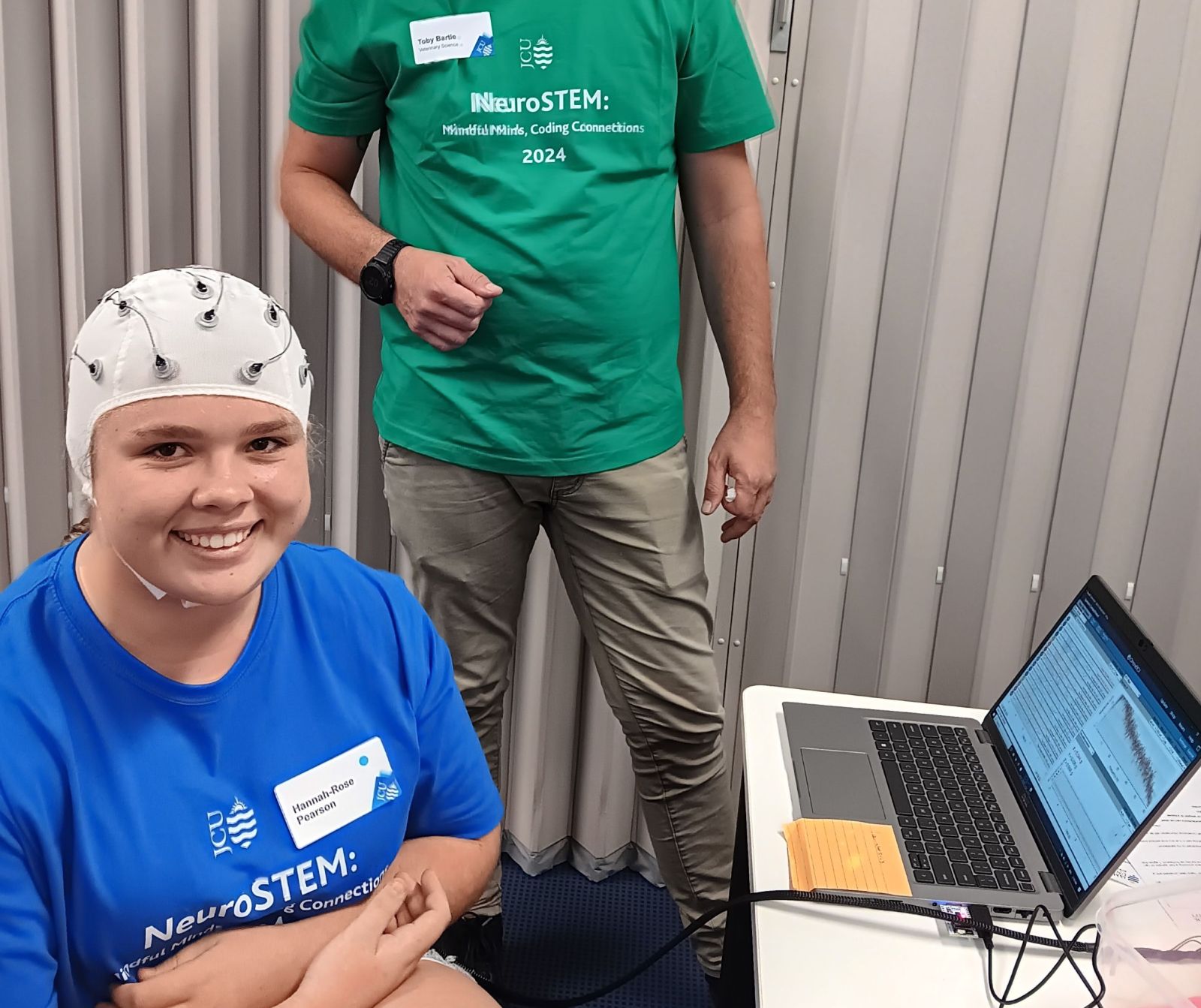
The free one-day NeuroSTEM program for high-school STEM students runs on the 17th of October on the JCU Beguma-Bada campus in Douglas, Townsville.
With spaces limited to one hundred year 10 and 11 high-school students only, schools are invited to nominate curious and capable students for an enriching STEM experience.
The program is designed to engage students in fun STEM activities, explore career and study opportunities in the field of neuroscience and build student's understanding of the health implications of stress.
"Students will have the opportunity to see a real brain in JCU's world-class anatomy lab, see a stress experiment, learn about different technologies to measure stress, and get an introduction to coding," said JCU psychology senior lecturer Dr Liza van Eijk, who is running a workshop on brain imaging and how it can be used to understand brain function.
JCU's NeuroSTEM is the perfect opportunity for stressed-out students to find out what's really going on inside their heads and even get some science-based stress-coping tips from the experts.
Professor Zoltan Sarnyai, a medical doctor and expert in neuroscience, will be running workshops on how the body reacts to stress.
"If students want to, they can be part of a hands-on experiment to demonstrate how the body reacts to different kinds of stress," he said.
"Students will learn that the ability of the body to react to stress is actually good – helping us to adapt to constantly changing environments."
Dr Ashley Gillman, a radiation oncology medical physicist at the Townsville Cancer Centre will introduce students to the use of computer coding to visualise brain data and explain the steps needed to use that data in stress studies.
Using human cadavers, JCU's Dr Alexandra Trollope will show students a real brain –exploring the impact of stress on different brain regions.
"The program helps students understand how STEM knowledge applies in real‑world contexts, build confidence in their scientific skills, and explore potential future study and career pathways," said Dr van Eijk.
NeuroSTEM is led by JCU and funded by the Margaret Roderick Centre for Mental Health Research and the Brain Healthy Schools Project (UQ).
The enrolment page for JCU's NeuroSTEM is now open, but get in quick because spots are limited to 100 students only.


