Researchers have developed a DNA vacuum that can suck genetic traces from animals out of the air and reveal which animals live in an area. In two new studies, the researchers collect air samples in three natural areas in Denmark and show that the method can be used to map local wildlife. This brings them a major step closer to better monitoring of biodiversity using DNA from air.
Can you suck bison out of the air? How do you know that a white-tailed eagle has passed through the forest if you have not seen it?
The air around us contains millions of invisible traces of animals - tiny remnants of genetic material that animals leave behind when they shed hair, feathers, or skin cells.
Now, researchers from the University of Copenhagen have succeeded in capturing these traces, so-called environmental DNA, in three natural areas across Denmark. This makes it possible to determine which animals live in specific areas - without seeing them with the naked eye.
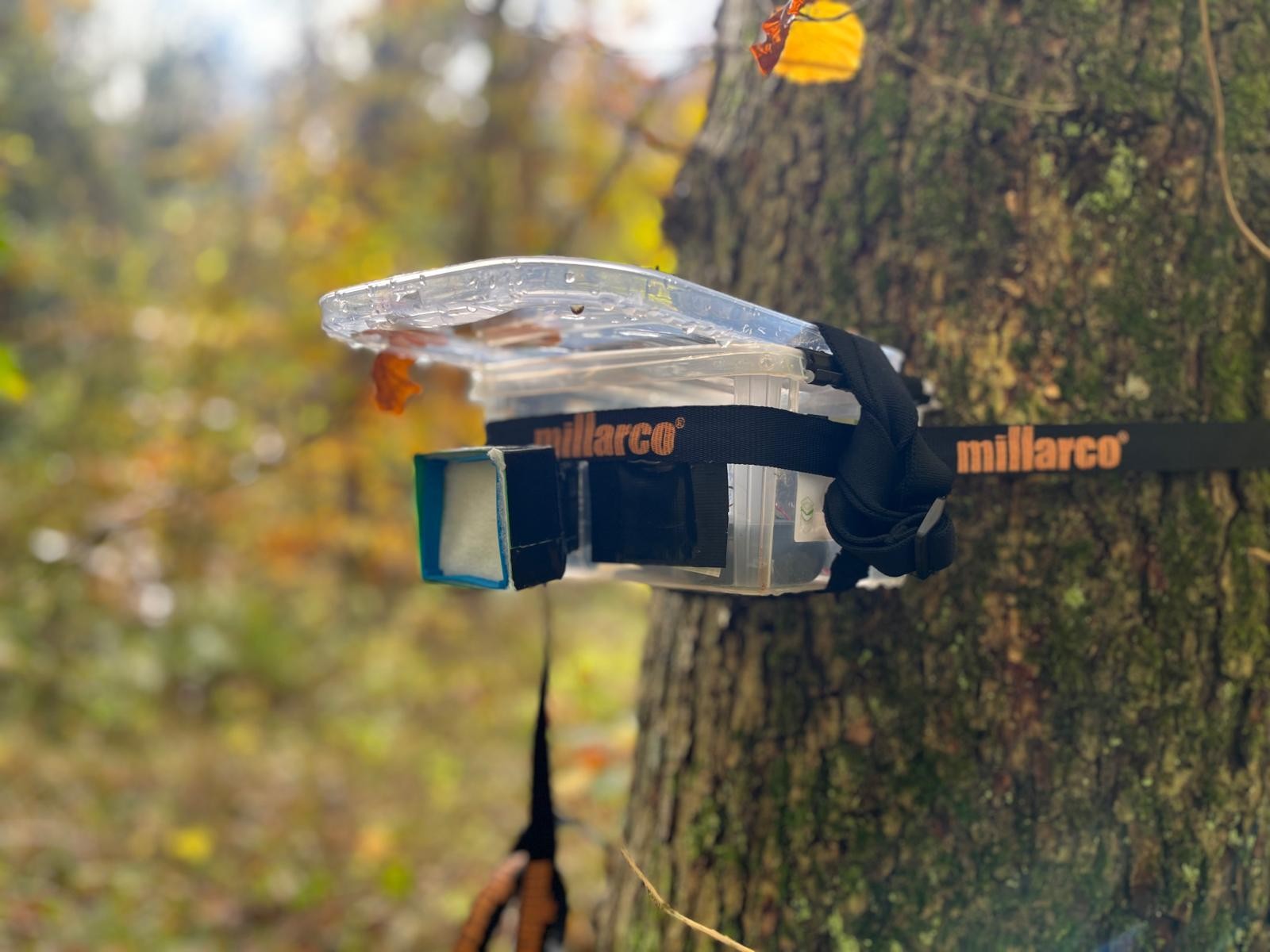
To track the animals, the researchers previously developed a 'DNA vacuum', which works by drawing air through a filter that can then be analyzed for DNA traces.
In two new studies, the researchers collected air samples on Æbelø north of Funen, at Kalvebod Commons on Amager, and in Lille Vildmose in North Jutland, to explore how they can improve DNA vacuuming.
In this work, they found traces of animal species characteristic of the three natural areas. Together with improvements to the method, they are now closer to using it as a tool for mapping species presence in nature.
"In our studies, we do not see DNA from animals that should only be found many kilometers away. This indicates that the signals reflect the local wildlife and that the method has become more precise," says DNA researcher Kasun Bodawatta, postdoc at the Globe Institute at the University of Copenhagen and one of the lead authors of the two new studies on the DNA vacuum.
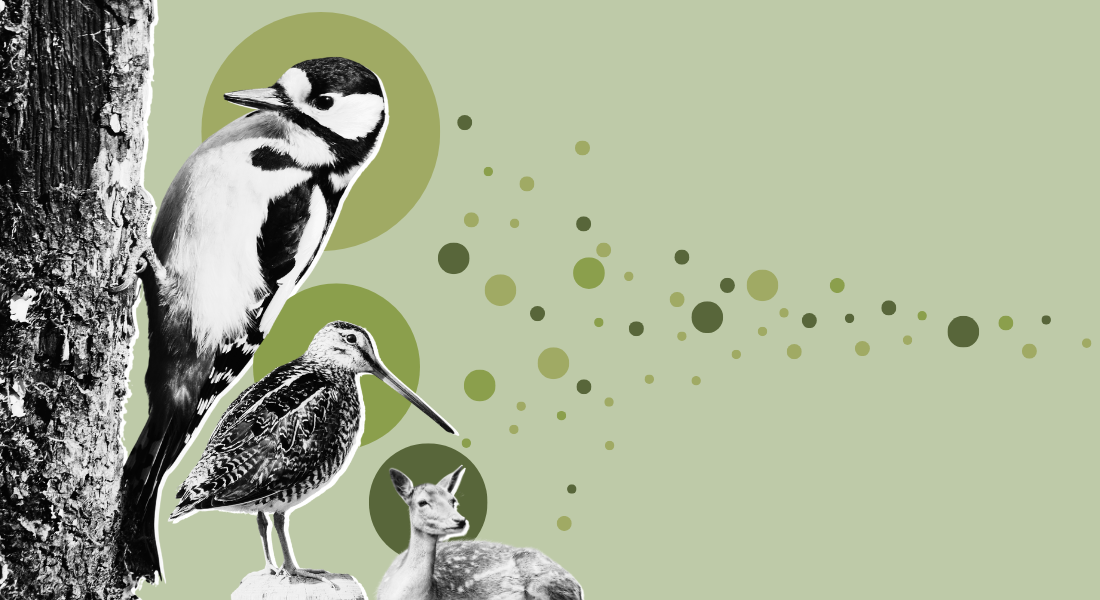
Among other things, the researchers found traces of Eurasian teal, common snipe, bearded reedling, and northern lapwing at Kalvebod Commons. In Lille Vildmose, they detected DNA from tawny owl, great spotted woodpecker, Eurasian bullfinch, and European buffalo, while work on the forested island of Æbelø revealed DNA traces from white-tailed eagle, long-eared owl, and European fallow deer, among others.
In 2022, the research group from the University of Copenhagen was among the first in the world to show that they could use the technology in Copenhagen Zoo, and later demonstrated that the method could also capture DNA traces from animals in a forest area on Zealand.
In the two new studies, the researchers have developed and refined the method, making it more efficient and able to detect significantly more species per sample.
A tool for safeguarding biodiversity
The fact that researchers have succeeded in improving the DNA vacuum so that it can detect traces of local wildlife also shows that the method is now closer to being used for safeguarding and monitoring biodiversity.
The hope is that DNA vacuuming, for example, will be able to help determine whether endangered species are present in a given area or detect invasive species before they become a problem.
"We hope that DNA vacuuming can become a method that functions as an additional tool in the toolbox for mapping species presence, for example to gain an overview of how conservation initiatives affect biodiversity in an area," says environmental DNA expert Kristine Bohmann, associate professor at the Globe Institute and senior author of the two studies.
The researchers are also investigating how airborne animal DNA spreads in space and over time. This knowledge is crucial for using the vacuum as a biodiversity monitoring tool. In addition, they will examine how the technology works in climates other than the Danish one - for example in the tropics.
Read the two new studies published in Communications Biology and Methods in Ecology and Evolution.
About the research
In two studies, the researchers investigated how to improve the method behind the DNA vacuum.
They did this, among other things, by examining the presence of animal DNA in the air in three different natural areas in Denmark: Kalvebod Commons, Lille Vildmose, and Æbelø.
A plastic box forms the exterior of the DNA vacuum, while a computer fan inside the box draws air from the surroundings through a regular filter-similar to those used in standard vacuum cleaner bags-where the DNA is deposited.
To capture DNA, the researchers hung the vacuums in trees in the three natural areas and analyzed the filters. They then sequenced the captured DNA and compared it with a database of animal DNA to identify which animals were represented.
In one study, the researchers examined the influence of filter type, airflow, and storage temperature on DNA capture. In this study, they recorded 52 bird species, 19 mammals, and one amphibian species across the three natural areas.
In the other study, the researchers examined how long the vacuuming needed to take. Here, they found traces of 54 birds, 18 mammals, and one amphibian species in Lille Vildmose.
The research group is now continuing to investigate how long it may have been since the animals left behind the DNA captured by the vacuum, and how close they may have been to the sampling site.