To find your path as an undergraduate, you need to take risks - to sail off into the unknown, whether it's a study abroad opportunity, an unexpected internship or a class outside your major.
For students in STEMSEAS, that involves an actual ship, accompanied by mentors such as Jeanette deCuba.
STEMSEAS is an acronym for Science, Technology, Engineering, and Math Student Experiences Aboard Ships, a National Science Foundation-funded program that provides undergraduate students from diverse backgrounds the opportunity to experience onboard research. There is little cost to the participants, many of whom come from backgrounds underrepresented in science, explained deCuba, a Binghamton University doctoral candidate in Earth Sciences who participated in the program as a "near-peer mentor."
"They may be at a point in their undergraduate journey where they're unsure whether they want to study science. Or they may be majoring in a STEM field but not sure about what they want to do after they graduate, and want to explore different career options," she said. "STEMSEAS offers the opportunity to explore science at sea and learn about different career pathways."
The University-National Oceanographic Laboratory System (UNOLS) has a fleet of vessels associated with universities across the country. STEMSEAS takes advantage of so-called "transit cruises," when vessels have finished a scientific mission and are headed to another port.
From Feb. 2 to 9, deCuba's expedition sailed from Panama City to Tampa, Florida, on board the RV Atlantis, an oceanographic research ship owned by the U.S. Navy and operated by the Woods Hole Oceanographic Institution.
Originally from Florida, deCuba came to Binghamton University three years ago to study with her own mentor, Assistant Professor of Earth Sciences Adriane Lam, and work in her lab. Lam has worked alongside the program directors of STEMSEAS on prior education and outreach initiatives. At a conference last October, Lam learned from them about upcoming cruises and passed the information along to deCuba, encouraging her to apply.
"Having graduate students sail on seagoing expeditions, aboard some of the finest research vessels in the world, is a game changer for them. It opens new doors and introduces them to a broad array of research and researchers," Lam said. "It also introduces them to a different type of real-world research setting and how to conduct science at sea, a region of our planet that is most susceptible to anthropogenic climate change and requires robust research and protection."
Mentor and mentee
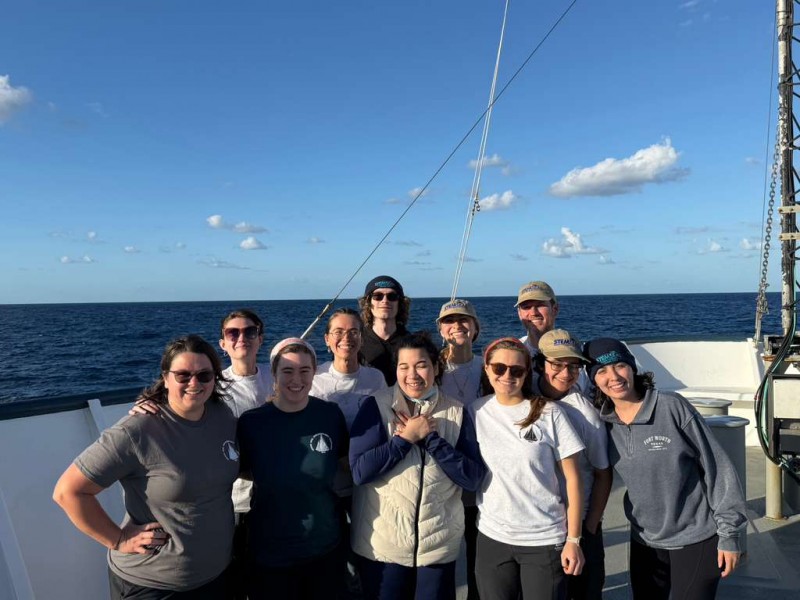
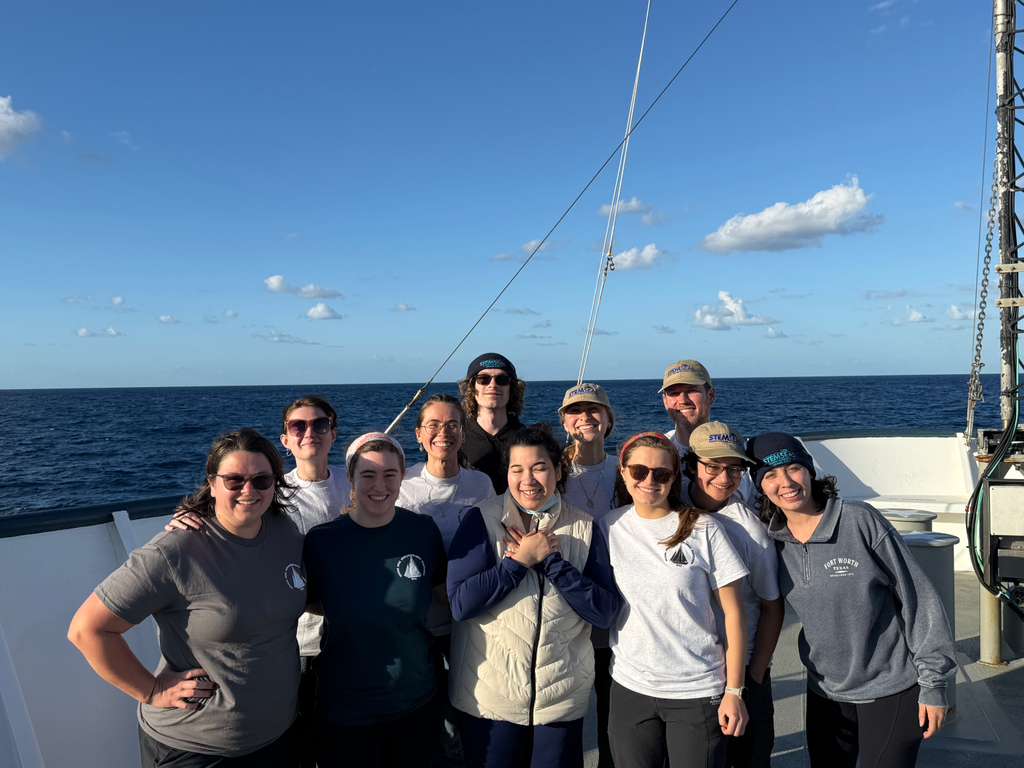
During the expedition, deCuba shared relevant parts of her own experience with the undergraduates, from her educational trajectory to her doctoral research. But STEMSEAS was a learning opportunity for her as well: The expedition marked the first time that deCuba was aboard a ship.
"This vessel was particularly interesting because it had a remotely operated vehicle used for deep-sea research," she said. "I learned about the instrumentation on board and the science that's done on that vessel. It was really cool."
Paired with two faculty members on the ship, deCuba also explored the possibilities of mentorship from both sides. The faculty mentors provided valuable insights on how to engage students and keep their attention that will prove useful in her own classroom someday, she said.
As a teaching assistant in Earth Sciences, deCuba typically works with STEM majors at Binghamton, most often in geology. Despite the program's name, undergraduates participating in STEMSEAS come from a variety of backgrounds, including the humanities. It was an interesting opportunity to introduce a diverse cohort of students to ocean sciences in a hands-on environment, deCuba said.
"One of the main things I took away was how important an experience this is for the undergrads," she reflected. "It may have been an integral point in their journey that solidified a career choice or led them to a certain pursuit they wanted to continue. This is probably an experience they're never going to forget."
"Seeing them learn new concepts and how these concepts apply on a vessel was really rewarding to me," she said.