
The ENANDES regional project demonstrates how collaboration among meteorological services, communities, productive sectors and regional centres can transform climate information into practical tools for adaptation.
Climate change is altering the conditions under which communities, farmers, public institutions and economic sectors make decisions. In this context, having timely climate information is not enough: such information must be accessible, relevant and tailored to the needs of those who use it.
This was one of the guiding principles of the ENANDES project - Enhancing the Adaptive Capacity of Andean Communities through Climate Services, coordinated by the World Meteorological Organization (WMO) and funded by the Adaptation Fund .
Through its work in Chile, Colombia and Peru, ENANDES sought to strengthen the capacity of National Meteorological and Hydrological Services (NMHSs) to develop climate services together with their users, connecting scientific knowledge with the concrete needs of communities and territories.
The result is a set of tools, capacities and experiences that extend beyond national borders and provide valuable lessons for the development of climate services across the Andean region.
Designing climate services by listening to users
One of the key lessons from ENANDES was that climate services are more useful when they are developed around the real needs of their users.
Rather than simply transferring information from scientific institutions to communities, the project promoted dialogue and co-design processes in which farmers, Indigenous communities, public institutions, researchers and other users could express their needs and contribute to the development of solutions.
These principles played out differently in each country, shaped by local institutions and needs.
In Colombia, for example, collaboration between the Institute of Hydrology, Meteorology and Environmental Studies (IDEAM) and farming and Indigenous organizations in Cauca led to the establishment of Community Agroclimatic Forums, which provided spaces for exchange between scientific and local knowledge.
Over 28 sessions, more than 1,100 people took part and shaped the dialogue and the bulletins that came out of it, which translated agroclimatic and hydrometeorological forecasts into terms specific to Cauca's farming calendar, feeding directly into community-based early warning systems.
The process also translated into concrete adaptation measures. Seven Farmer Field Schools - community-based, hands-on training programmes - trained 568 people and supported the implementation of 109 measures, including rainwater harvesting systems, bio-input production facilities, protected gardens, native seed banks and energy-efficient stoves.
In Chile, Participatory Agroclimatic Forums in the Aconcagua River basin brought together farmers, specialists and other stakeholders to improve the understanding and use of climate information. The process helped create a common language between those who produce climate information and those who need it to make decisions.
The experience also extended to other sectors. In collaboration with stakeholders from the energy and academic sectors, tools were developed to support renewable energy planning, while in Valparaíso the CLIMTUR platform, co-designed with the tourism sector, enables stakeholders to plan sustainable activities using real-time climate information.
Strengthening the science and infrastructure behind climate services
Co-design with users is a fundamental component of climate services, but it also requires robust observation systems, data and technical capacities.
In Colombia, IDEAM recovered and digitized historical records, consolidating an inventory of 63 stations with more than 10 million records. Models were also developed for 32 river basins, together with a national drought monitoring plan.
In Peru, the National Meteorology and Hydrology Service (SENAMHI) strengthened its risk management capacities through innovative tools such as PANDORA, an automated system for monitoring and early warning of urban flooding. Regionalized climate change scenarios were also developed, and Agroclimatic Technical Forums were strengthened.
At the regional level, the International Center for Research on the El Niño Phenomenon (CIIFEN), as the Regional Climate Centre for Western South America, played a key role in connecting information and tools across countries. Its contributions included consolidating a regional climate database, generating high-resolution climate change projections, and creating the Climate Service Toolkit, a repository of methodologies for the Andean region.
From climate information to tangible benefits
A central question for any investment in climate services is how to demonstrate that the information generated actually contributes to better decision-making. ENANDES incorporated socioeconomic benefit studies to assess this link.
In Colombia, the analysis conducted under the project found that 22% of participating households increased their income by 30% through the strategic use of climate information. At the same time, the use of climate information in the territory increased from 87.6% to 97.6%.
These results highlight the importance of moving beyond measuring the production of information to understanding how that information is used and what changes it can generate for communities and climate-sensitive sectors.
An increasingly inclusive approach
The project also generated important lessons on the value of considering the different perspectives and needs present in each territory.
The participation of Indigenous and rural communities helped incorporate local knowledge and experience into the development of climate services. In Chile, for example, the process included representatives of the Mapuche, Diaguita and Aymara peoples.
At the same time, the experience highlighted opportunities to further strengthen the participation of different user groups - including women, young people, older persons and persons with disabilities - in the design and planning of climate services.
This lesson provides an opportunity for future phases to move towards services that are increasingly representative, accessible and responsive to the diversity of needs across territories.
Three countries, shared lessons
Although the experiences in Chile, Colombia and Peru responded to different national contexts, the project identified a number of common challenges.
These include the need to strengthen and sustain observation networks, improve the availability and integration of data, develop institutional capacities, and secure financing mechanisms that allow climate services to be maintained over time. Perhaps one of the most important lessons, however, is that these challenges do not have to be addressed in isolation.
Cooperation among NMHSs, Regional Climate Centres, national institutions, international organizations, universities, productive sectors and communities can generate capacities that no single actor could develop alone.
A closing that opens a new chapter
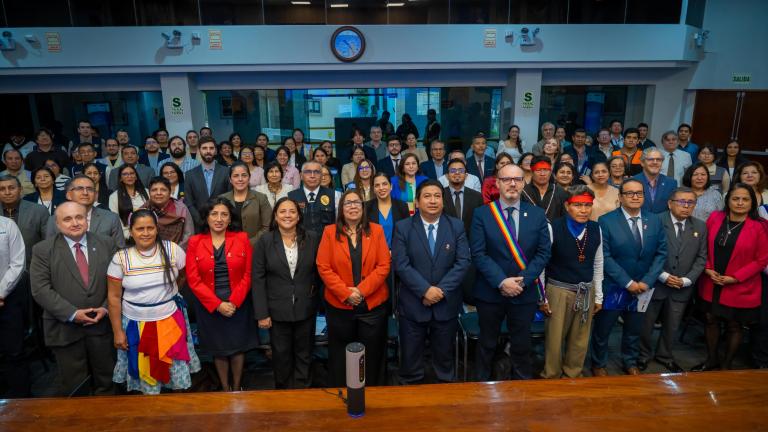
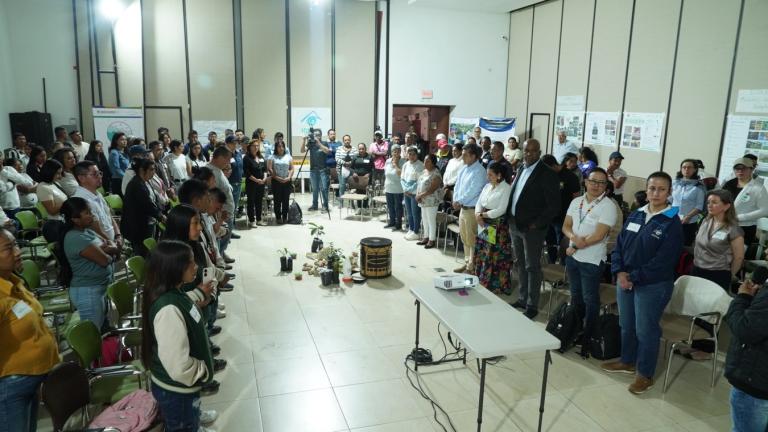
The national closing events held in Colombia, Peru and Chile marked the formal conclusion of one phase of ENANDES, while also highlighting the continuity of the work initiated through the project.
As Ricardo Manzano, an Indigenous leader from the Puracé Indigenous Reserve, expressed during the territorial closing event in Colombia: "The spiral allows us to always enter and exit. The spiral has a beginning, but it has no end. This is a closing, but it is also the opening of a new process."
ENANDES leaves behind more than platforms, tools and products: strengthened capacities, new forms of collaboration, and a working methodology grounded in dialogue between science and society.
The next turn of the spiral: ENANDES+
That learning is already being taken to a new scale. ENANDES is paving the way for ENANDES+, a new phase of regional cooperation coordinated by WMO that brings in Ecuador, Bolivia and Argentina alongside the three founding countries, extending strengthened capacities, shared solutions and the lessons of the first phase to new contexts.
Building climate resilience is not a process that ends with a project. It is built through continuous learning, adaptation and cooperation. With ENANDES+, that spiral is already in motion across the Andes.


