
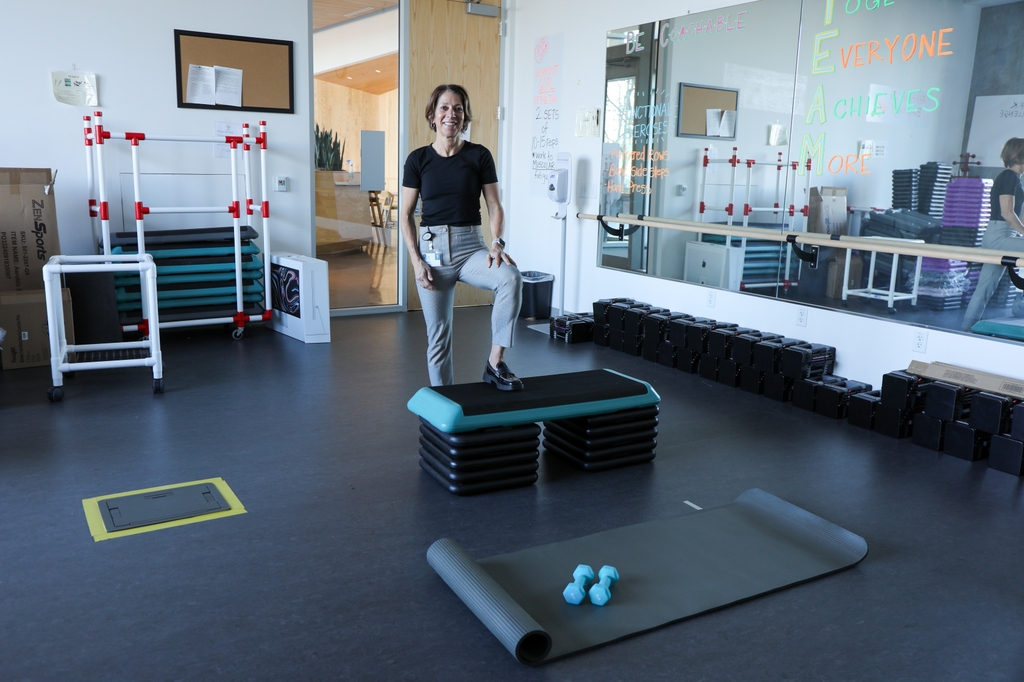
For cancer survivors older than 65, exercise is essential during treatment, throughout recovery and beyond, according to a consensus statement recently published in the journal Cancer.
The work, led by Oregon Health & Science University physicians and professors, was part of a multidisciplinary panel of 16 experts from across North America.
The panel, called ACES, or Advancing Capacity to Integrate Exercise Into the Care of Older Cancer Survivors, included exercise scientists, geriatricians, medical oncologists, physical therapists and a patient advocate and exercise professional. Their year-long effort culminated in a series of recommendations for older cancer survivors that dispel the myth that it's too risky for them to exercise and filling a gap in guidance for the largest demographic of cancer survivors in the United States.

Kerri Winters-Stone, Ph.D., Penny and Phil Knight Endowed Professor in Cancer Research Innovation in the OHSU Knight Cancer Institute's Division of Oncological Sciences, said there can be misconceptions around what older patients with cancer are capable of, and what is safe for them to do.
"We want to put that myth to bed, that older people can't tolerate exercise during cancer treatment," Winters-Stone said. "We know that if anything, it's the opposite. From a clinical perspective, if exercise helps older patients tolerate more treatment, they have better clinical outcomes and maintain their quality of life. It's a win-win."
Flexible, adaptable guidance
Development of the consensus statement was funded by a National Cancer Institute grant, and the guidelines are meant to complement the current cancer survivor exercise recommendations from the American College of Sports Medicine, the American Society of Clinical Oncology, and National Comprehensive Cancer Network.
In 2016, there were an estimated 15.5 million cancer survivors in the U.S., 62% who were 65 or older. By 2040, that number is projected to jump to 26.1 million, with 73% age 65 or older.
Yet there is a surprisingly small number of rigorous, controlled exercise trials in older cancer survivors that could inform evidence-based practice, the research team says. Until now, there were no documented best practices around whether or how older cancer survivors should handle physical exercise.
The ACES panel examined the current American College of Sports Medicine general cancer survivor guidelines and agreed that they apply to older cancer survivors:
- Avoid inactivity.
- Engage in 30 minutes of moderate‐intensity aerobic and/or resistance exercise three times per week.
- Strive toward 150 minutes of moderate to vigorous aerobic exercise per week, plus twice‐weekly resistance exercise, with recommended additional exercise prescriptions specific to older cancer survivors.
For health care providers, the panel created a suite of recommendations on prescribing and delivering exercise for cancer survivors 65 and older. Some guidance includes:
- Monitor for signs of poor tolerance during exercise, such as fatigue, pain, dizziness and weakness, and adjust exercise accordingly.
- Add balance and flexibility training to exercise routine.
- Modify exercises or involve caregivers, family or friends if unsupervised exercise is unsafe.
Winters-Stone said the recommendations are meant to be flexible and adaptable. If mobility issues are a factor, for example, the focus should be on getting stronger with better functioning and greater stability before telling that person to increase their daily steps.
Maintaining quality of life
For older cancer survivors, maintaining their independence may be more important to them than living longer. Exercise, Winters-Stone said, is key to achieving and maintaining independence as long as possible, but it must be integrated up front, alongside treatment.
"Staying in your home as long as possible, aging in place, being able to make your own decisions, take care of your own finances, continue being able to socialize — those are all incredibly important things to older patients with cancer," Winters-Stone said.
"And then there's the ability to continue doing your activities of daily living: bathing, dressing, eating, plus higher-level activities like grocery shopping and cleaning, without dependence on others," she added. "A regular exercise program will increase your chances of being able to do those things much longer. Maintaining their basic daily functions allows older survivors to maintain their dignity and quality of life."
Winters-Stone said it's the responsibility of providers and health care organizations to make sure that some sort of exercise program is available for older cancer survivors.
Just as importantly, she said, it's imperative that exercise doesn't stop once they're cancer-free or if they are living with advanced disease.
"There's a saying that if exercise was a pill, it would be the number-one prescribed medication in the whole wide world because it has so many benefits," Winters-Stone said. "I can't think of a single reason not to prescribe exercise for everybody with cancer, but especially for those patients and survivors who are older. They'll feel better, maintain their independence, and probably even live longer."
Funding for this consensus statement was provided by National Cancer Institute grant 1R21CA280996.


