Two acclaimed artists and literary experts at the University of Exeter are leading a new exhibition inspired by watery environments.
Opening at the Thelma Hulbert Gallery in Honiton in January, Shifting Waterscapes brings together visual art, sound, story and mixed media created by Dr Ellen Wiles and Dr Arun Sood in response to bodies of water in flux.
The six-week exhibition explores the value of watery ecosystems at a time of rapid environmental change by diving into a series of distinctive places, including Porlock Vale on Exmoor, Countess Wear at Exeter, and the tidal island of Vallay in the Outer Hebrides.
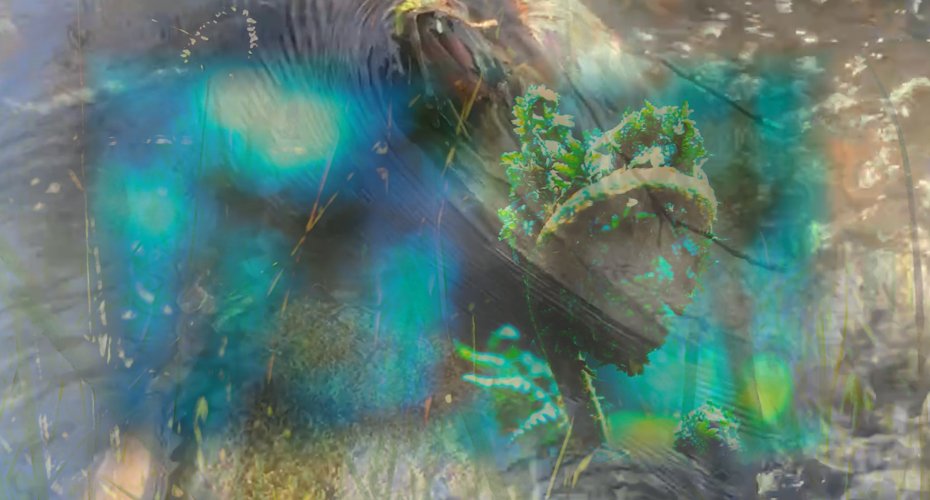
At the heart of Shifting Waterscapes will be a new installation developed by the two artist-academics, in collaboration with visual artist Emma Molony, which has emerged from a year of research at Otterhead Lakes in the Blackdown Hills. Springs and Seepages was conceived as a collaboration with this unique wetland environment, and combines multiple elements produced in situ, including sound, music, text, film, natural sculpture, collage, and a series of painted canvases that have been immersed in the mulch.
"Over the last six years, I have been addressing the environmental crisis through my creative work by making immersive literary audio through collaboration with organisations involved in nature restoration and water resilience," says Dr Wiles.
"It has been a delight to work with Arun to bring this exhibition into being - to combine our shared passions for watery ecologies, nature and multidisciplinary art practice, and channel this into a new immersive installation work. We thoroughly enjoyed working with fellow artists Emma Molony and Malcolm Robertson, with Gemma Girvan and the team at the Thelma Hulbert Gallery, with the Otterhead Estate Trust and with the Blackdown Hills National Landscape."
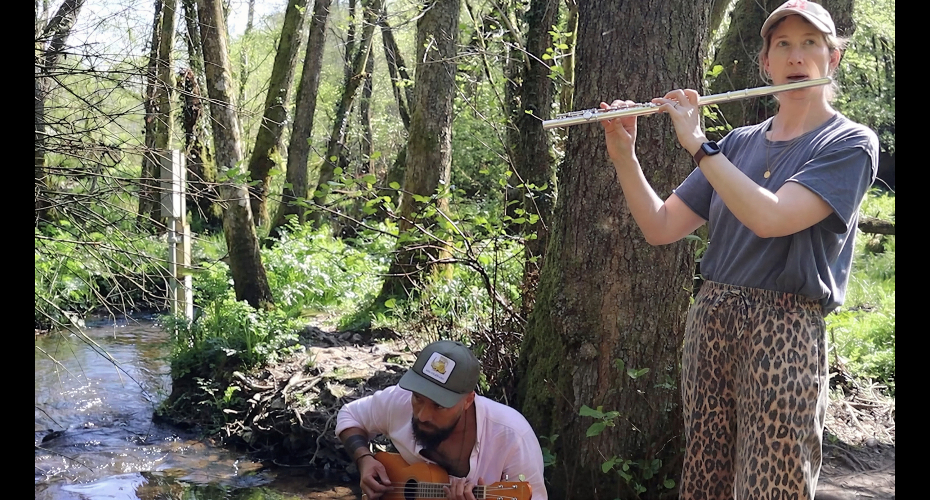
Dr Wiles, who is artist-in-residence at the innovative CREWW water research facility on the Exeter campus, has spent the past year visiting Otterhead Lakes with Dr Sood, producing field recordings and observations, recording oral histories, improvising music in counterpoint with the resonant acoustic ecology of the waterscape and filming the wetland environment.
"Wetlands are more precious than ever, as they now cover only 6% of the world's surface and are home to 40% of its species, and they are vital places for ensuring water system resilience to extreme weather events," said Dr Wiles. "We wanted to draw attention to this through an immersive experience that also represents their value as places of peace and wonderment. The installation is intended to be an entrancing, ambient experience that evokes some of the distinctive qualities of this place, created in collaboration with the more-than-human world of this waterscape."

In addition to the new installation, the exhibition also features a selection of other works by Wiles and Sood, including works representing Sood's relationship with Valley in The Outer Hebrides, Wiles's audio work Paper Heron shown through a new xylolibrarium installation created with artist Malcolm Robertson, and a film of Wiles's fictional sound story Riverlandia, originally commissioned by The National Trust.
The exhibition opens on Saturday 17 January (and runs until 28 February), and is suitable for audiences of all ages. There will be several activities and events on the day, including a drop-in family printing workshop, a live performance by the artists, a film screening, and a conversation and audience Q&A with the artists and Tim Youngs, Manager of the Blackdown Hills National Landscape. Tickets for the opening events are free, but booking is recommended.
Councillor Nick Hookway, Portfolio Holder for Culture, Leisure, Sport and Tourism, adds: "As water is fundamental to life, so it is fundamental to all creative enterprises. I warmly recommend this exhibition to you and hope that you share the passion of the artists whose work is on display."
"We hope that people who come to the exhibition will enjoy an immersive and restorative experience, rich in ambient nature sounds and imagery, while also discovering some new waterscapes to fuel their imaginations," adds Dr Wiles. "Our exhibited works may provoke people to think about certain critical issues around environmental change and reflect on the value of our waterscapes and our entanglement with the more-than-human world to some extent - but in doing so they are imaginatively transporting and engaging."