
Agribusiness research supported by ACIAR will strengthen Fiji's beekeeping and tilapia sectors by redesigning value chains and building the capacity of farmer organisations.
Beekeeping and tilapia farming are important income-generating activities for smallholder farmers across Fiji. Both offer strong potential to develop into high-value agribusiness industries. The four-year A$1.67 million project aims to strengthen both sectors by supporting farming associations to become effective drivers of industry development.
Led by Southern Cross University, the project is being implemented in partnership with the Fiji Ministry of Agriculture, the Ministry of Fisheries, the Tilapia Fiji Farmers Association, the Fiji Beekeepers Association, the Adelaide University and Talanoa Consulting.
The initiative builds on lessons from earlier investments by ACIAR, including the Pacific Agribusiness Research in Development Initiative (PARDI and PARDI 2), as well as the project on strengthening beekeeping industries for improved production and livelihoods in Fiji, Papua New Guinea and Solomon Islands.
Co-project leader Dr Cooper Schouten said strong emphasis is placed on building capable industry associations.
'The project is growing partnerships between key industry and government departments for continued industry growth,' said Dr Schouten.
'This is achieved through market-driven demonstration chains, product development, agribusiness mentoring and group learning activities that strengthen farmer skills and commercial capability.
'The aim is to ensure these organisations are financially and operationally resilient and able to continue supporting their members well after funding concludes.'

Building profitable, community-led agribusiness sectors
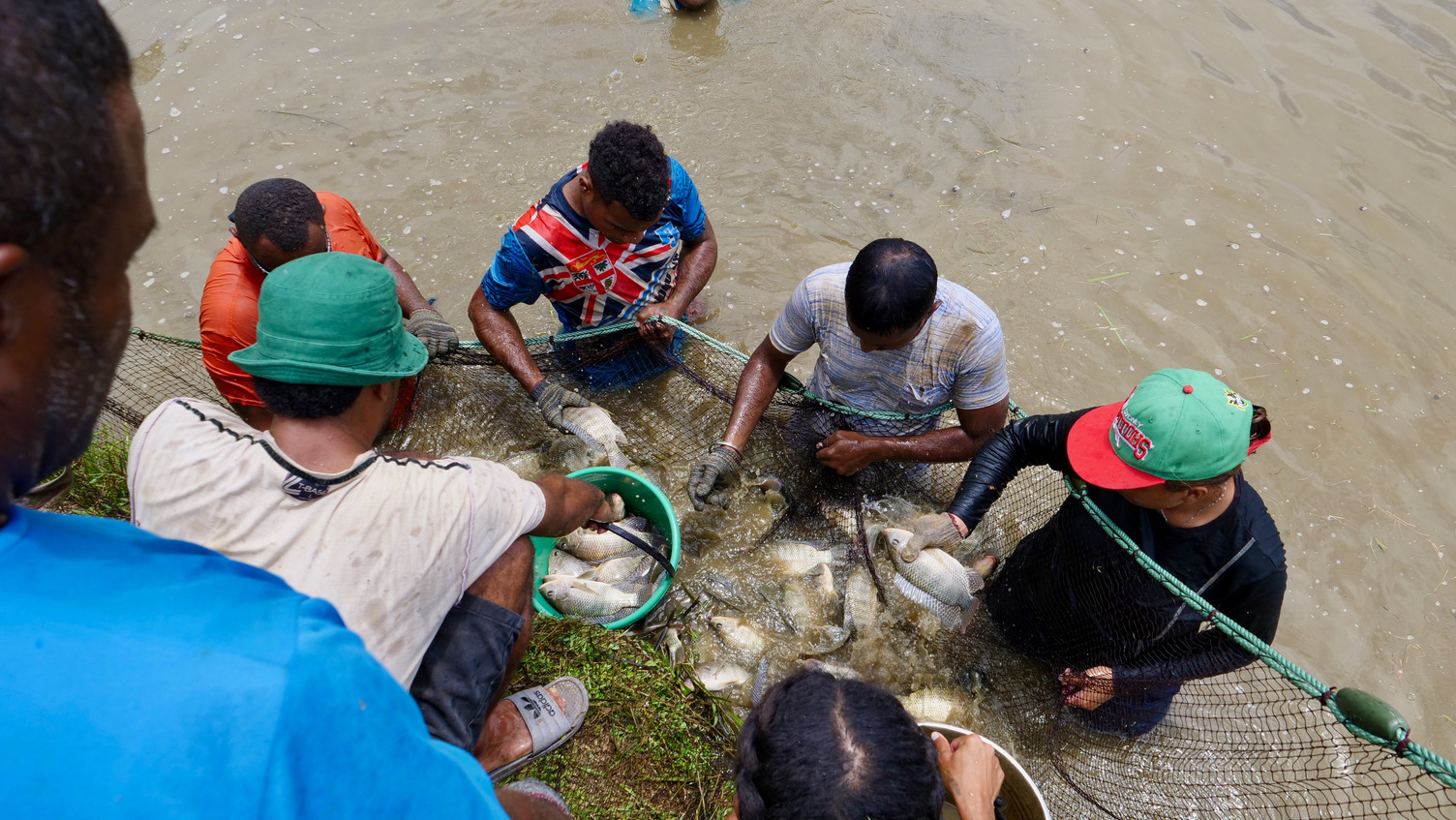
In Fiji, there are more than 350 tilapia farms, producing about 228 metric tonnes, largely at subsistence and semi-commercial levels. Over the years, the demand for commercial tilapia fish has increased, along with competitive prices and a niche market that offers a stable income for many established farmers.
For the growing beekeeping industry in Fiji, the sector has approximately 1200 beekeepers managing over 13,000 hives and producing about 250-300 tonnes of honey annually.
ACIAR Research Program Manager for Agribusiness, Dr Jack Hetherington said the project is laying the groundwork for more self-sustaining agricultural sectors in Fiji and across the Pacific. 'We are not only strengthening partnerships and building the capacity of farmer organisations by understanding what works in Pacific contexts when it comes to building viable agribusiness sectors. The lessons generated will help inform future investments across the region.'
Fiji Ministry of Fisheries Acting Director Ms Nanise Kuridrani echoed this support.
'The value of this collaboration lies in how it brings research, government and farmer organisations together,' said Ms Kuridrani.
'Strengthening capacity and market engagement within our farmer groups is essential if Fiji's tilapia sector is to grow beyond subsistence and remain viable beyond the project.'
Insights from partners
At the project inception meeting, partners engaged in open discussions on data gaps, operational processes, strategy and capacity needs.
Vice President of the Tilapia Farmers Association, Mr Laisiasa Cavakiqali said the association is looking at improving the efficiency and technical skills of its farmers.
'One of the key issues for our tilapia farmers has been inconsistency in supply, quality and market linkages. Many farmers struggle with accessing good breeding stock and affordable inputs while also facing uncertainty around where and how to sell their fish. Through this project, we are working to improve these systems, strengthen standards and create clearer market pathways for farmers.'
For Dr Muhammed Saiyad Riyaz Ud Dean, the President of the Fiji Beekeepers Association, they are looking at the value chain from production to market.
'This project is a significant step forward for beekeepers in Fiji. It's not just about increasing production; it's about strengthening the entire value chain. From better hive management and quality control to stronger market connections, beekeepers will be better equipped to grow their businesses and supply consistent, high-quality honey to local and regional markets.'
One of the aims of the project is also understanding gender roles across agribusiness activities.
Co-project leader, Ms Salote Waqairatu said while women's participation in Fiji's tilapia sector makes significant contributions across different farm types and production systems, they remain underrepresented in training, decision-making and leadership roles.
'Studies indicate that women are often excluded from aquaculture training programs due to the limited advocacy for gender responsive approaches within the sector. Addressing these constraints presents a key opportunity to unlock productivity and resilience gains,' said Ms Waqairatu.
She added that gender equality and social inclusion principles will be embedded across all activities, ensuring that women, youth and marginalised groups are supported and able to participate meaningfully in and benefit from sector growth.
As Fiji's beekeeping and tilapia industries continue to grow so too does the opportunity to build profitable and community-led agribusiness sectors. Through its collaborative, market-driven and participatory approach, this ACIAR-supported agribusiness project aims to position smallholder farmers at the centre of its activities.
Learn more about this project here.


