
From surgical gloves to water bottles, shopping bags and chewing gum, every part of our daily lives includes plastic. They epitomise convenience - their durability makes our dependence on them inextricable, but it also stifles the environment.
Once plastics are released into the marine environment, large pieces choke wildlife and disturb fragile habitats like coral reefs before breaking down into toxic microplastics that poison the food chain. Even when they have fully disintegrated physically, their chemical bonds remain and the impacts persist.
Today, more than 4,000 marine species are known to be affected by plastics, according to the World Ocean Assessment , the only analysis of the world's ocean across the three pillars - environmental, economic and social - of sustainable development.
Dr Ian Butler, an editor of the 1,600-page report that includes contributions from over 650 experts, said the whole marine system is being affected: "it's their feeding, their metabolism, their immune function, their growth and reproduction. It weakens and kills them, and changes populations."
Ahead of World Ocean Day on June 8, here are five things you need to know about ocean plastics:
1. Ocean plastic pollution is still rising
The amount of plastic in the ocean is still rising, driven by mismanaged waste, littering, microplastic abrasion and marine activities. Plastic waste emissions are estimated at 52.1 million metric tonnes per year.
There are also different regional patterns: littering is described as the largest source of pollution in the Global North, while uncollected waste dominates in the Global South.
These 'leakages' are what causes the ocean so much damage. "What our eyes see is the tip of the iceberg," Dr. Butler warned.
Floating and beach macro- and microplastics account for only three to four per cent of total ocean plastic, meaning much of the problem is dispersed, submerged, fragmented or otherwise hard to recover.
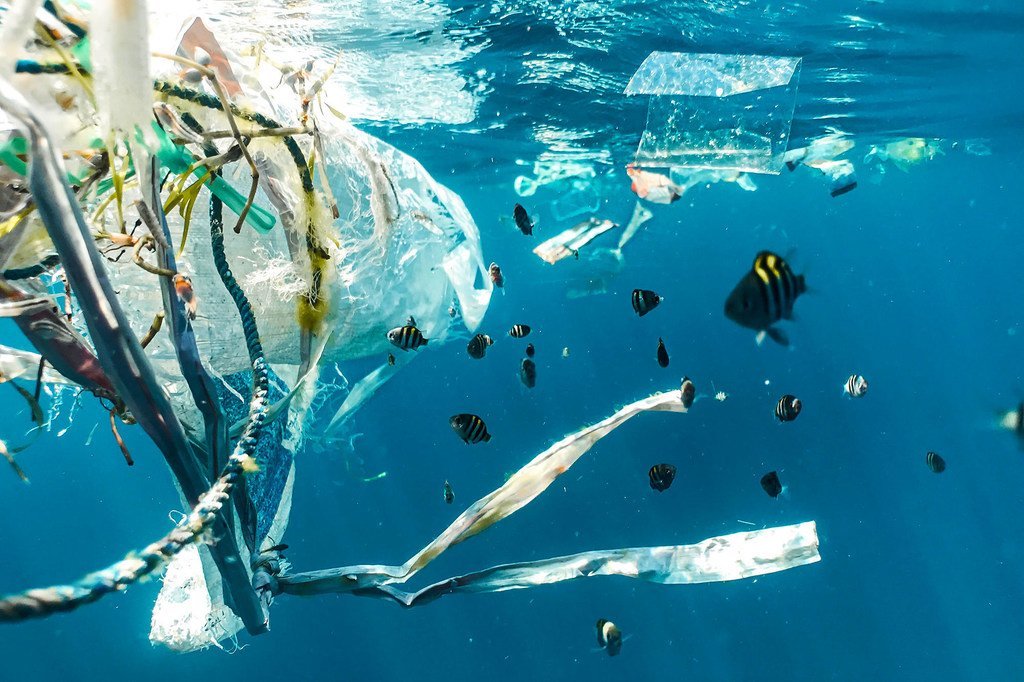
2. The smallest plastics are the biggest unknown
Once plastic reaches the ocean, it is not just confined to beaches or floating garbage patches - microplastics have been found from surface waters to the deepest depths of the ocean.
It is estimated that there are some 24.4 trillion microplastic pieces in the world's upper oceans. Microplastics are small plastic pieces less than five millimetres long, often breaking down from larger plastic items, and can cause alterations to the immune system, inflammation, decreased growth rates, and energy imbalance.
However, our understanding of nanoplastics and their long-term biological effects is still very limited - the less visible the plastic becomes, the harder it is to detect, monitor, remove and assess for risk. At the same time, it becomes easier for the plastic to penetrate natural biological barriers such as cell membranes.
The concentration of these tiny plastics also "magnifies through the food chain - from the smallest creatures, who get eaten, and then it accumulates higher and higher up," Dr Butler said.
3. Single-use plastic a major source of litter
Single-use plastics make up about 40 per cent of global litter, while fishing contributes around 15 per cent, with patterns varying between higher- and lower-income countries.
Reducing the problem requires reducing production, promoting reuse, rethinking product design, improving recycling innovation, and finding alternatives to single-use plastics. The attached water bottle cap is one quite pithy recent invention, although the single use bottles must also be tackled.
Recycling should not be treated as the whole answer - the bigger shift is towards preventing waste before it reaches the ocean.
When it comes to sustainable alternatives to plastics, Dr. Butler said that "changing the recipe of the plastic helps but changing our dependence on throwaway plastic matters more for the ocean."
4. Plastic pollution is not just an environmental issue - it is a social and economic one
While plastic pollution poses a significant threat to marine habitats, it also significantly reduces ecosystem resilience, human livelihoods and food security
The costs of pollution fall heavily on ocean-dependent sectors. Tourism, fishing, and shipping lose billions of US dollars every year through reduced revenue and cleanup costs.
Small-scale fisheries may be especially vulnerable - plastic pollution is now a major coastal and fisheries challenge, with possible human health implications, including evidence of plastic ingestion in 386 marine fish species.
5. Prevention is key, a global plastics treaty is needed
The solution is not just more beach clean-ups or more recycling. According to the Assessment, action must also focus on reducing production, improving material science, and finding alternatives to single-use plastics.
Potentially the most effective method of reducing plastic pollution is through an international agreement or treaty. The Intergovernmental Negotiating Committee on Plastic Pollution , led by the UN Environment Programme ( UNEP ), was founded to develop an international legally binding 'instrument' on plastic pollution.
After six years of negotiations, an agreement has not been reached between the 193 member states of the UN.
"Some countries feel they're unfairly hurt by certain types of restrictions, and their economies will disproportionately suffer compared to those other countries, which are not dependent on plastic manufacture," Dr. Butler said.


