Electric vehicle batteries that can no longer efficiently power cars could be given a second life supplying energy for homes, farms and remote communities through a project at Flinders University.
Researchers are working with Mitsubishi Motors Australia Limited, ResourceCo and other industry partners to develop a commercially viable pathway for repurposing end-of-life electric and plug-in hybrid vehicle batteries.
Supported by a Green Industries SA grant, the repurposed batteries could be used for lighting, water pumping, energy storage and reducing reliance on diesel generators.
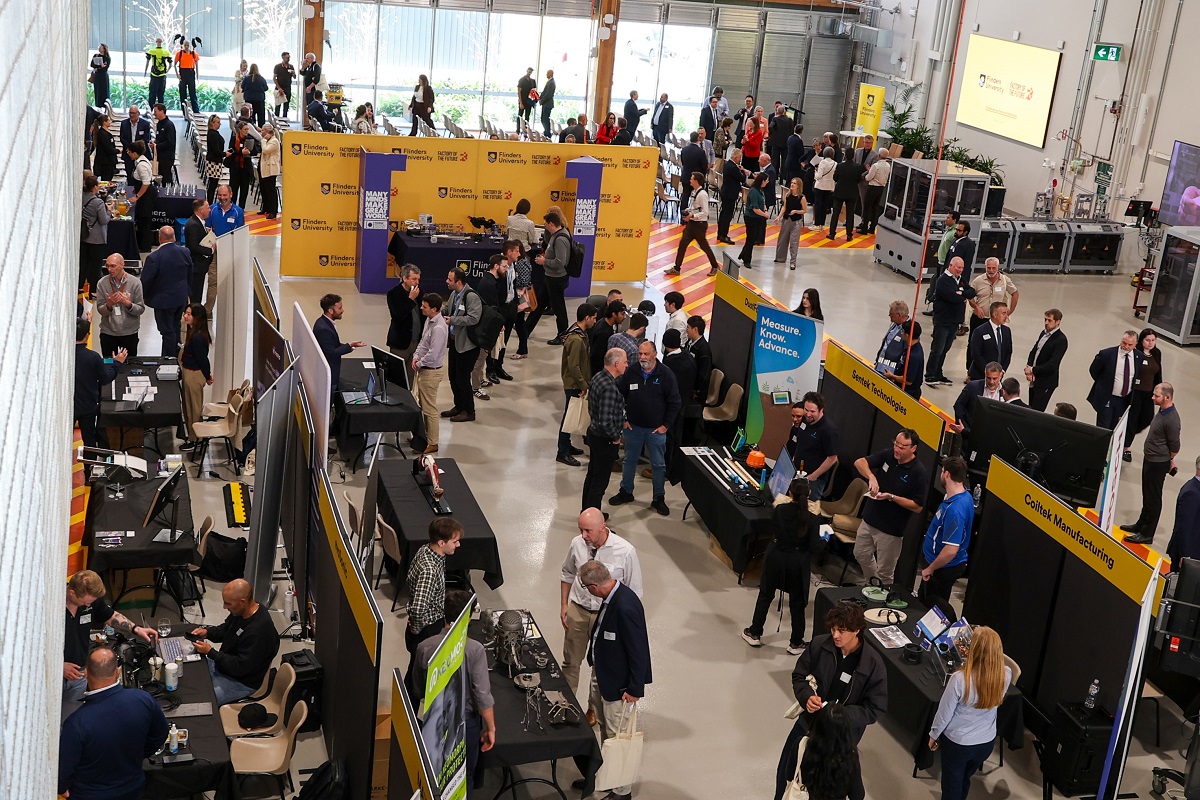
The project is one of 21 industry collaborations being showcased at the $19 million Flinders Factory of the Future at the Tonsley Innovation District.
The showcase highlights how the Factory of the Future helps industry partners test, develop and commercialise new technologies.

Vice-Chancellor Professor Colin Stirling said Australia's manufacturing resurgence depends on strong partnerships between universities, industry and government and that is what we have created within the Factory of the Future.
"Ideas are being transformed into commercially viable products, unlocking opportunities to grow businesses, create jobs and strengthen exports," said Professor Stirling.
"Today's showcase highlights how the Factory of the Future is bringing industry and research together to accelerate next-generation Australian products and technologies."
It also features FORGE Medical Devices, a $12 million initiative backed by the Australian and South Australian governments. Building on almost two decades of the Medical Device Partnering Program, FORGE aims to support 30 new ideas and 17 technologies towards clinical trials and commercialisation.
Adelaide-based Sentek is working with the Factory of the Future to partially automate assembly of its smart-farming soil-moisture sensors.
Other projects on display include rehabilitation devices for people recovering from knee surgery, mouthguards for children with braces, smart-farming sensors and machine-learning quality-control systems for space products.


"Australian manufacturers come to us with a challenge or opportunity, and our experts work alongside them to develop a practical pathway forward," said Flinders Factory of the Future and Medical Device Partnering Program Director Professor Karen Reynolds.
"Our focus is on helping companies adopt new technologies, improve productivity and bring new products to market."
Turning ideas into Australian-made products
Built on the former Mitsubishi Motors Australia Limited assembly site, the Factory of the Future brings together researchers, businesses, government and students to solve manufacturing challenges and turn new technologies into commercial opportunities.
Supported by $10 million from the Australian Government and $9 million in funding from the South Australian Government, its expertise includes automation, artificial intelligence, additive manufacturing, digital twins, prototyping, testing and workforce development.
The Factory of the Future also connects students with industry and provides training in the skills businesses need to adopt new technologies.
Supported by the South Australian Department of State Development, the $4 million Manufacturing Growth Accelerator helps small and medium-sized manufacturers adopt advanced technologies and improve productivity.
Factory of the Future – By the numbers (Federal and State MGAs)
- Engagement with 250 South Australian Small and Medium Enterprises (SMEs)