
The low-lying Avalon Coastal Reserve on the shores of Port Phillip Bay may not be at the top of many people's must-visit lists, however following recent works, Parks Victoria is hoping to attract flocks of very picky visitors to the reserve - thousands of migratory shorebirds.
Avalon Coastal Reserve was formerly a saltworks, with a network of ponds and channels constructed to produce salt from seawater. While those modifications changed the natural tidal processes of the area, many of the old saltpans have since become valuable habitat for coastal birdlife.
Today, the reserve's mix of saltmarsh, wetlands, lagoons, and open space provides habitat for a range of important native species, and numerous migratory shorebirds who visit each year.
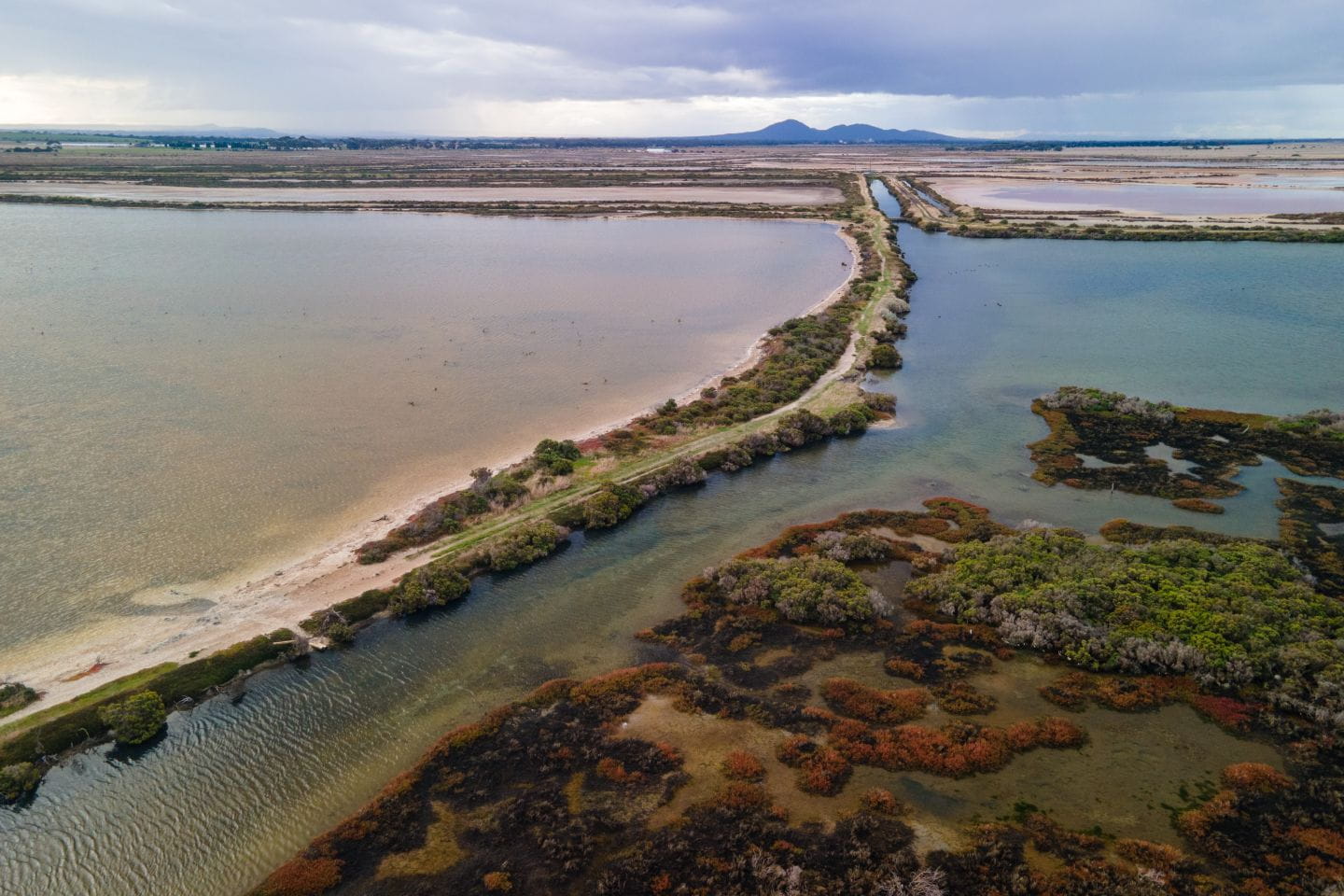
Above: An aerial view of Avalon Coastal Reserve, looking back to the You Yangs.
Parks Victoria Senior Conservation Officer Catherine Clowes said Avalon was "chock-a-block full" of nationally important biodiversity values.
"Avalon Coastal Reserve provides habitat for close to 30 listed migratory shorebirds, and several critically endangered and threatened species including Curlew Sandpipers, and the Orange-bellied Parrot," Catherine said.
"It has a huge number of important cultural values across the site as well."
Improving the existing coastal saltmarsh habitat is a key focus at Avalon, with recent infrastructure works having taken place to restore the reserve's natural tidal processes.
"Late last year we installed a new pump to better redirect water between the ponds, ensuring that there is water reaching the drier areas which in turns provides for healthier habitat for shorebirds and native vegetation," Catherine said.


